 DIY Blog
A Box for Spokeshaves
06 Nov 2024I've already built a box for my chisels, and this is my second attempt at making a wooden case for tools. My technique is improving, but I'm also trying a few new things. This box has better latches, better lining, and a solid wood top. I haven't tried dovetails yet, though.
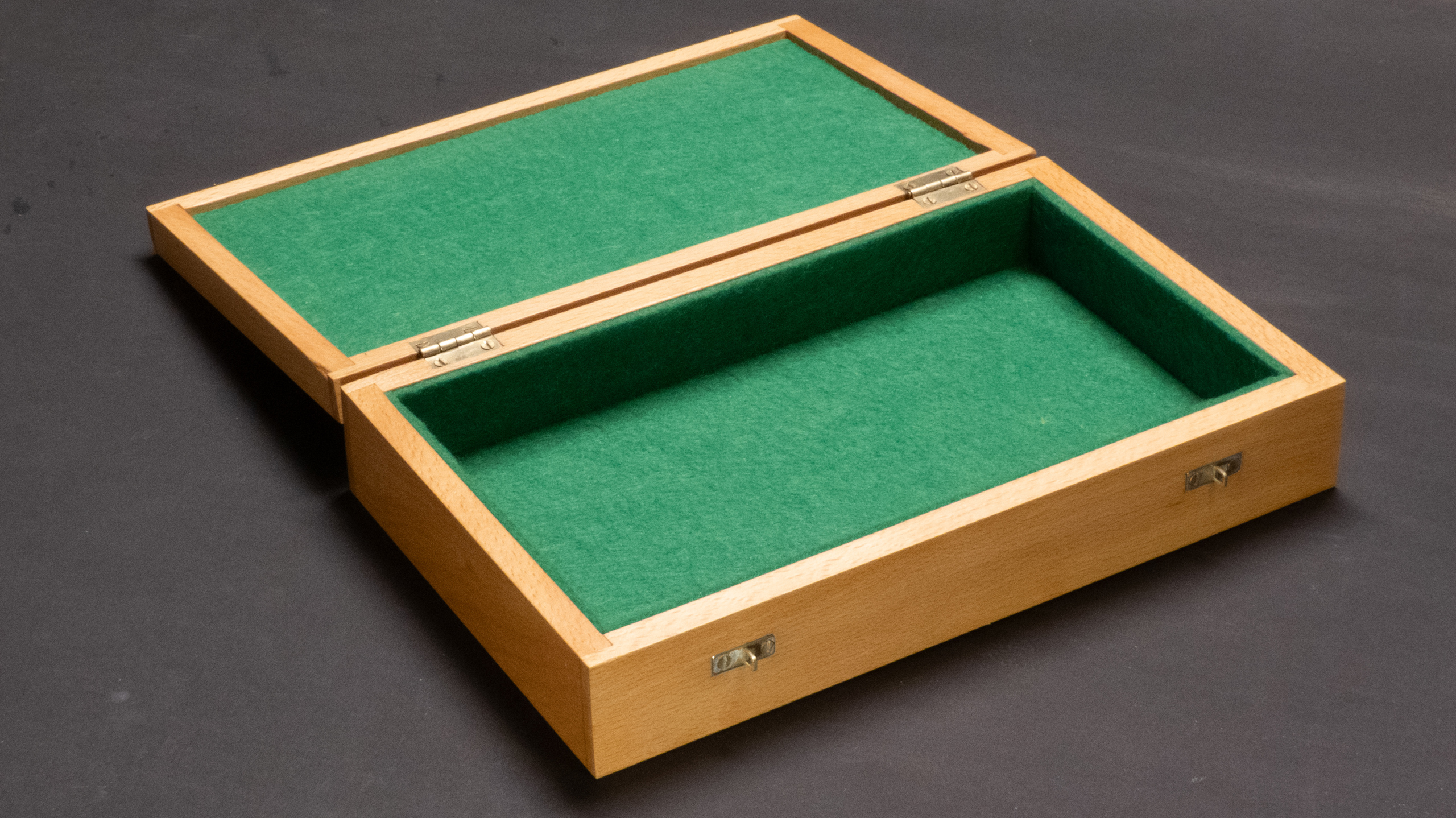
Latch construction
Pretty much every wooden instrument case I've encountered uses these hooks to hold the lid in place. That's not a coincidence, as the hooks — and, for that matter, the boxes themselves — follow the GOST 14225-83 Wooden Cases. General Specification standard. Funny how the standard describes fancy washers, machine screws, and nuts, but in real-life applications, they are substituted with some coarse-pitched wood screws.
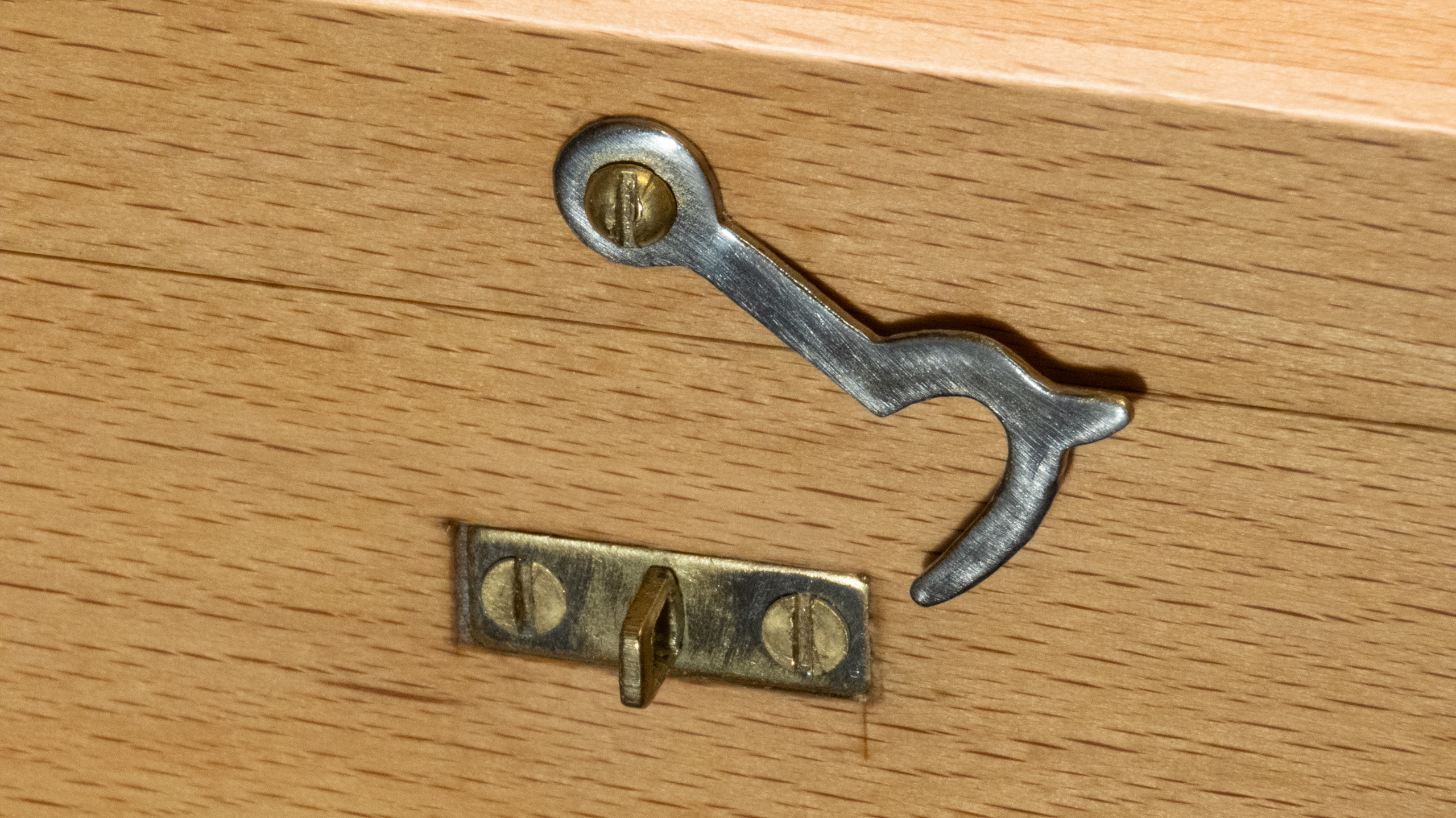
I was able to get my hands on a modern incarnation of this latch type. It's functional, but I would not call it heirloom quality. While the Soviets at least had the decency to stamp both left-hand and right-hand hooks, these were produced only in the right-hand variety. Had the hooks been made of solid brass, I would have simply removed the burrs on the reverse side and flipped one hook around. But they are clearly made of steel and then plated with yellow zinc.
I deburred both hooks and sanded the majority of the plating off so that the flipped hook would not stand out so much. The loops were mostly good, but I had to countersink the mounting holes, which, of course, ruined the plating. Corrosion should not be an issue, though, as I plan to store this box indoors where it is dry.
Lining
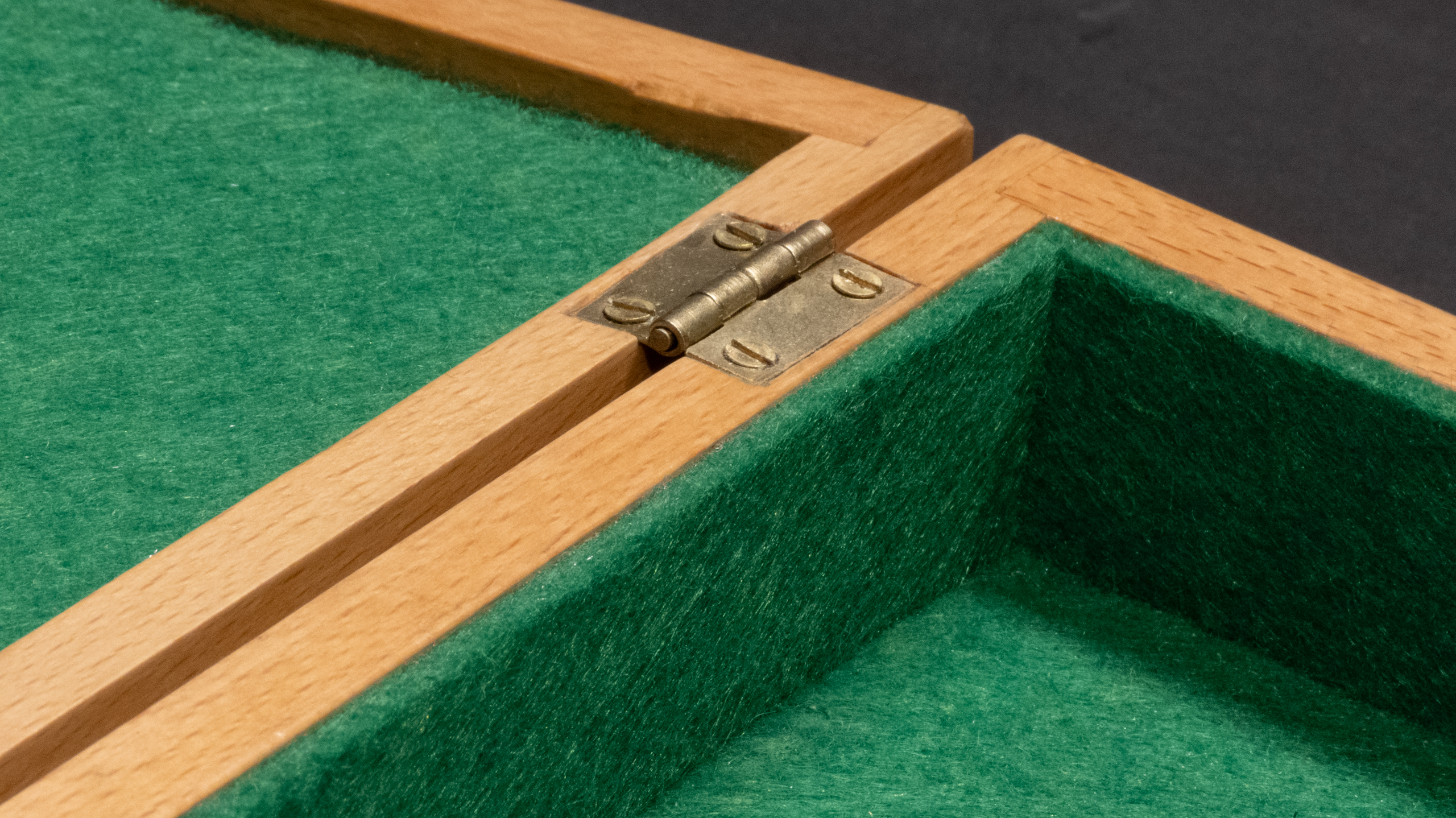
For the lining, I've found this artificial felt material. It's about 3 mm thick and quite stiff. I've seen others make little cardboard panels covered with some kind of fabric lining, but this material is sufficiently thick and stiff to serve as a panel without any backing. I've cut the felt into panels and pasted them onto the wood using rubber adhesive.
Edge glued panel
I had two small beech boards left over, so this time I decided to glue up a panel for the box lid. I used polyurethane glue, and the glue-up was not as complicated as it could have been. With a panel this small, I was able to apply a lot of pressure and eliminate any gaps. At this scale, wood movement is not an issue either, so I just glued the panel into the recess.
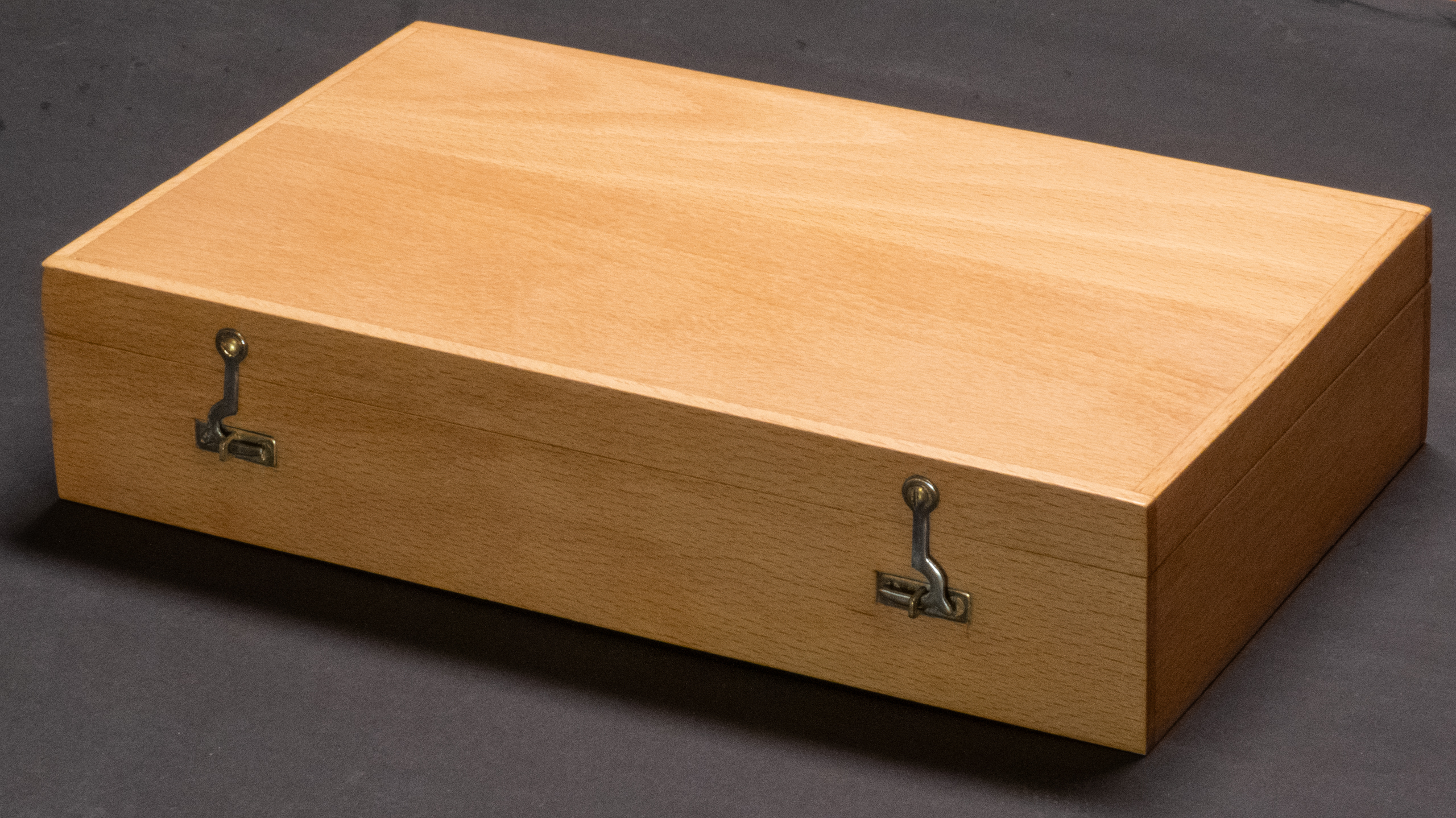
The construction is the same as before, with the exception that the lid panel is made from solid wood. It certainly looks better than plywood. The bottom is still made from plywood, mainly because I did not have enough scraps to make a solid wood panel for the bottom.
Brass screws
Despite drilling pilot holes and liberally applying paste wax, I still broke one brass screw and chewed up the rest. Perhaps I need a better screwdriver — the kind used by gunsmiths. Or maybe I should get some matching steel screws and use them to cut the threads in the wood, then take them out and put the brass screws in. Or perhaps I could even make a tapping tool from a steel screw.
The spokeshaves fit the box, so the box serves its purpose. I should have made it longer and perhaps designed a platform for the tools to rest on. Right now, if I shake the box, the tools rattle.
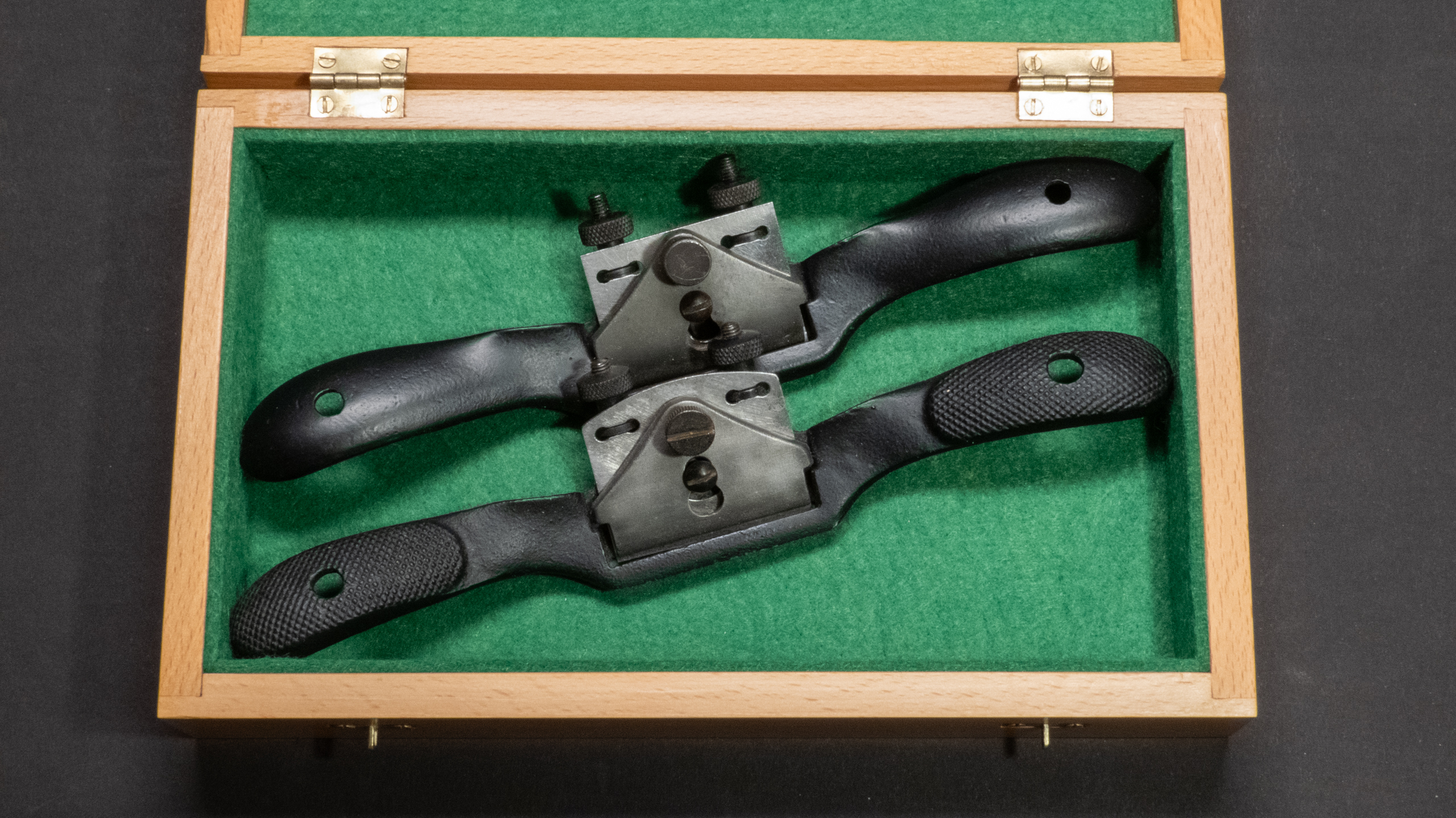
This box marks a small improvement in overall technique, but there is still so much more to learn. Further experiments, unfortunately, are hampered by a lack of thin boards or an easy way to make them. Resawing boards with a handsaw is proving to be more trouble than it's worth. Perhaps when I finish my Roubo frame saw project, this will change.