 DIY Blog
Faithfull #10 Plane Makeover (Part 1)
14 Jan 2024I've explored many different planes in pursuit of the ultimate rabbet-making tool, all to no avail. The next logical step is to try a carriage maker's plane. While this Faithfull #10 plane is a cheaply-made modern piece, with some work, I can transform it into something nice.

Original Stanley carriage maker's planes of the #10 family are scarce and collectible, at least in comparison with the ubiquitous #5's and #4's. This modern reproduction by Faithfull is an intriguing blend of the old and the new, rife with questionable and not-so-questionable technical decisions. Here are my preliminary observations:
- Body casting is good: flat, sides square, decent paint job
- Frog casting is average, surface is rough
- Lateral adjustment is good, the lever is nice and thick
- Blade is flat and reasonably hard
- Screws are OK, a little rough, nickel-plated, but in oddball historically accurate #12-20 size
- The screw cap is good, I actually prefer it to the lever cap
- Depth adjustment doesn't work at all: the yoke is very sloppy and the hole in the chip breaker is not in the right place
- Handles are abominable and must be replaced
I've started by cleaning up the body casting, removing the metal chips left in the holes and deburring everything that needed it. I then proceeded to scrape the paint off the rims and sand them smooth with a rotary tool. Finally, I polished the rims with some lapping compound.

Apart from cleaning and deburring, this modification serves no purpose other than aesthetics, but I like the look of polished rims, so the extra effort is totally worth it.
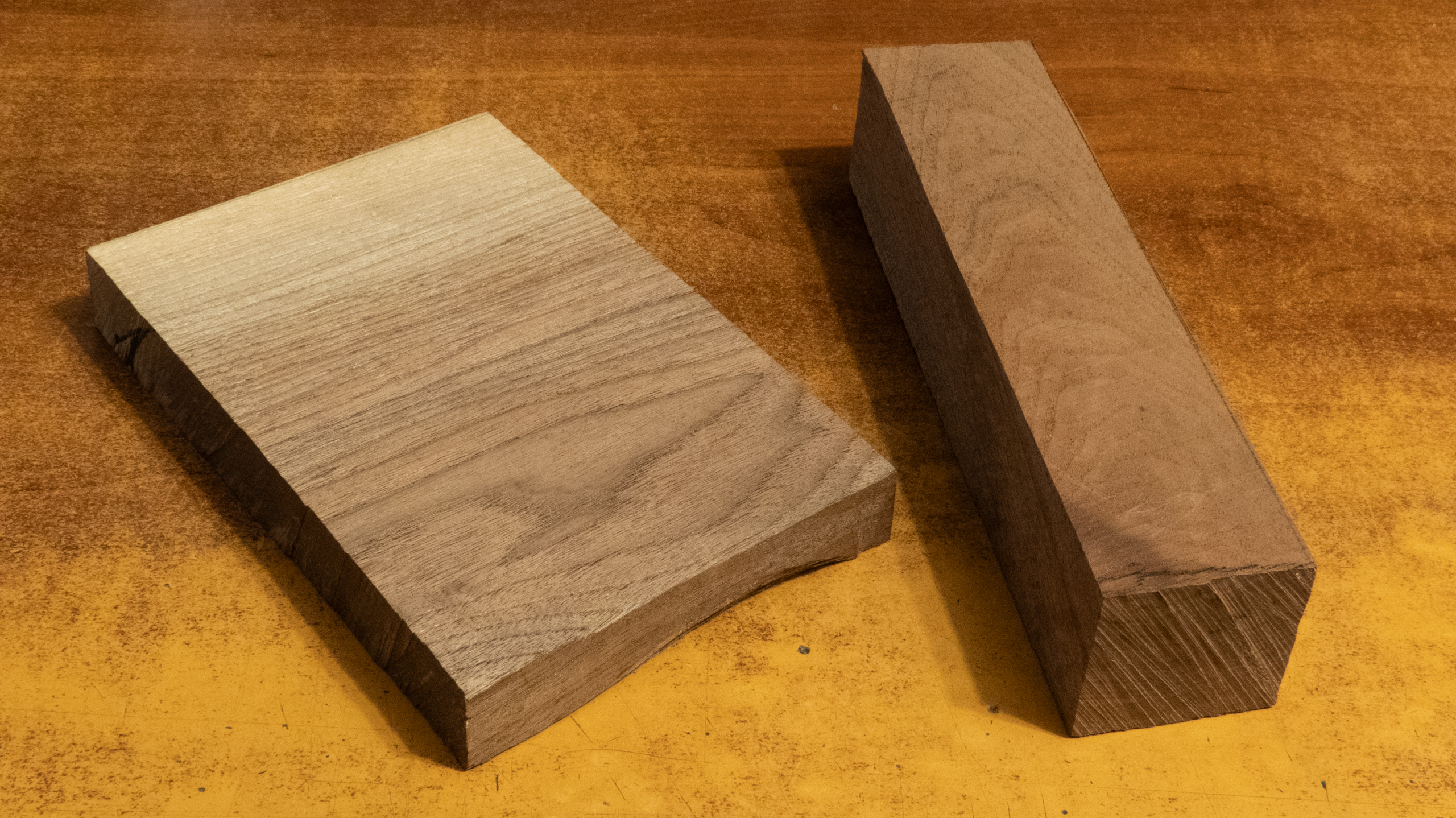
I've then picked some wood to make handles out of. These came from the same 50 mm walnut board. For this project I wanted only the dark heartwood, so I strategically arranged my pieces to only include the heartwood.
The tote blank has a sapwood edge and a nasty chip, but I managed to position the tote in a way that avoids both.
I've attached the knob blank to a mandrel that fits my lathe. Previously, I had done all drilling and shaping on the lathe, but this time, I drilled the through hole with a drill press and rounded off the edges with a hand plane before putting it on the lathe.
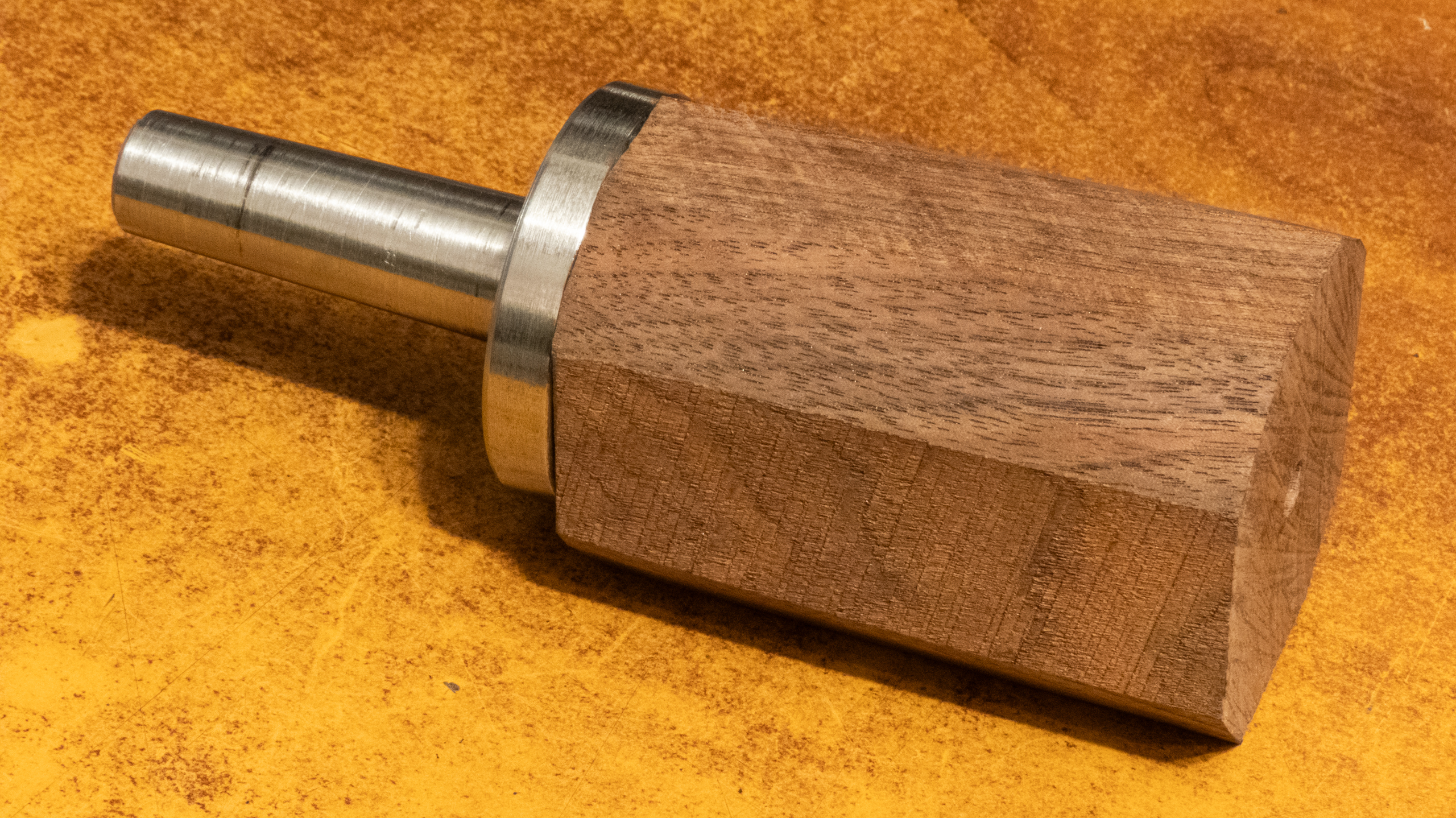
This worked out much better than expected; I was able to use a shorter blank and save precious wood, and the rounded corners made the initial roughing of the blank so much easier.
I started by drilling a long 6 mm hole through the blank. I drilled from both sides with standard metal drill bits using a drill press until the holes met somewhere in the middle. Afterward, I cleaned out the hole with a hand drill and a very long wood drill bit.
Next, I cut off the corner at the bottom and planed the bottom flat and smooth. Counterboring the top part has always been challenging for me because I've been using standard drill bits, and they tend to wander off, making holes that are out of round due to the wood grain structure.
As luck would have it, I recently acquired a counterbore for M6 bolts that is absolutely perfect for this task. The outer diameter of the counterbore matches the brass nuts, and the inner diameter matches the hole.
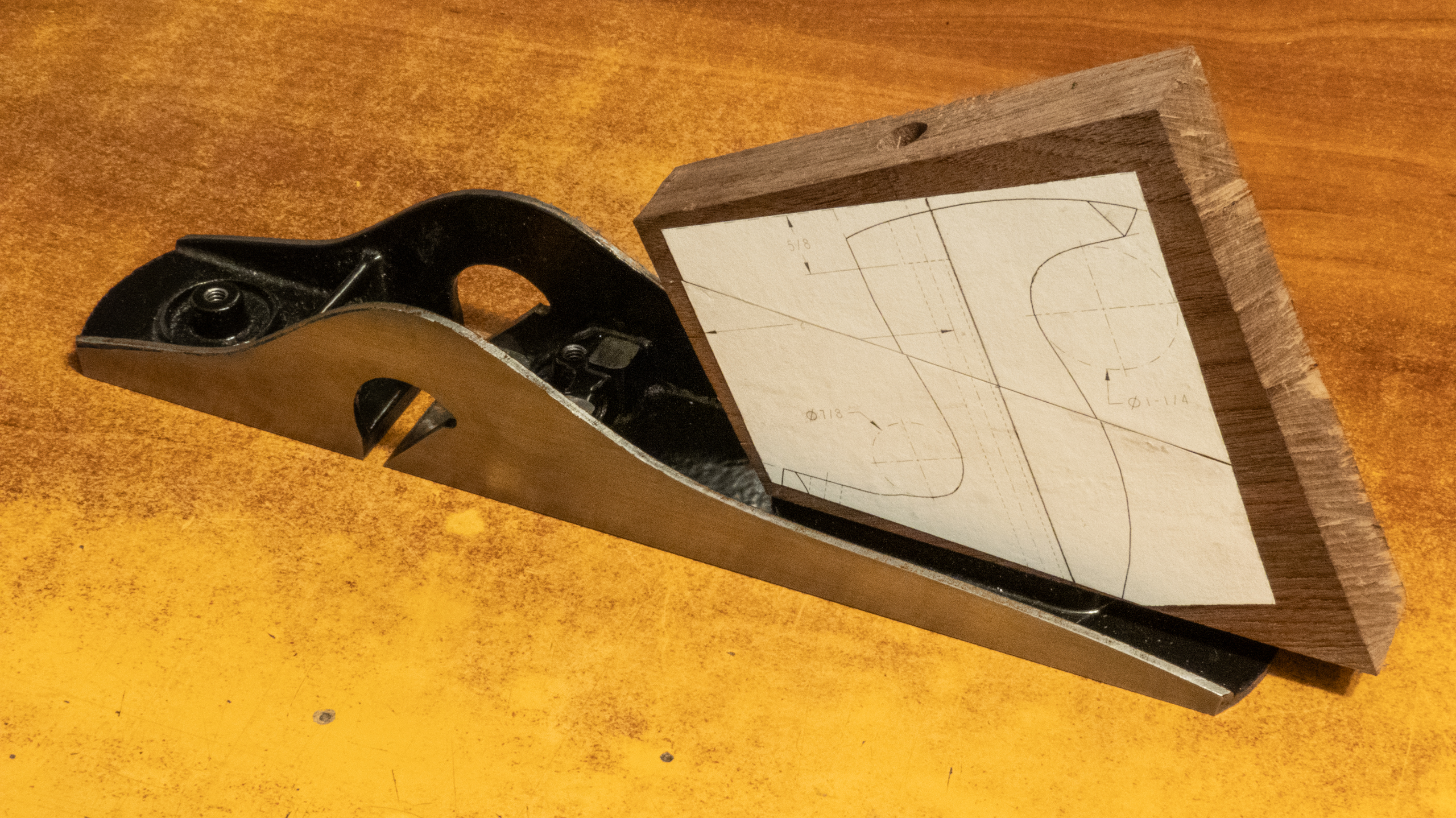
With the counterbore in place, I was able to adjust the angle of the blank to sit perfectly on the body casting. At this point, I realized I should have offset the hole to the right to allow for more space on the left side of the tote. I managed to fit everything, but just barely.
Now, I needed to work around the features I had already established: the angled hole and the bottom. I began by using the template for the Stanley #5 tote, making adjustments as the height and angle were slightly different.
Another feature that required accurate placement was the hole for the small screw used to attach the tote to the body. I drilled it from the bottom, as any potential blowout on the top would be removed later during the shaping process.
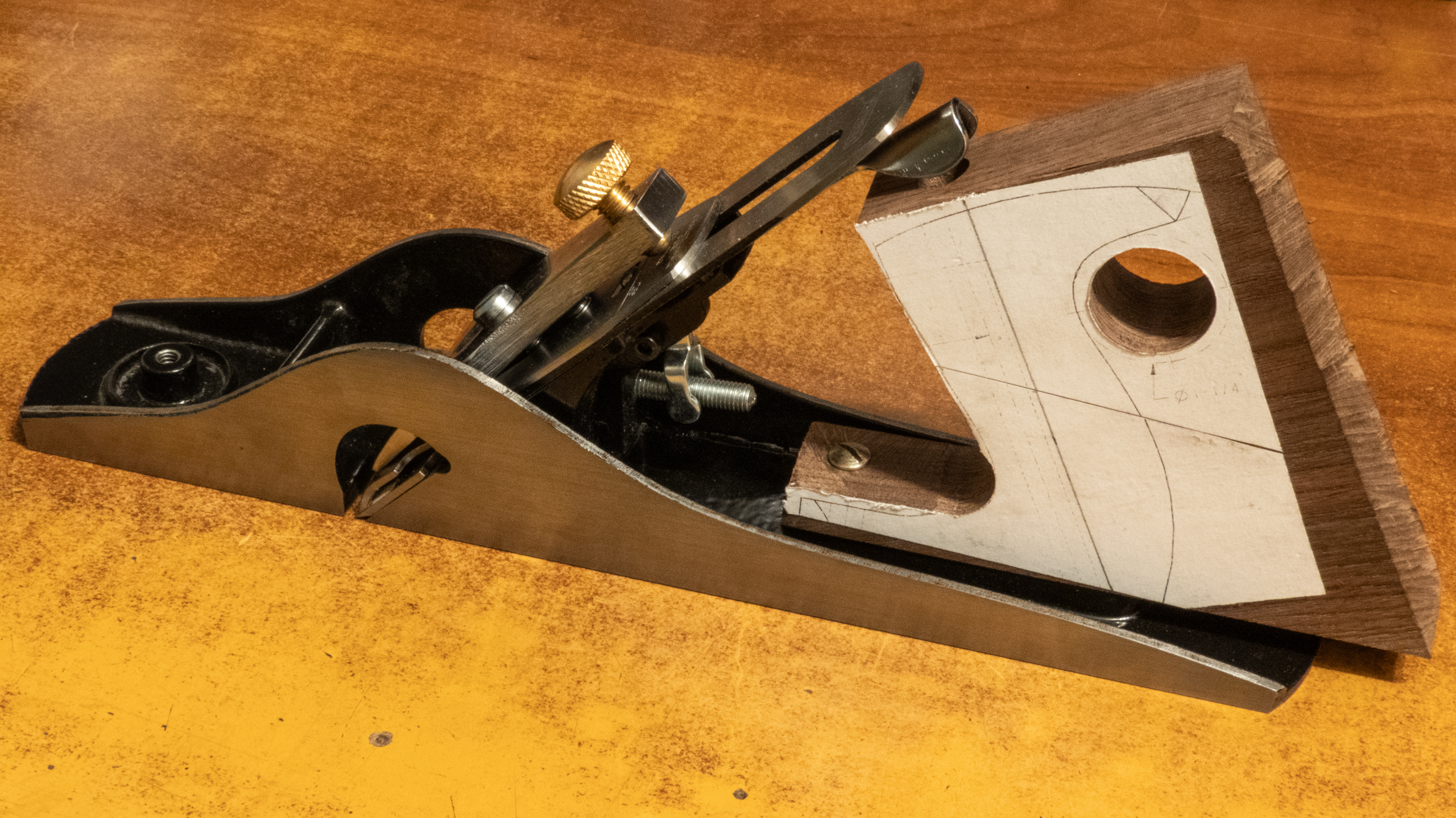
I find the standard handles to be too short for me, so I try to make them slightly longer if possible. However, I learned this the hard way: the tote still needs to clear the lateral adjustment lever. That's why I installed the frog to check if the lateral adjustment is accessible.
The rest of the operations were pretty straightforward. I shaped the tote using a rasp and some files, then smoothed it with sandpaper. The knob was shaped on the lathe and sanded smooth.
I applied oil several times and then varnished both handles with thinned-down polyurethane.
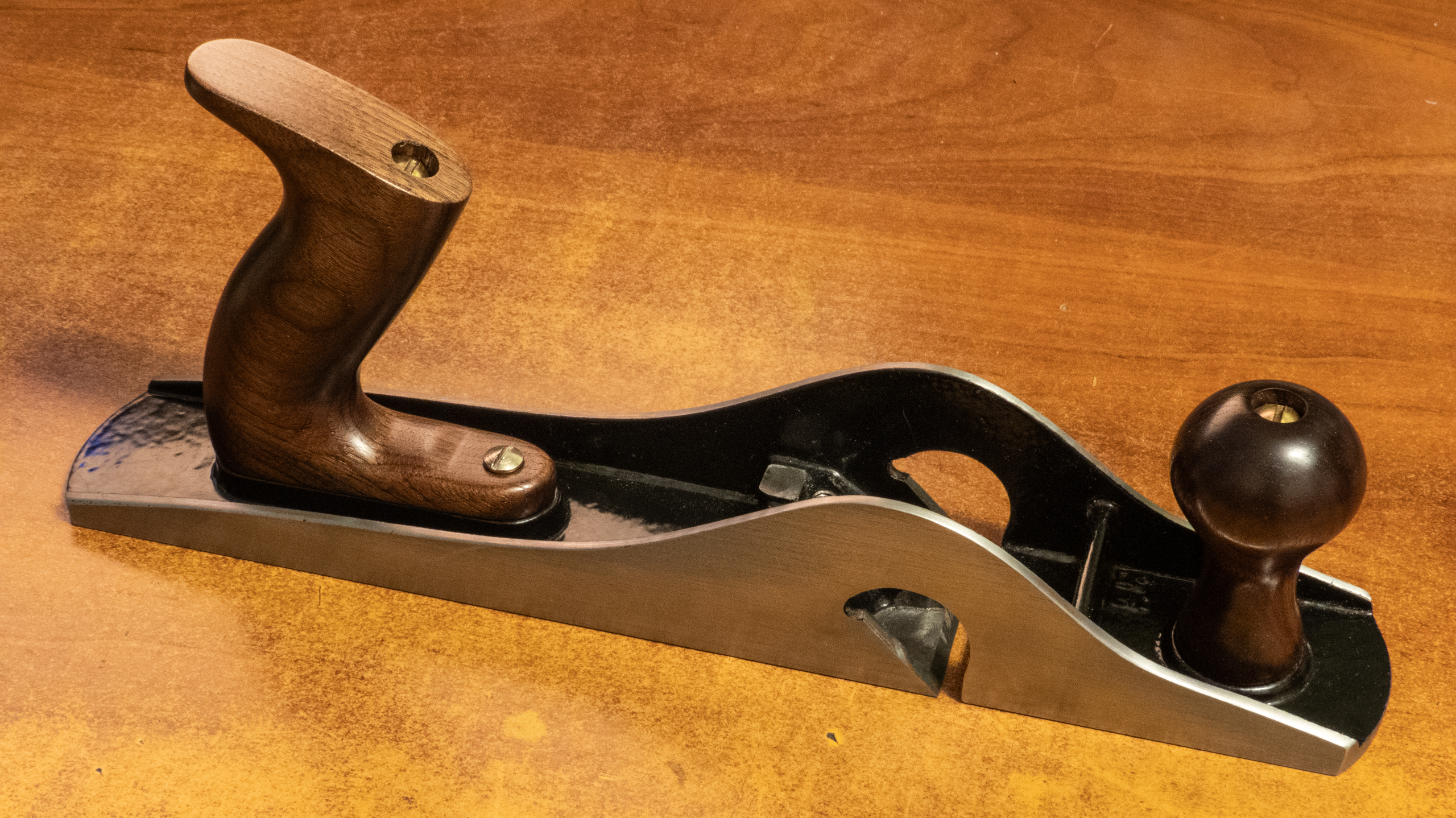
Both handles are taller than the originals, causing the brass nuts to be slightly recessed. This could be addressed with longer pieces of threaded rod and washers, but they don't make #12-20 threaded rod any more, and the dies of that size are also scarce. Enlarging the holes to 1/4"-20 is an option, but I don't believe it's worth the effort. Therefore, the recessed nuts will remain for now.
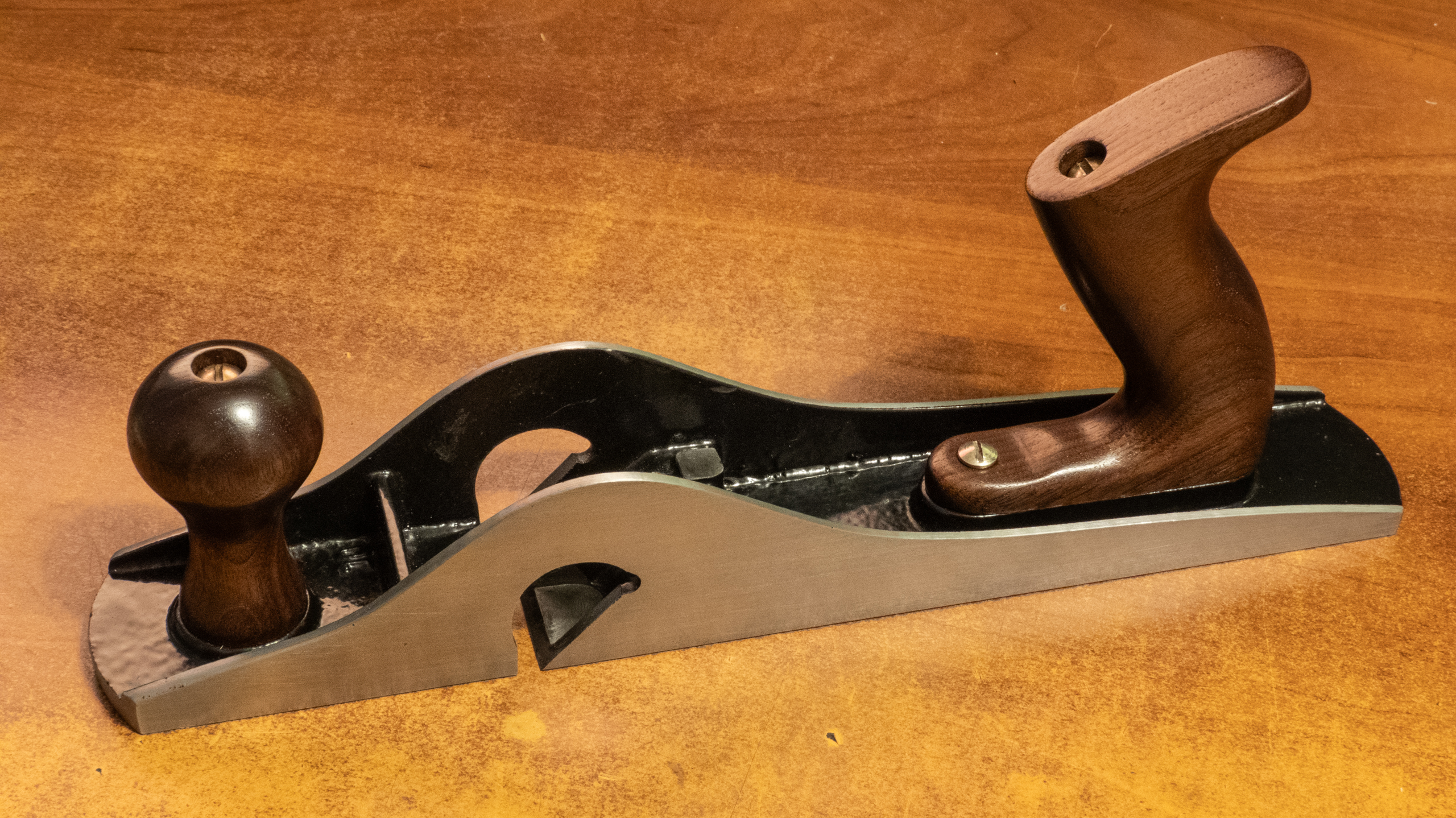
The handles and the body are done. Next, I'll focus on the depth adjustment mechanism. I'll shorten the chipbreaker, fabricate a new yoke that is not sloppy, and make sure the frog fits the body and the blade well.