 DIY Blog
Marking Knife
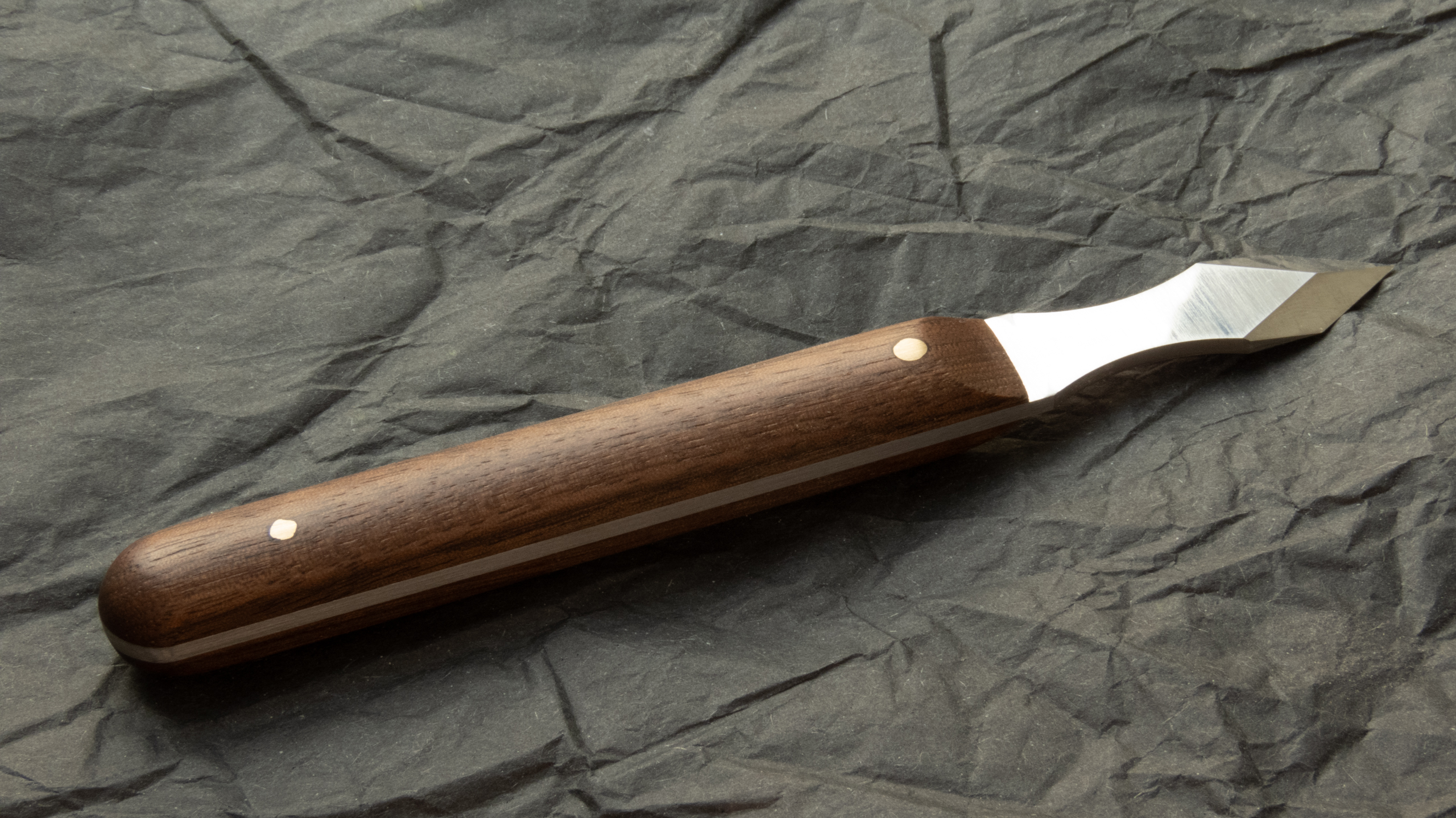
23 Oct 2023I've always wanted to have a nice marking knife, and my curiosity led me to this Narex kit. It comes with the fully sharpened blade and two brass pins, but wood needs to be supplied separately. I chose walnut as it complements the brass beautifully and takes on a fantastic appearance with an oil and wax finish.
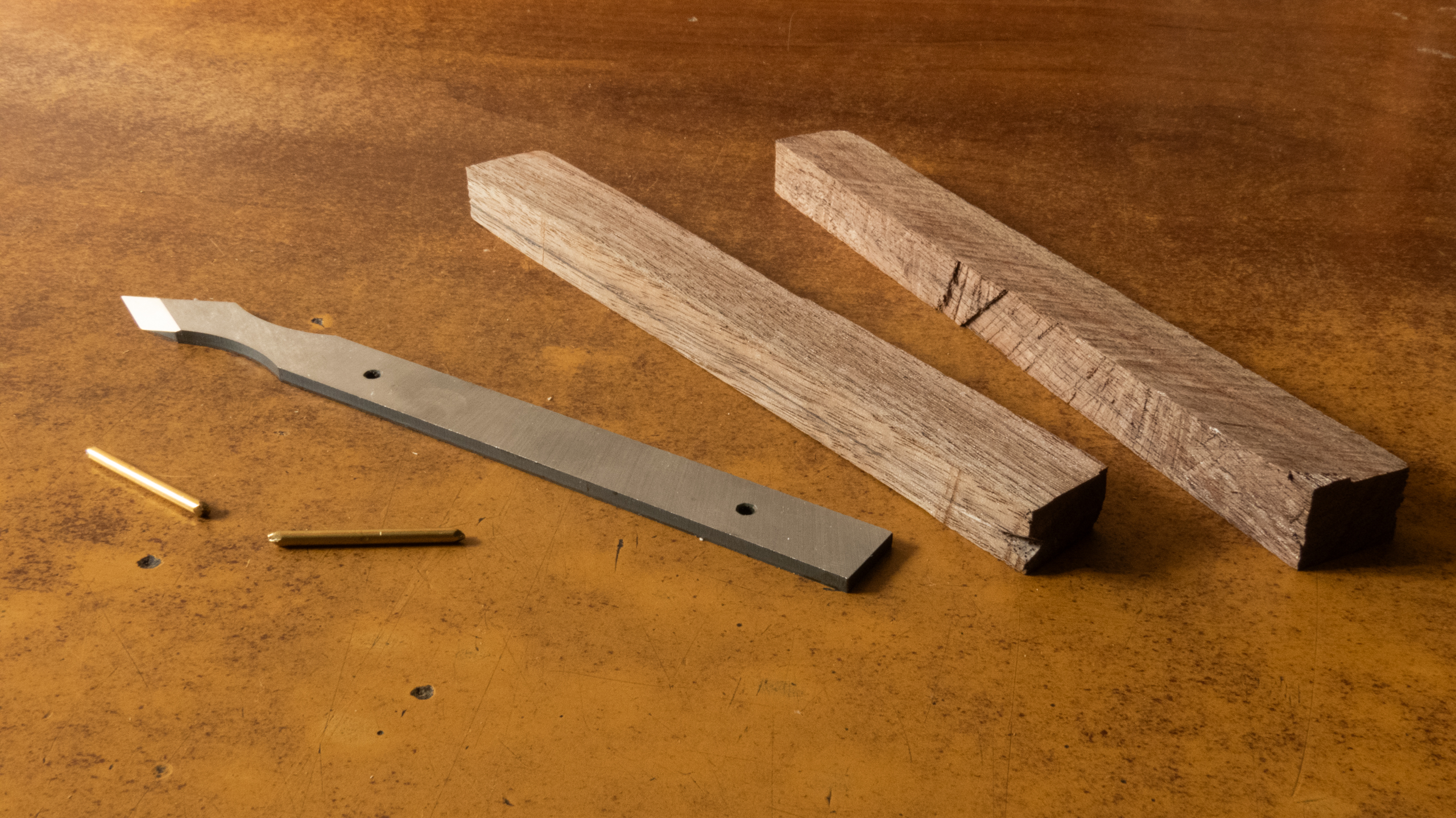
To my surprise, the blade came exceptionally sharp right out of the box, so I decided to polish it just a bit. Afterward, I covered the sharp end with tape and scuffed the blade with coarse sandpaper. I had also prepared two small pieces of walnut to serve as scales for the knife. I flattened one side of each walnut blank for gluing to the blade, with the intention of shaping the rest after the glue-up.
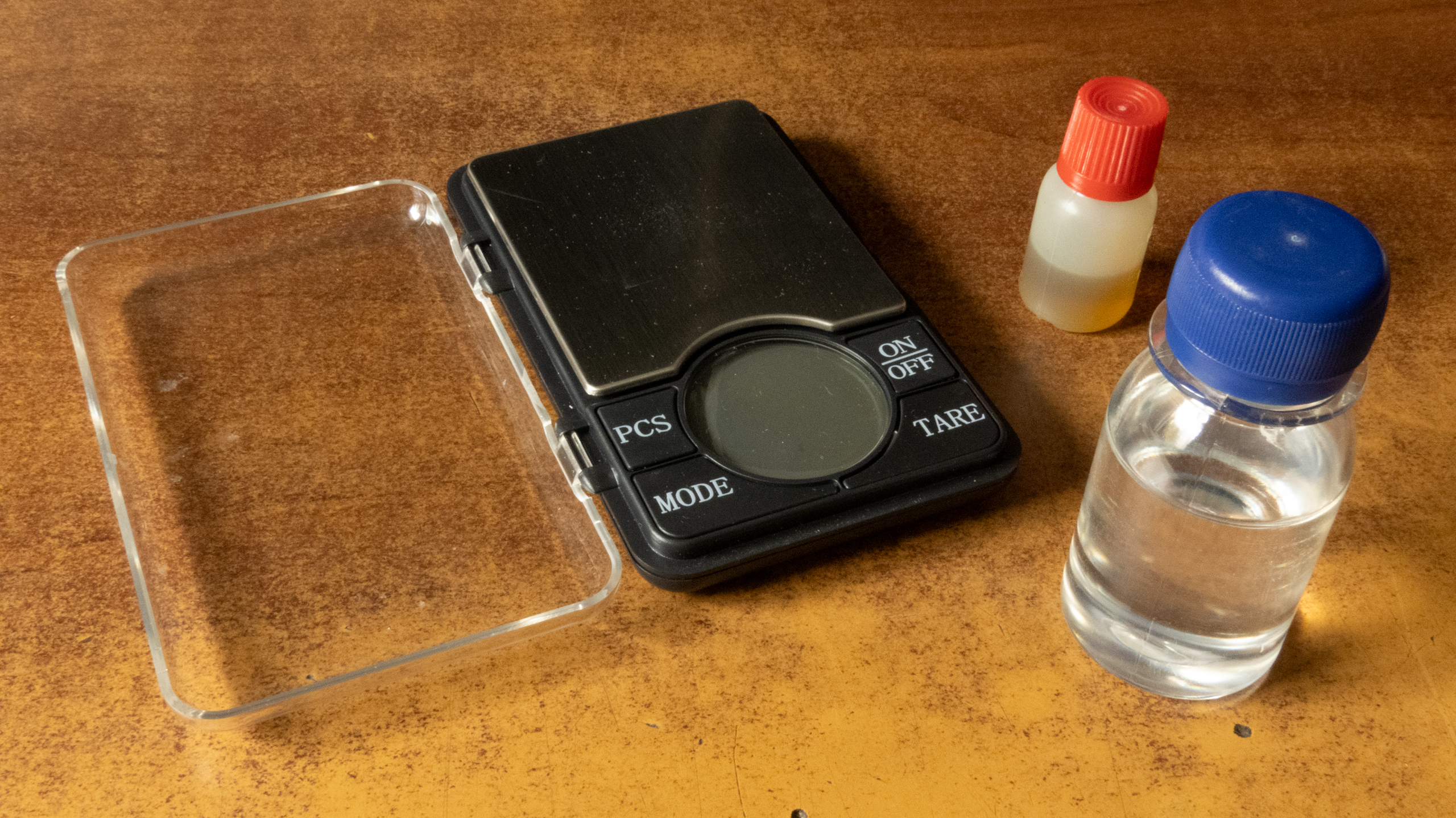
This was my first time measuring epoxy by weight, and it proved to be a successful experiment. For my application, the volumetric ratio is 1 part hardener to 5 parts resin, but considering the differing densities of the two components, the weight ratio is 1:6. Although measuring the hardener from its bottle proved challenging due to its viscosity, I initially poured out roughly 0.3 grams of hardener, obtained an exact weight reading from the digital scale, and then added six times that amount from the resin bottle. Since there's significantly more resin than hardener, any minor error in resin quantity has a less pronounced impact on the result. After spending approximately 10 minutes thoroughly mixing the epoxy, I proceeded to attach one of the walnut blanks to the blade.
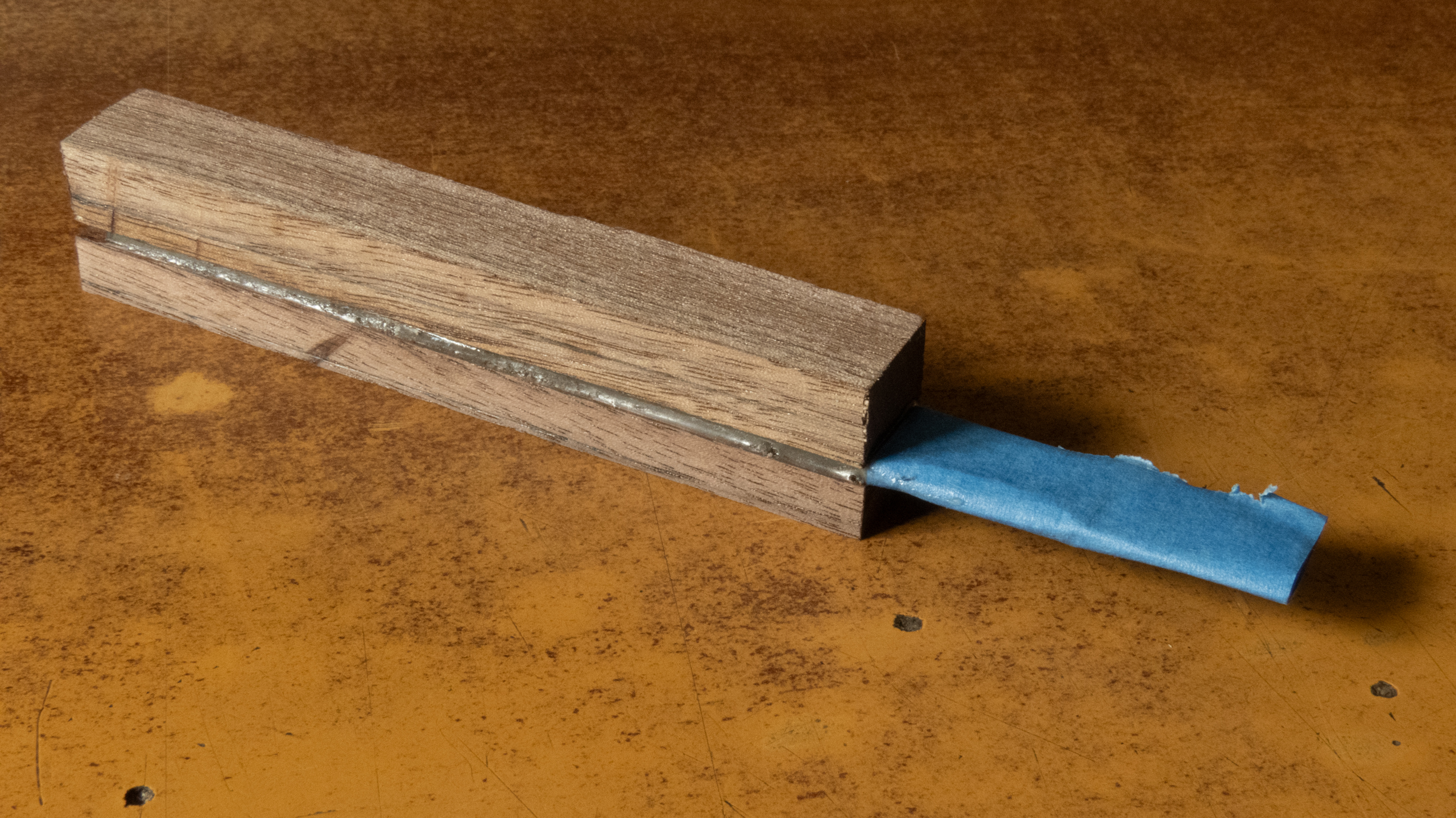
The following day, the epoxy had solidified, although it still felt somewhat pliable to the touch. I proceeded to drill the holes for the brass rods in the walnut, using the holes in the blade as a guide. It's worth noting that a drill press would have been quite helpful in this step. The hand-drilled holes did end up slightly off square, but given the thinness of the wooden parts, the deviation isn't critical. With the holes in place, I prepared another batch of epoxy and secured the second wooden piece.
Once the epoxy had set for the second time, I completed the holes for the brass pins using the first set of holes as a guide for the drill bit. I then used hand planes and chisels to roughly shape the wood, after which I drove the pins through and cut them slightly proud of the surface. To secure the brass, I carefully peened it using a ball peen hammer.
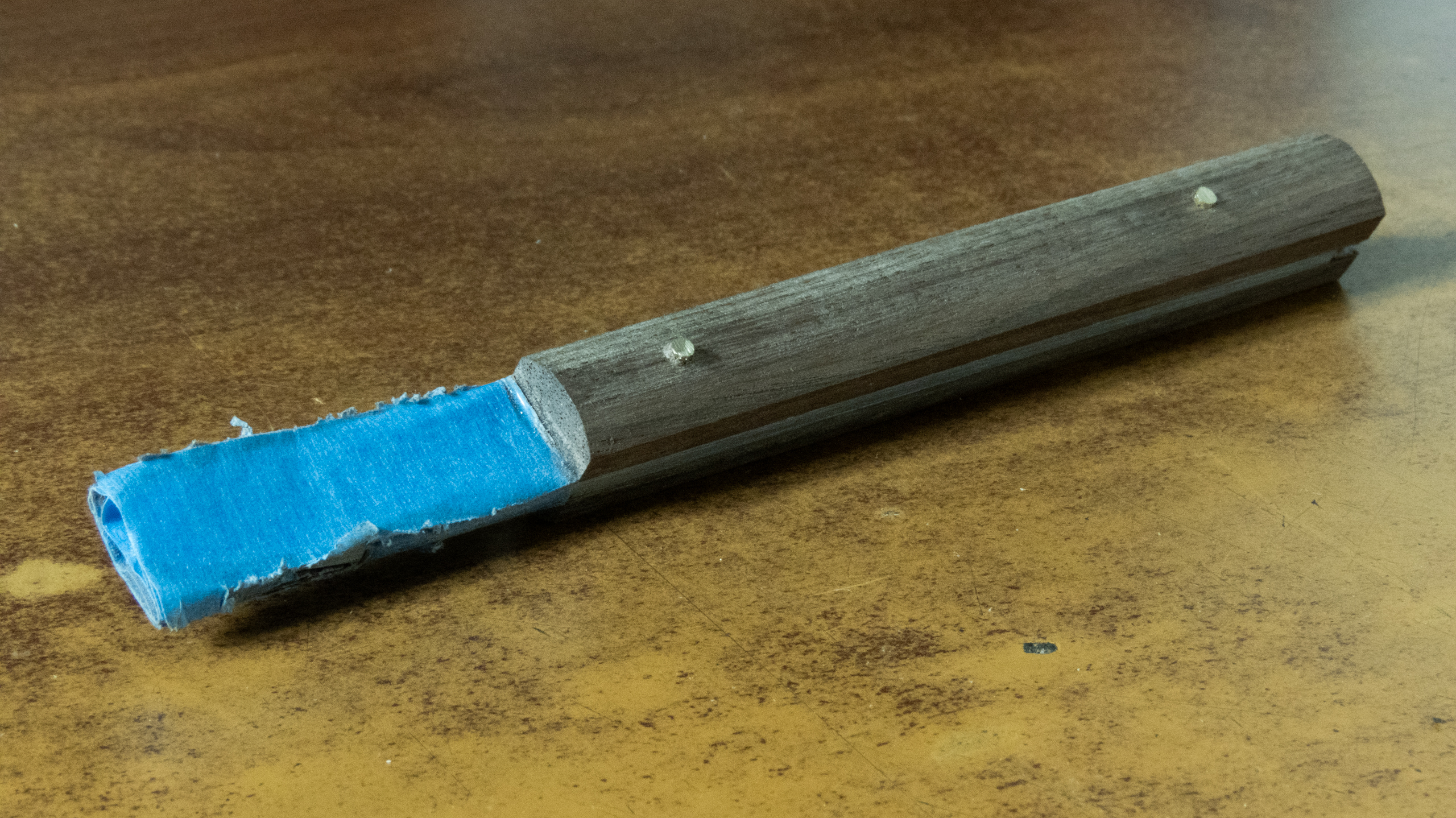
I decided to round over the back end of the knife, but because the knife was fully hardened it could only be shaped using abrasive tools. To achieve this, I used a belt sander with a coarse belt.
I completed the final shaping using coarse sandpaper, then finish sanded it with progressively finer sandpaper up to 320 grit. After applying two coats of oil and buffing it with wax, the knife was transformed into a beautiful tool.