 DIY Blog
Router Plane Build (Part 2)
29 Mar 2023It works. Still a work in progress, but it cuts and it adjusts. Corners were cut, lessons were learned, but more on that below.
The glue-up was successful, but the parts did shift slightly. I easily fixed this by planing the backside flat. Next, I proceeded to chop out the recess for the blade all the way through the base board. However, I found that the cutter was nearly obstructed by the base board, so I opened up the front of the plane for better visibility. The base remained extremely rigid, so no problems there.
I beveled the edges of the base board with a plane and rounded the corners with a rasp. After a quick sanding, it was ready for finishing. This was my first time using homemade wiping varnish, and the results were great. I mixed equal proportions of polyurethane and mineral spirits, though the classic recipe calls for boiled linseed oil as well.
The recommended time between coats for this varnish is six hours, but because of the thin coats I applied, I was able to recoat every four hours. After three coats, I decided to stop as the surface was becoming too glossy for my liking.
According to the datasheet, the varnish reaches its full hardness after four weeks. When I tested the plane on some rough wood, it left some dents in the sole. The wood itself isn't too hard, so it's unclear whether to blame the varnish or the wood. I suppose we'll find out in a month. Nevertheless, the sole can be sanded or planed flat and clean if necessary. I'm not even sure I want finish on it.
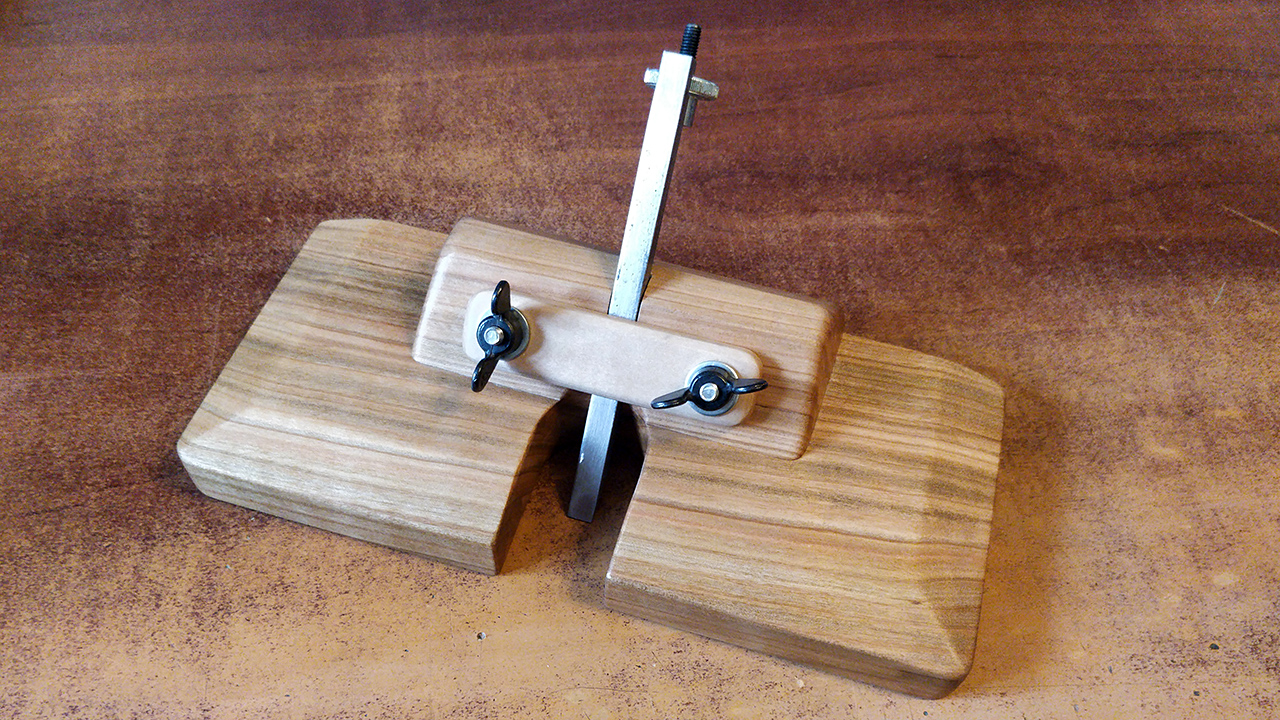
To allow for adjustments, I needed to make a notch in the blade. I spent almost two hours grinding it away, but it wasn't enough. I decided to try annealing the steel and then filing it down, which worked perfectly on the first attempt. Using a propane torch, I heated the tip of the cutter until it turned red (no idea what kind of red it was - I am no metallurgist) and then let it cool. While it would have been better to slow the process down by sticking it into hot sand, the metal became soft enough to file without it. It still felt harder than typical mild steel, so I chose not to harden it after filing the notch.
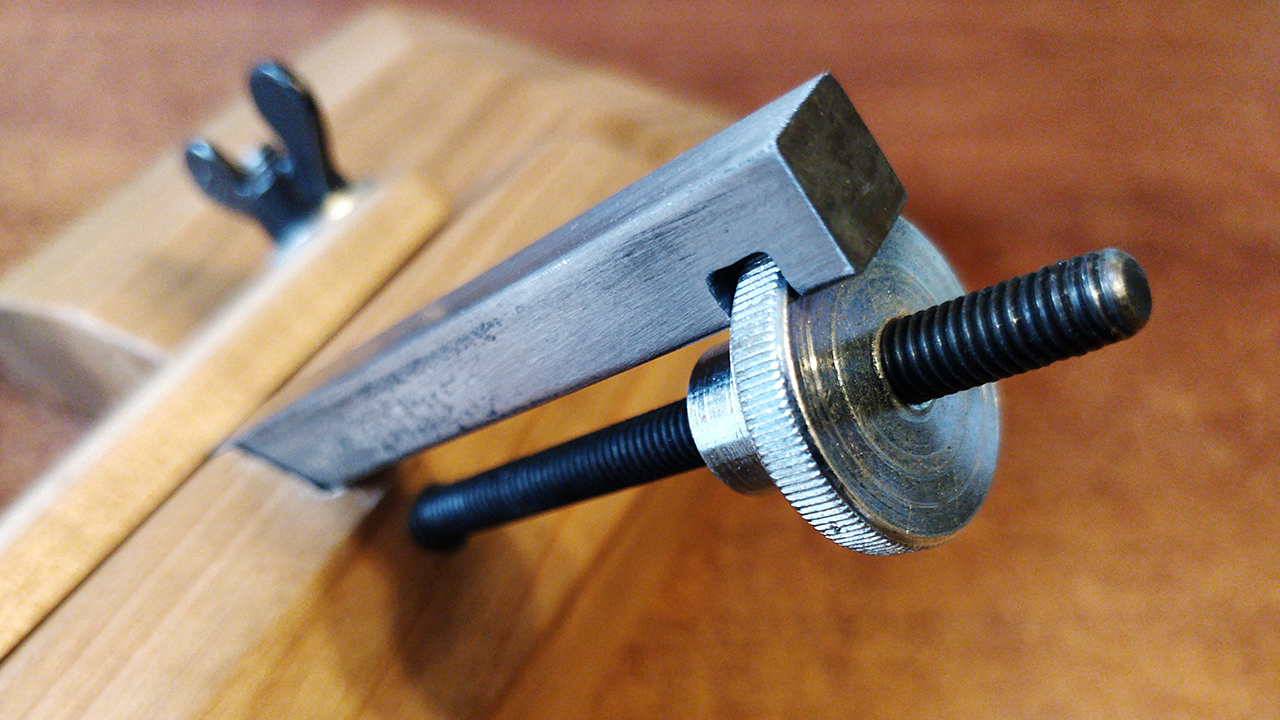
Even with the spring-loaded clamp, it is difficult to achieve the ideal pressure for the blade, which must be adjustable but still hold firmly. My current approach is to loosen one of the screws, adjust the blade, and then tighten it back. The adjustment is surprisingly fine despite the standard pitch on the M6 bolt. Unfortunately, the threaded hole on the adjustment nut is not perfectly square to the flange, but I have no lathe to fabricate a better-fitting part.
I'm not sure if the plane needs handles. It works without them, but I need to use it for a while to determine if handles are truly necessary. Can't wait to try it out on a project!