 DIY Blog
Fore Plane Adjustment Mechanism
10 Aug 2022When I got this plane, its adjustment mechanism was in shambles. Manufacturing defects, normal wear and tear, and inept repairs certainly took their toll on its well-being. I decided to repurpose it as a fore plane. Its adjustments don't need to be very precise, so I have quite a margin for error.
Left to right: original chip breaker, my replacement, donor chip breaker.
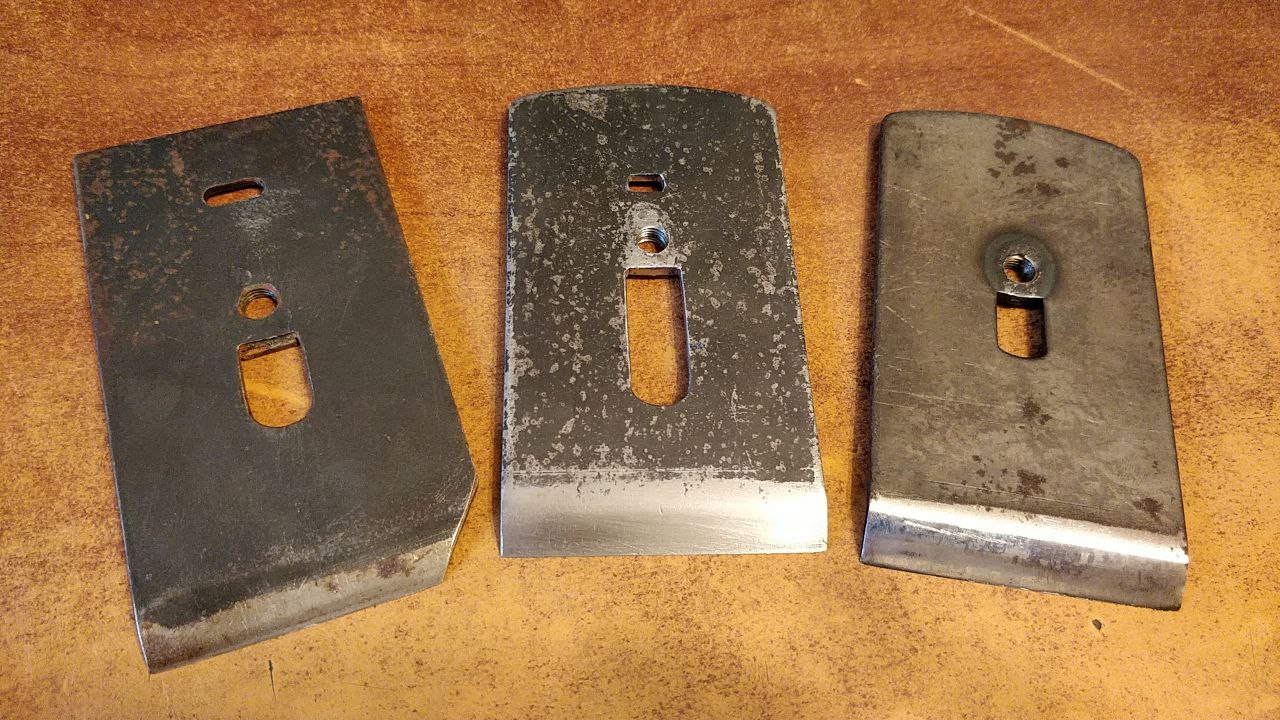
The original chip breaker surprised me. How did it end up missing a corner? It's mild steel that bends easily. The corner is not broken off, it is cut off, but to what end? We'll never know.
Having no way to fix the chip breaker, I decided to make a new one. I got several new old stock units and adapted one of them to this plane.
The donor unit had no hole for the depth adjustment lever, and its clearance hole for the bolt that retains the lever cap was too small. I drilled them out where needed and filed them to the correct size. Filing soft metals with a fine and sharp file is oddly satisfying.
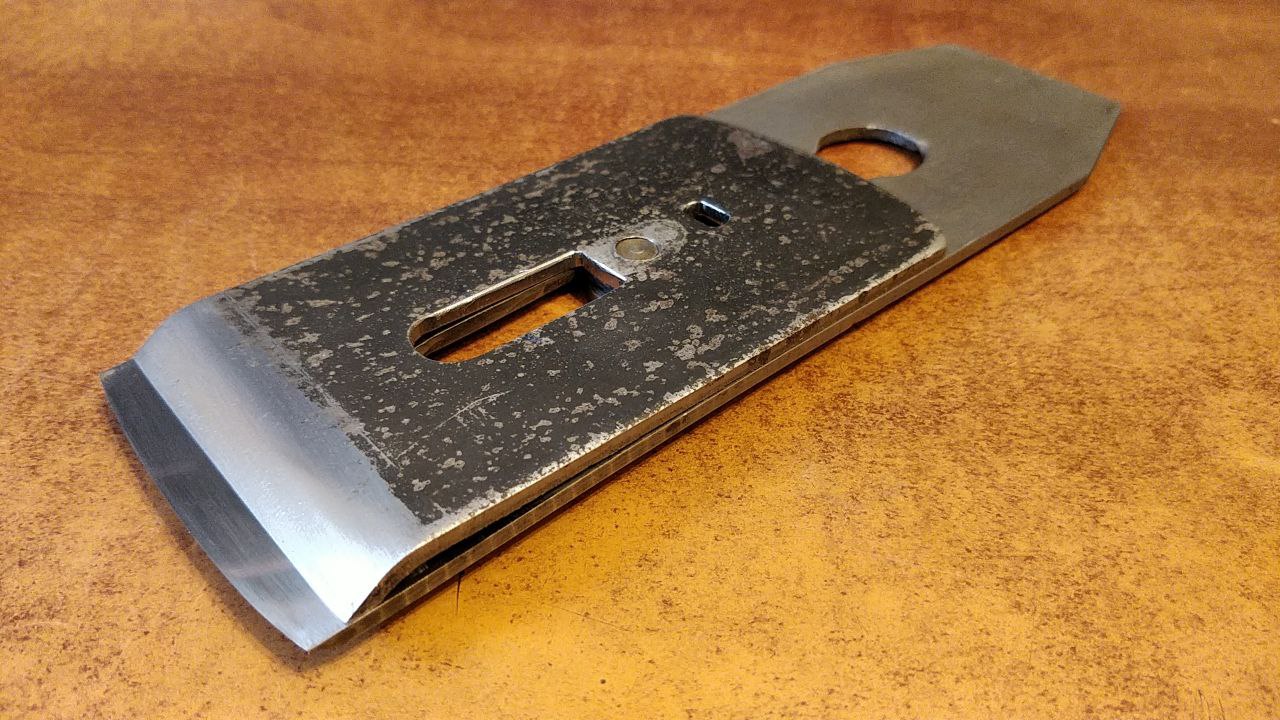
One good thing that came with the original plane was the iron. I polished the back, cambered the blade on the grinder, then finished sharpening it on my diamond stones. In this configuration the chip breaker is not going to prevent any tearout or break any chips, it's just too far from the edge. But for a fore plane that isn't really an issue.
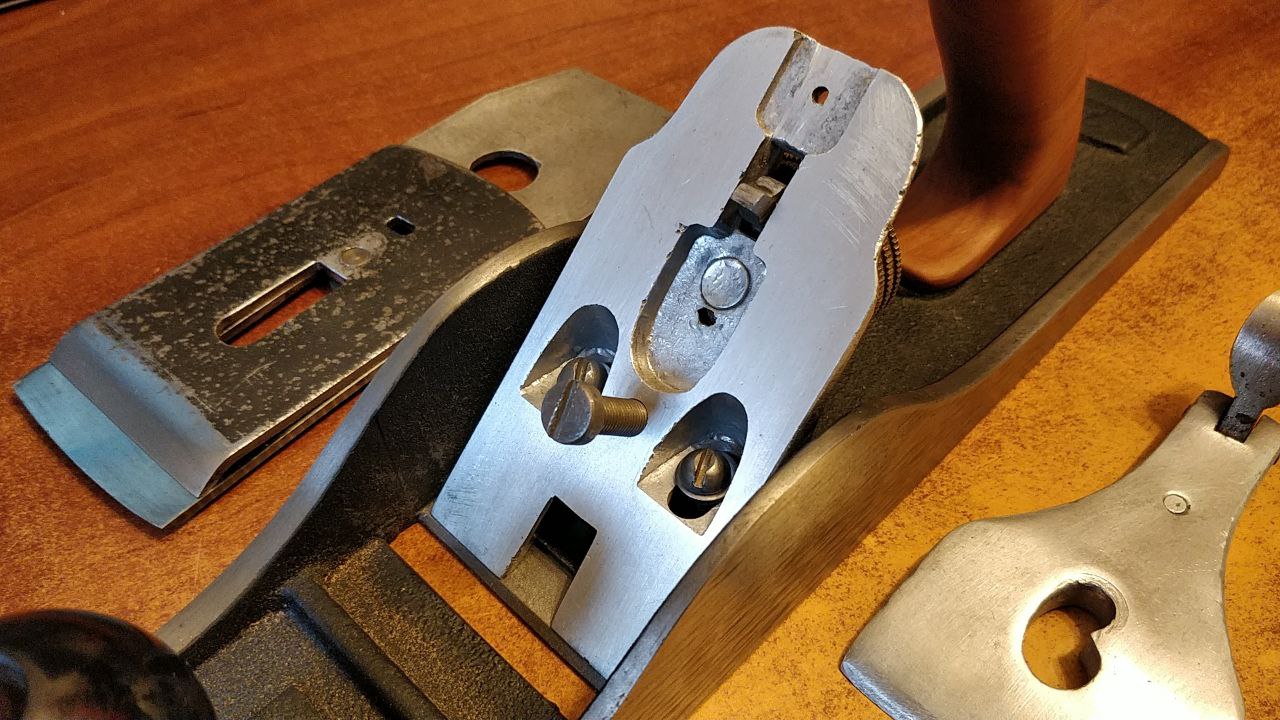
The plane came equipped with lateral adjustment and depth adjustment. The lateral adjustment layer was flimsy, so I simply removed it. Fore planes don't really need lateral adjustment. As for the depth adjustment, the little wishbone-shaped yoke came attached with a bent nail, no doubt a field expedient repair by the previous owner.
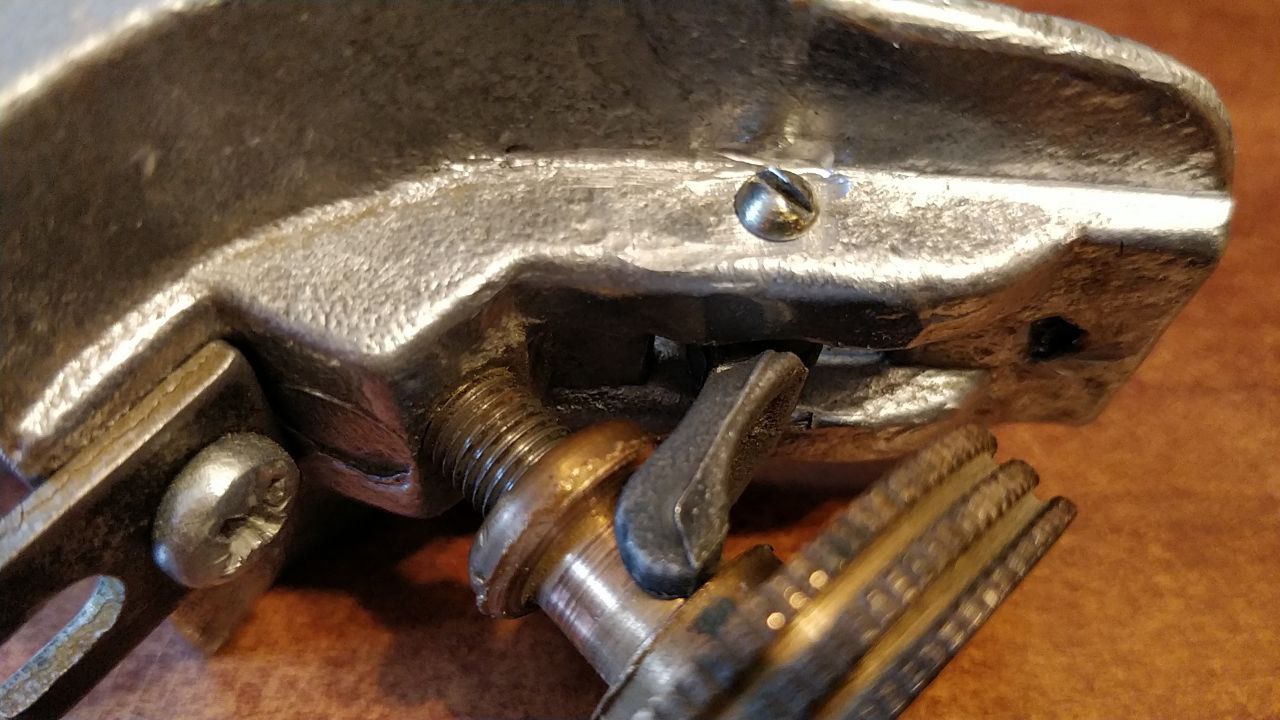
I can only assume that originally the yoke was held in place with either a tapered pin or a peened rivet. Then somebody replaced it with a nail. I, in turn, replaced the nail with an M3 bolt. The other side is secured with a nut. The bolt itself is threaded only where the nut is. The part on which the yoke rides is threadless.
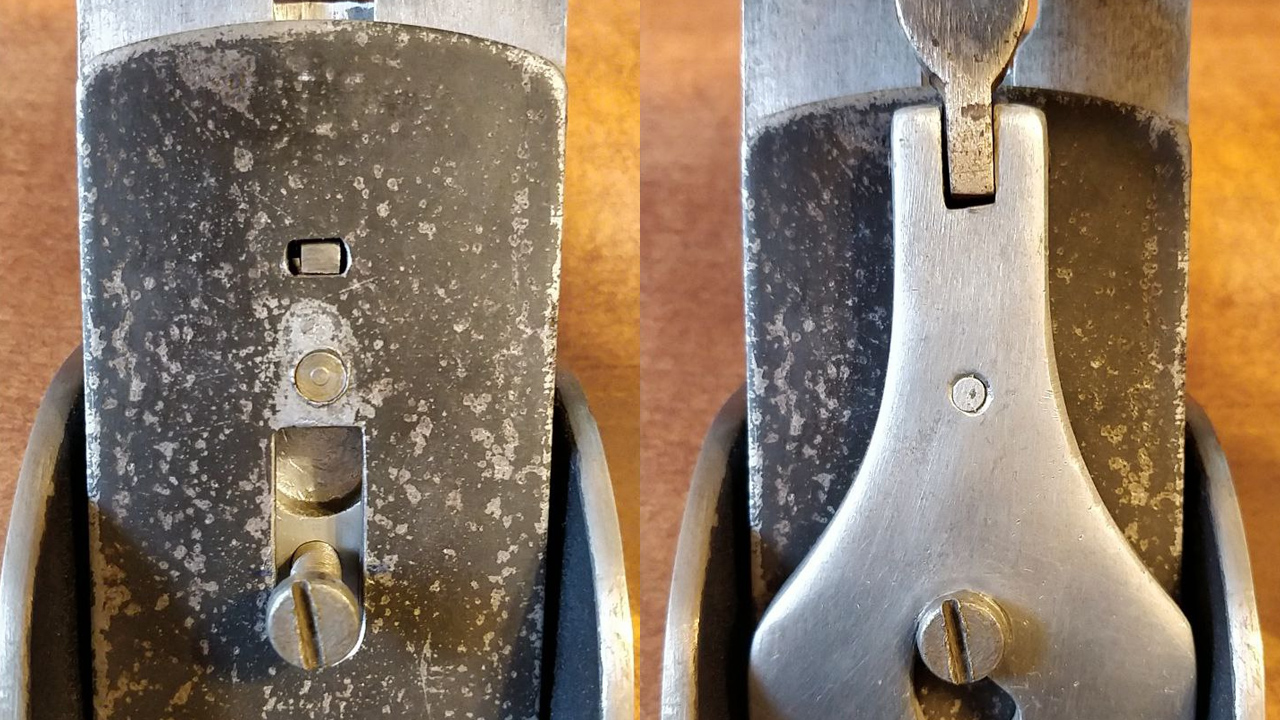
The frog and the lever cap are for some reason made from cast aluminum. Well, not all of the lever cap, the lever itself is steel with some plating. It isn't going to win any beauty contests, but there's not much I can do with it. I've sanded the frog flat, the iron assembly sits well on it, and the lever cap holds it in place securely. Good enough.
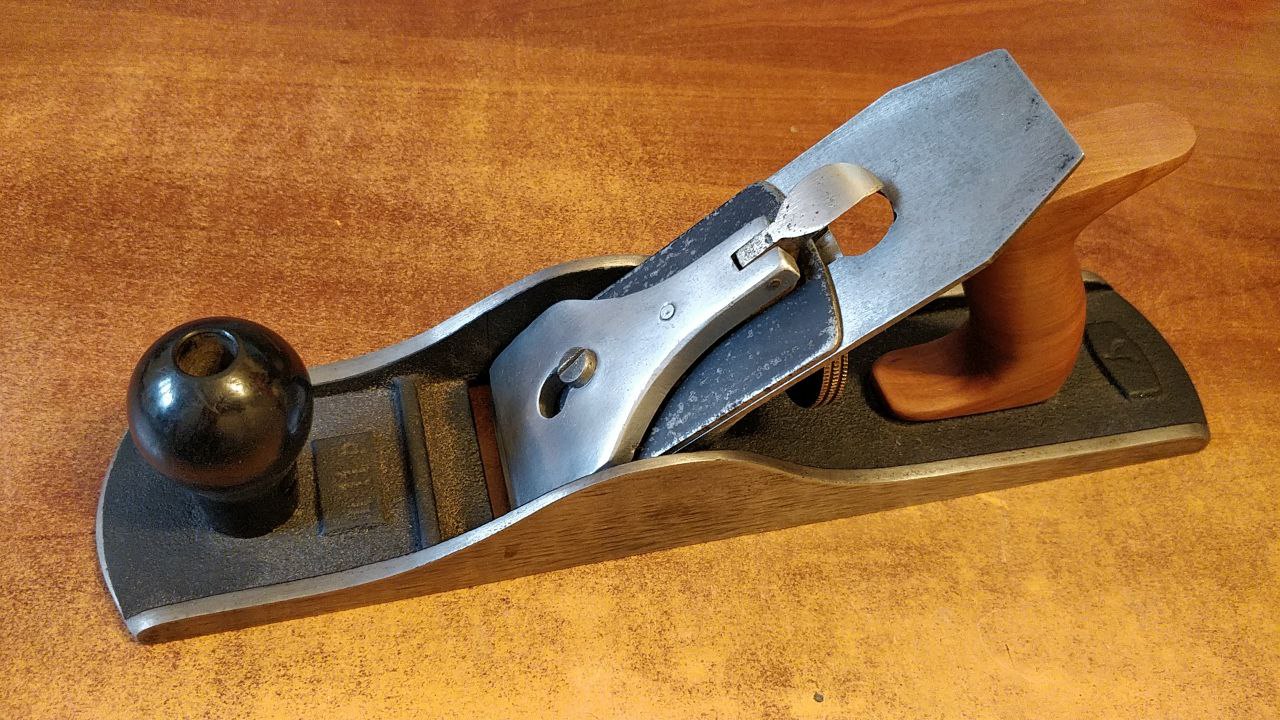
The plane now takes decent thick shavings. The chip breaker certainly works. However, it is only good for scrub or fore plane use. The donor was too short to make a chip breaker good for smoothing. One major improvement this plane needs is the wooden knob to match the tote. Otherwise, it is good to go.