 DIY Blog
Wannabe Stanley #40 Tote
28 Jul 2022This replacement tote for the old scrub plane turned out surprisingly well. This is my second tote project, so it was easier to make than the first. Still, not everything went as planned. I am yet to make another tote (a replacement for my Stanley #6), so hopefully next time it will be even better.
I start by preparing the blank. Drilling a long accurate hole without a drill press is hard, and I've already ruined one blank with inaccurate drilling, so I do that first. This time it works out fine, and for the next time, I've got an extra long drill that will be much easier to guide.
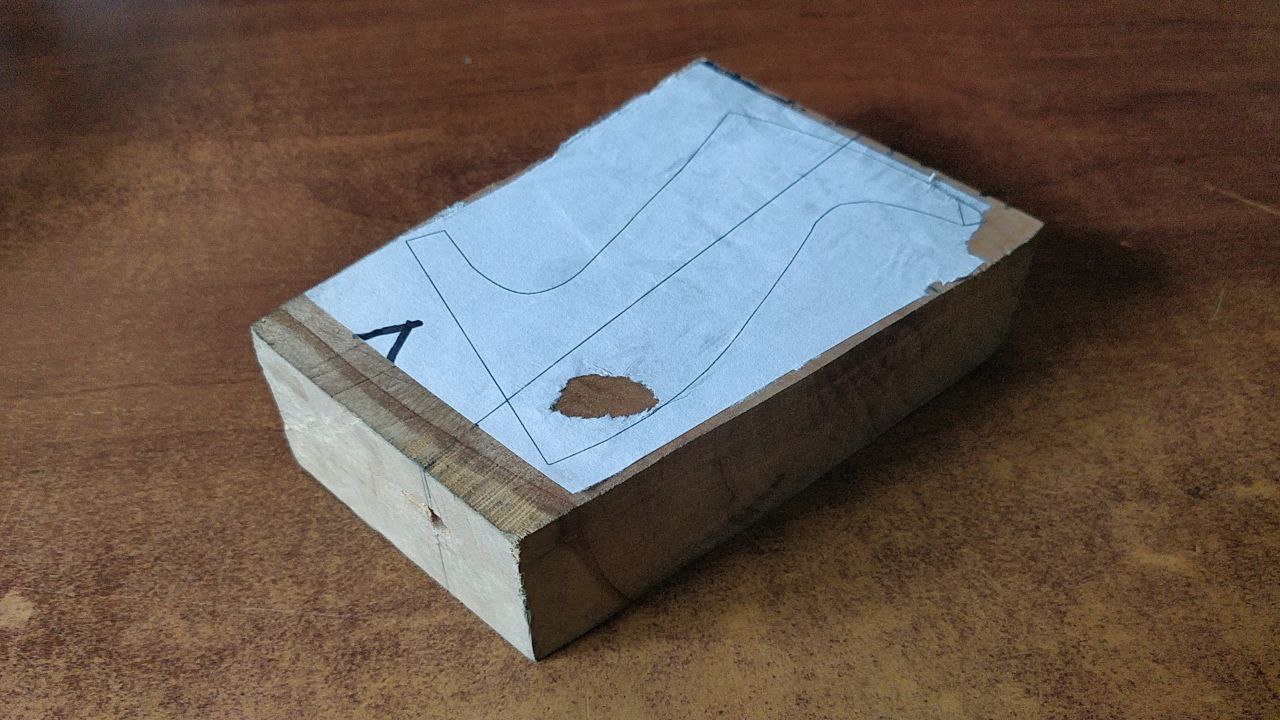
I attach the template with PVA glue (and eventually regret doing so because the glue soaks into the wood).
The template is located in such a way that only heartwood is used. There's a bit of sapwood visible towards the bottom end of the blank. At least I think it's sapwood. There is a sharp transition between heartwood and sapwood here, and it's not something I'd like to have in the final product. Sapwood is only a little bit softer than heartwood in this board, but the transition is weak - it just peeled on me along the line when I was experimenting with offcuts before.
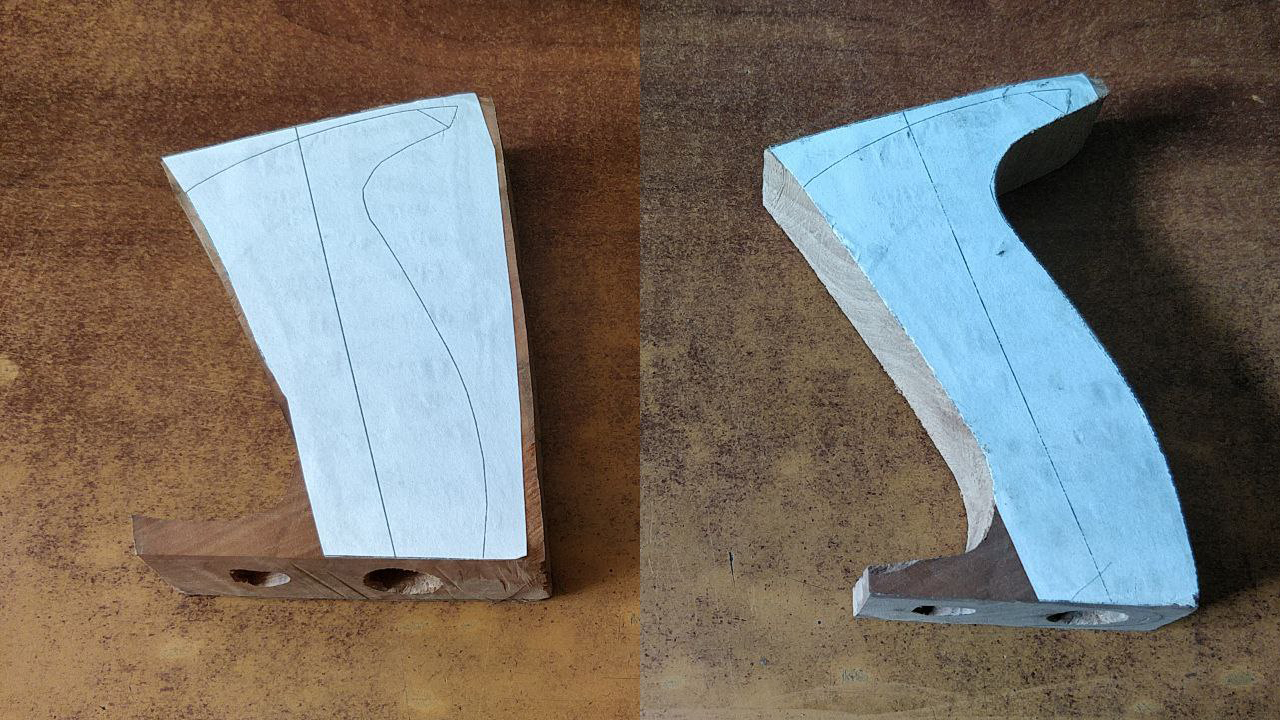
I make some rough cuts with my electric jigsaw and instantly regret that too. Curved jigsaw cuts in thick boards are never perpendicular. I take too much off one side towards the bottom of the tote. It turns out OK in the end, but still, the allowance is too small for my comfort. Next time I might consider doing the curves with a drill and then connecting them with straight cuts with a handsaw.
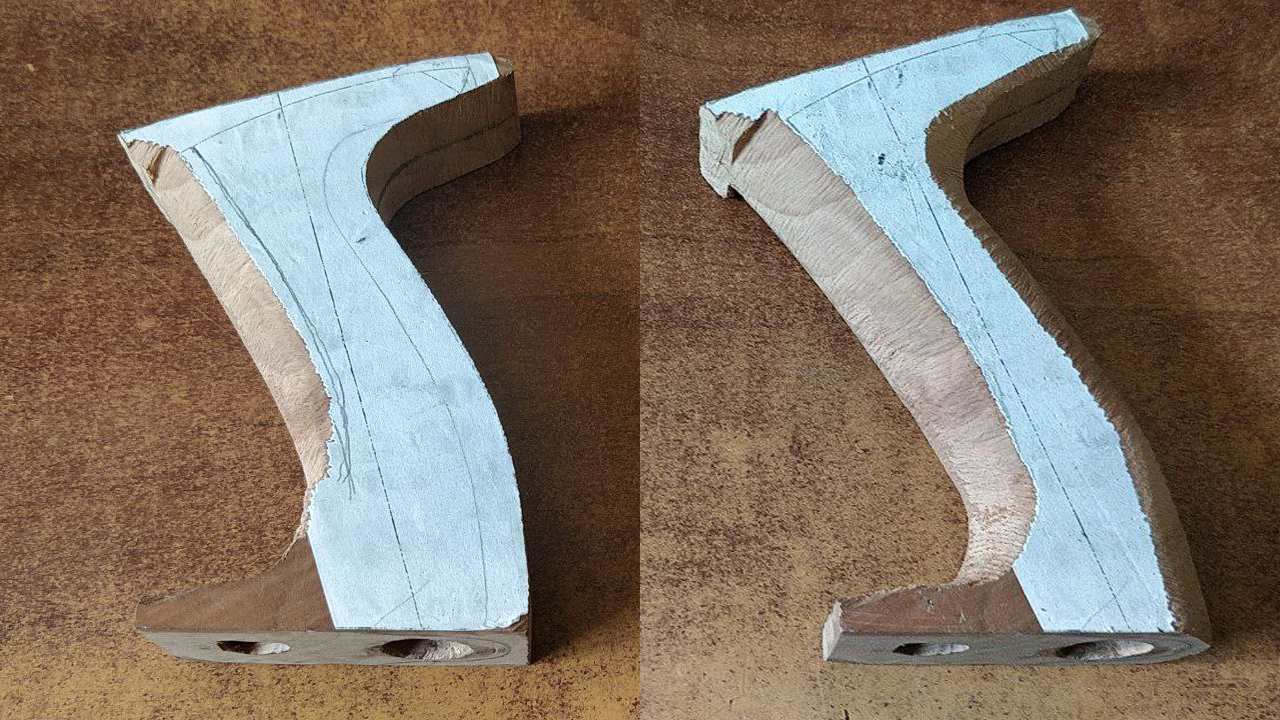
I have intentionally drilled the hole off-center so that if it was not perpendicular, I could still save the blank by removing wood to make it perpendicular and centered. Fortunately, this hole is straight. All I need is a resawing cut with my handsaw so that the hole is in the middle of the board. Having rough-cut the blank, I grab my rasp and work to the line. No rounding over yet.
Since the bottom of the blank is pretty much done, I can now open up some cavities to match the bosses on the cast iron body and fit the blank to the body for the first time.
This is when I realize why handles are attached to bodies with threaded rods and nuts as opposed to just bolts. The bolt sits on the little shoulder inside the tote, and it's hard to locate that shoulder precisely. The bolt needs to be of the exact length, while the threaded rod/nut combination is adjustable. Since there are only about six M6⨯1 threads in the body, and I'd like to engage 3 to 5 threads, the bolt needs to be within ±1 mm of its target length. They don't make bolts of that length, but I just shorten a standard bolt to be exactly as long as I need it to be, and interchangeability be damned.
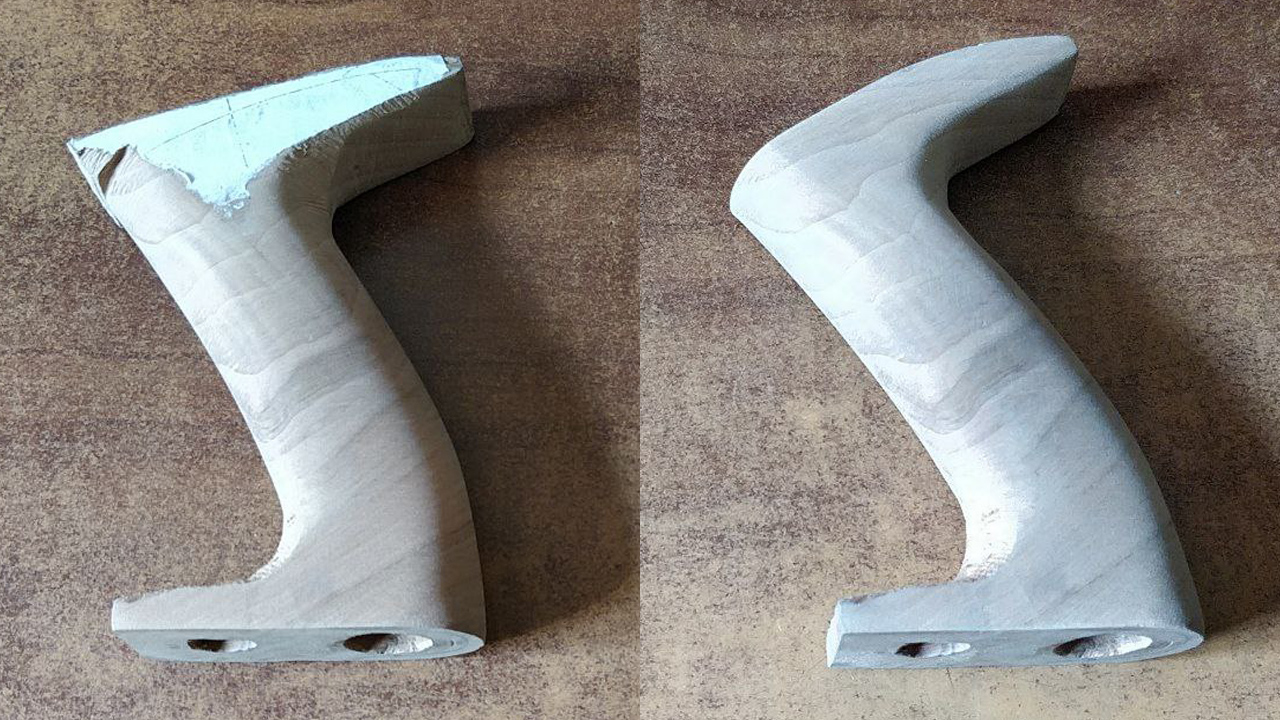
With my mounting hardware issues solved, I grab the rasp again and begin rounding over the blank. The rasp removes material incredibly fast. Last time I also used files, but this time it's mostly rasp and then 100 grit sandpaper on a padded sanding stick. This is when I notice that PVA glue has penetrated the wood quite deeply, and I need to sand it off lest it interferes with the finish. Live and learn.
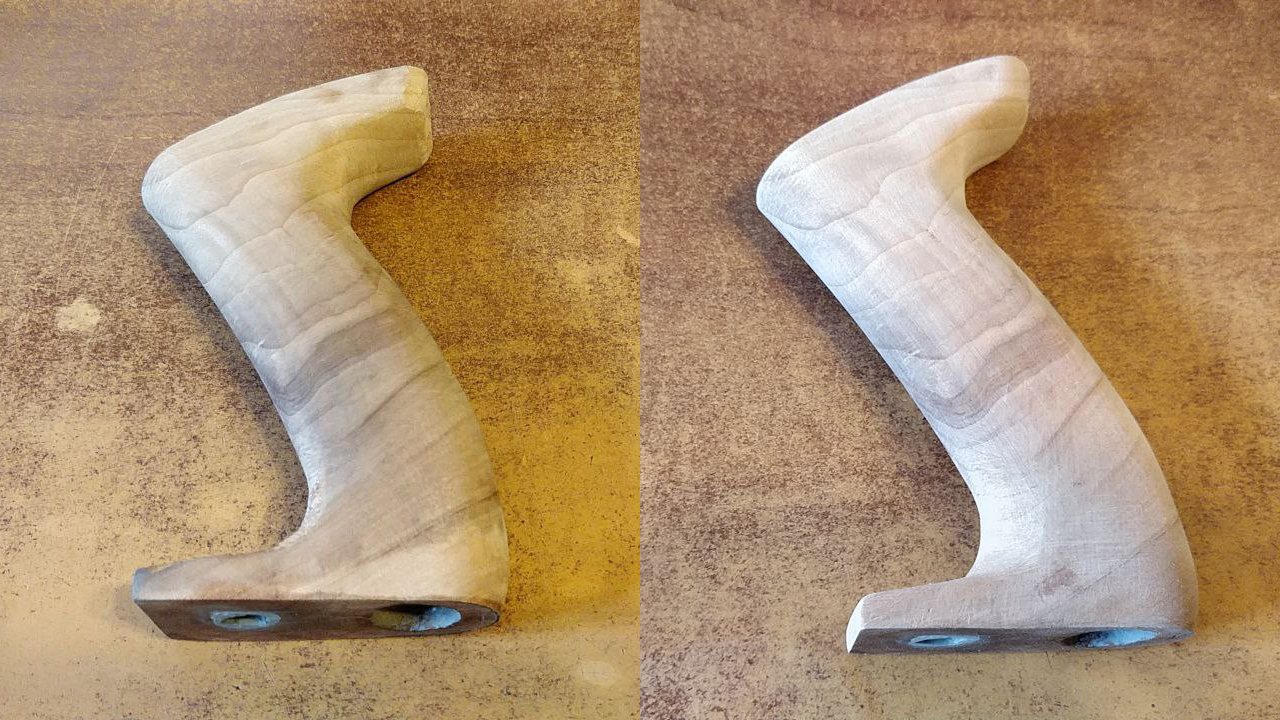
I could have used the rasp to shape the top surface of the horn, but I choose not to. It's too delicate, and there needs to be a sharp angle. So I cut the excess off with a saw, then chisel away the rest. By this point, the paper is gone, and with it the line, but I just cut it by eye.
I also use some epoxy filler to make the handle fit the cast iron body perfectly. I still use lithium grease as a separator, but this time I just put on lots of it, and it turns out fine.
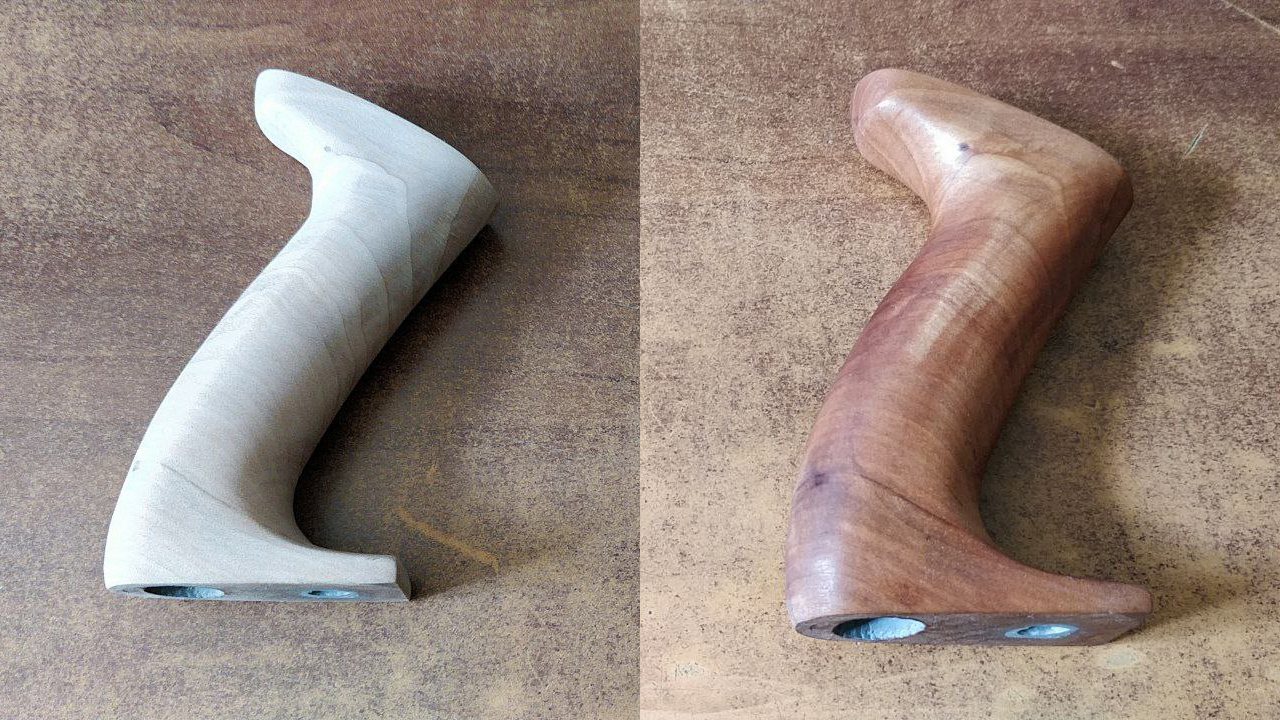
I sand the tote all the way up to 320 grit, trying to sand with the grain where I can. I then apply some oil-varnish blend, and this is when the wood reveals its beauty for the first time.
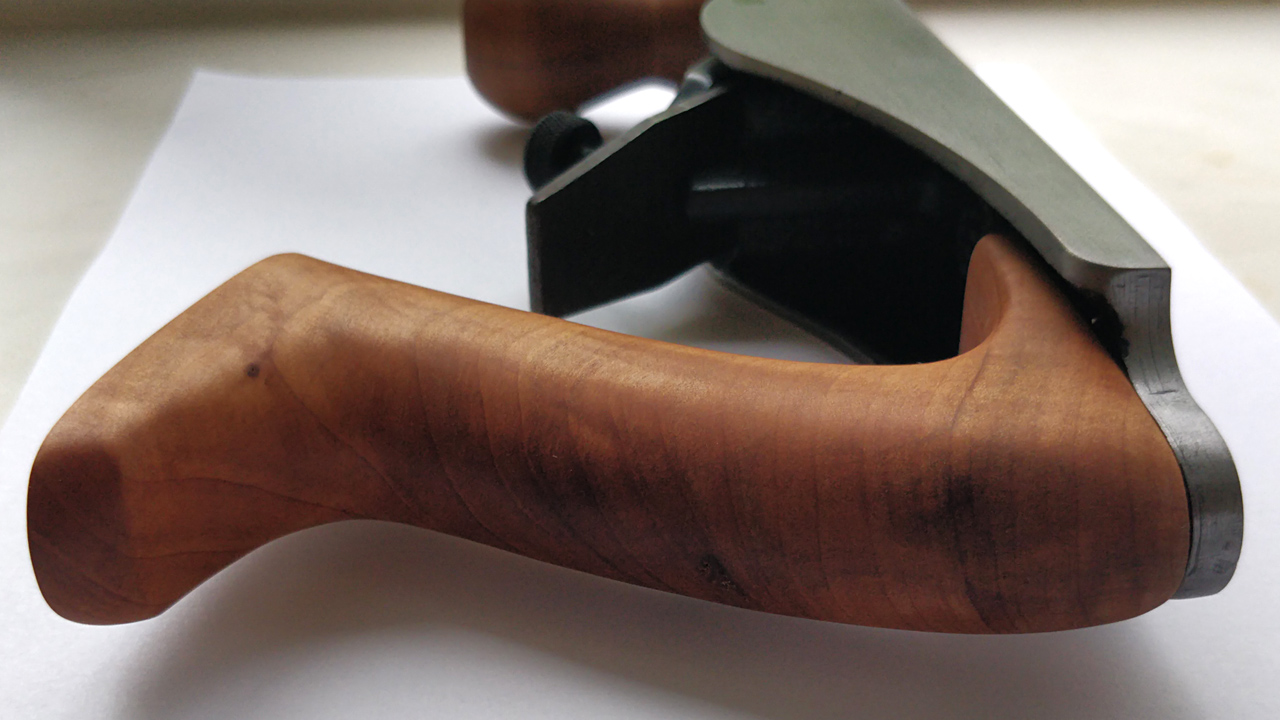
I will probably add another layer of oil, then buff it with wax. But for now, the tote is good.
Lessons learned
- I need to improve how I drill long accurate holes. Perhaps my extra long drill bit will do a better job next time.
- Attaching the template to the board with PVA glue was a bad idea. I shall use rubber glue next time, as it can be just rubbed off.
- I either need to improve my electric jigsaw technique or use a different tool altogether. Perhaps a coping saw. Or maybe drill out the big curves with auger bits and then make straight cuts with a handsaw.
- I really like how the handles can be easily assembled and disassembled with internal hex bolts. Sure, brass heads are pretty, but I am not at the point where I can make my own, so these bolts will do. They need to be trimmed to the exact length, but that's easy enough.
- Apple is a pretty wood, and even more so with an oil finish. Excellent material for handles!