 DIY Blog
Wannabe Stanley #40 Body
21 Jul 2022I am slowly working towards refurbishing my "Wannabe Stanley #40" plane. There are some definitive improvements to the body: it's cleaned up, painted, and a part is replaced. Some things turned out well, some not so well, but I'm calling the body done.
As I already mentioned before, the casting was quite gnarly. Cast iron is easy to file, so I was able to make the rims nice and clean. I filed down quite a lot at the heel of the plane. Fortunately, I was not working to any exact dimension, so I filed it until the heel looked good with flowing curves. It is now narrower than before, and not perfectly symmetrical, but that is not an issue. I am still to make the tote, and the tote can be made to fit the body.
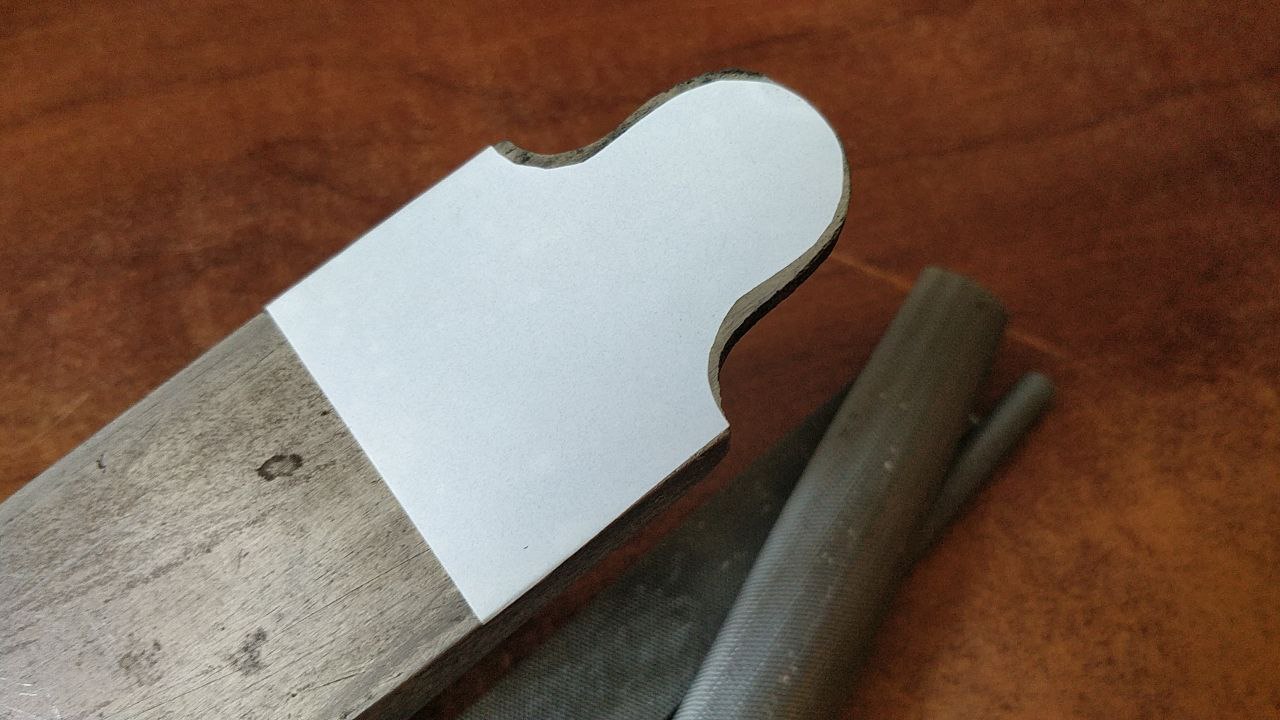
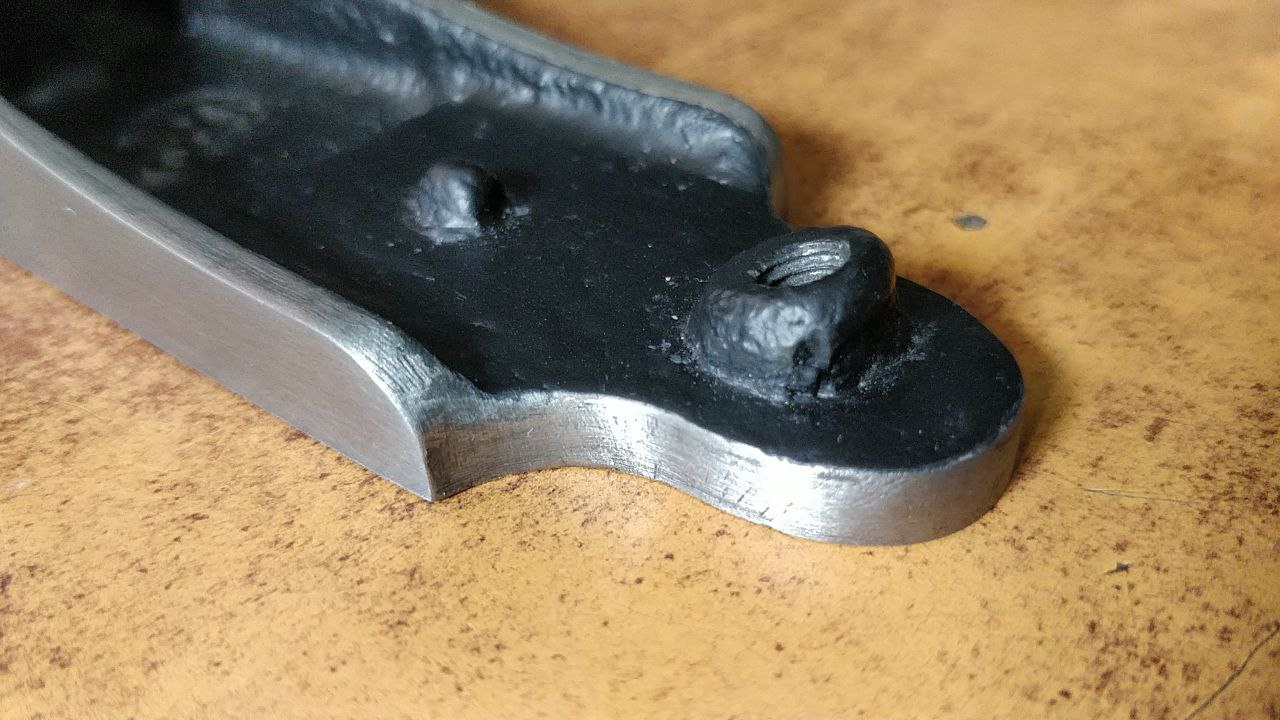
The plane is designed with a screw cap, and for it to work there is a rod that the cap pivots around. The original rod was rusty and bent, so I decided to replace it. While the rod is screwed in and is potentially removable, that is rarely necessary. For this reason, I just took a long bolt, screwed it in all the way, and then cut off its ends. I proceeded to file and then sand the bolt flush with the cheeks of the plane. Now the only way to take out the rod would be to grab it with pliers and rotate it, but I'll never need to do that anyway.
Sanding cast iron is proving to be my least favorite part of hand plane restorations. Sanding produces this fine black dust that gets everywhere. To make matters worse, the dust reacts with moisture in the air and rusts. Filing is marginally better, but even then it produces both larger filings and finer dust. Oh well.
Fortunately, this plane is for rough work only, so there's really no need to lap its sole against a flat surface. Neither does it matter if the cheeks are perpendicular to the sole, as it will never be used for shooting. Because of that I could just grab my powerful belt sander and sand the sole and the cheeks. The surface might not be perfectly flat, but it's reasonably clean. For bonus points, the ends of the rod get sanded flush with the cheeks.
The paint job is straightforward: masking the cheeks and the rims, priming, and painting. Excess paint is sanded off from the rims. I've filed the bed where the blade sits, just to make sure it is straight. As straight as the file is, anyway.
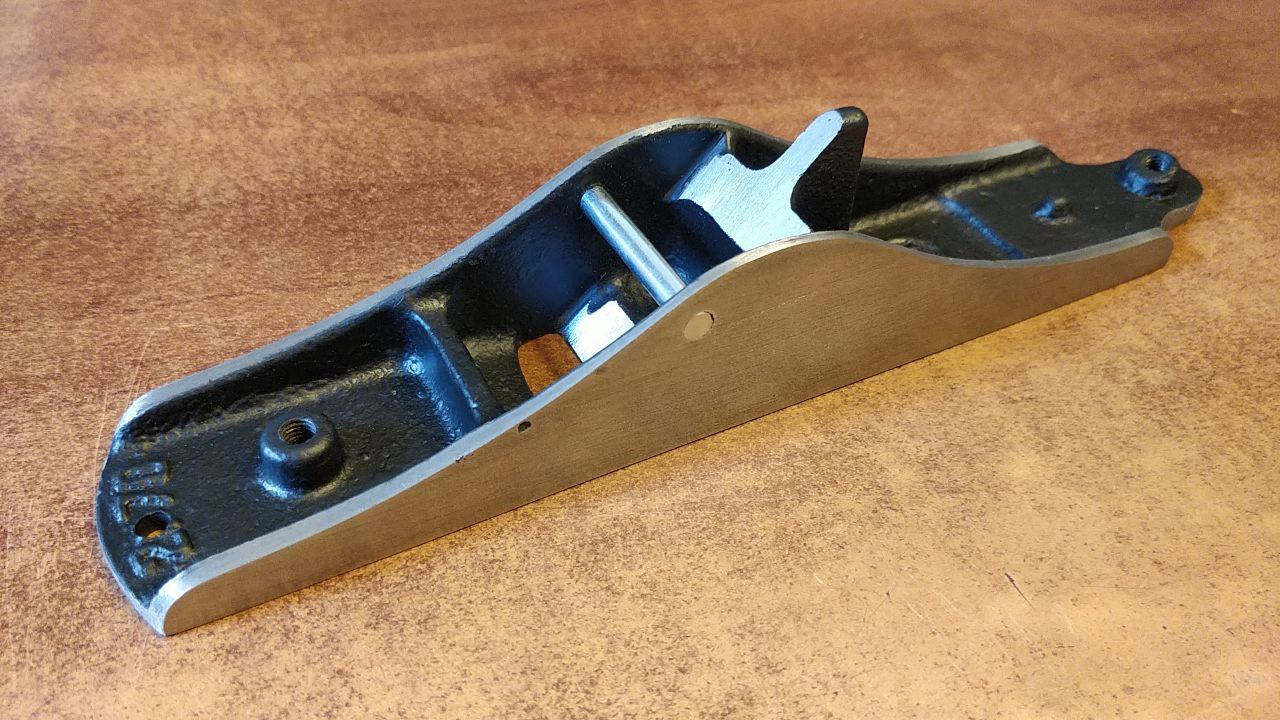
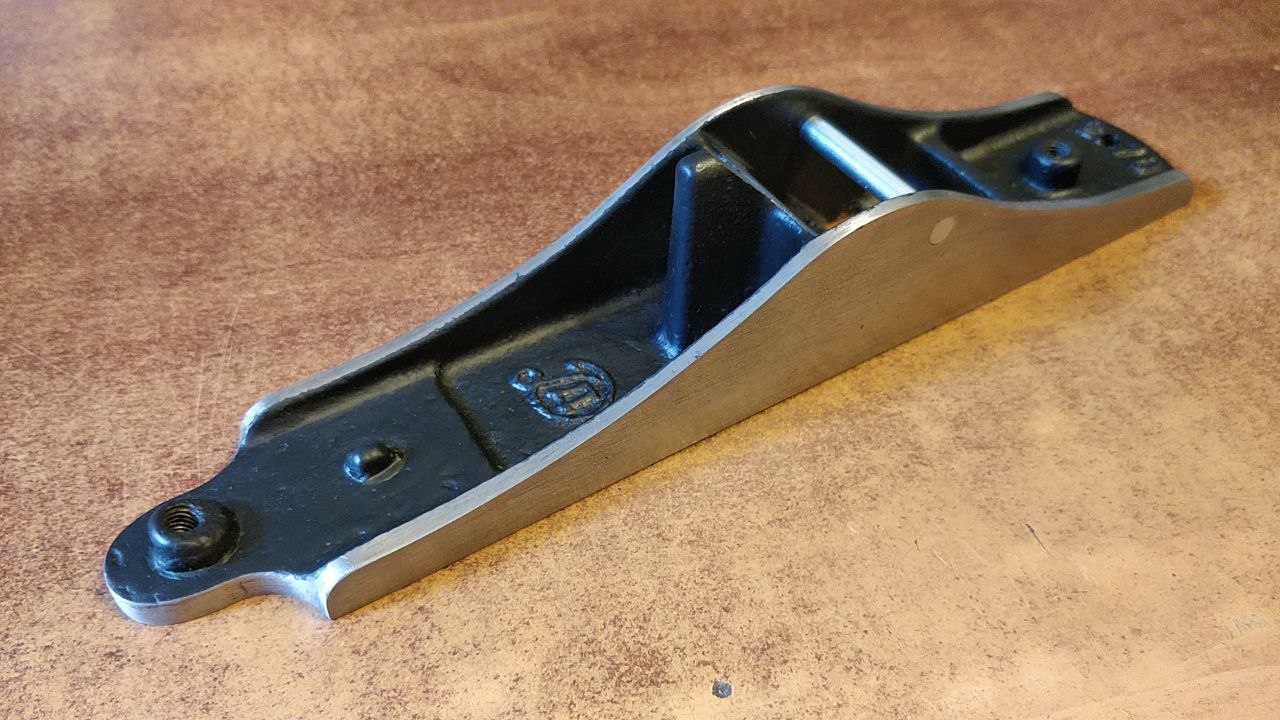
I was considering filling the hole in the casting that the original owner had drilled out. I had the option of filling it with a piece of iron and peening it on both sides, or using some epoxy filler, or even cutting off the part of the plane with the hole, making it slightly shorter in the process. In the end, I decided to just leave the hole be. Once this project is done, I'll see if I even want to have a scrub plane. If I find it useful, I just might get a similar plane with a better body casting to restore.
The other issue with this body that bothers me is that the area under the tote is not flat. I tried filing it flat, which is quite hard with the little boss in the way. I tried flattening it with some epoxy putty. No matter what I did, I could not get it to be flat. Perhaps I'll add some rubber gasket to the bottom of the tote to make it sit firmly.
The body is restored but there's still work to be done on this plane. The screw cap needs to be cleaned up, and the handles are not ready yet. Still, progress has been made, and here I am, recording it.