 DIY Blog
Fitting Totes to Planes
09 Jul 2022Every used plane I bought came with a wobbly tote. No surprise there, as the tote is probably the most stressed part of the plane during its normal operation. And unlike the wooden planes of old, where the tote is often tenoned into the body providing tremendous mechanical strength, the modern tote is attached with two screws at best.
It all comes down to what actually holds the tote in place. Typically, it's the friction between two planes: the wooden bottom of the tote and the painted cast iron surface of the plane body. And it feels like it's not enough.
As long as it is possible for the tote to rock in place, it will eventually come loose. The solution? To make it sit firmly!
Stanley #4
This #4 had been the first hand plane I'd restored. The tote was held with just one long screw. The little nub in the body was designed to mate with the cavity in the tote to prevent it from rotating sideways.
The fit of this nub to the tote was probably not very snug to begin with, and over the years it got even looser.

Two-component epoxy filler to the rescue! I enlarged the cavity a bit and filled it with epoxy. I then covered the plane body with lithium grease and pressed the tote against it. There was a little bit of squeezeout, but having removed it, I got the handle to sit perfectly.
It is obvious that I need a better separator than grease, as some of this filler got stuck to the matt black paint of the body. I could not clean it up after the fact, but at least it's concealed under the tote.
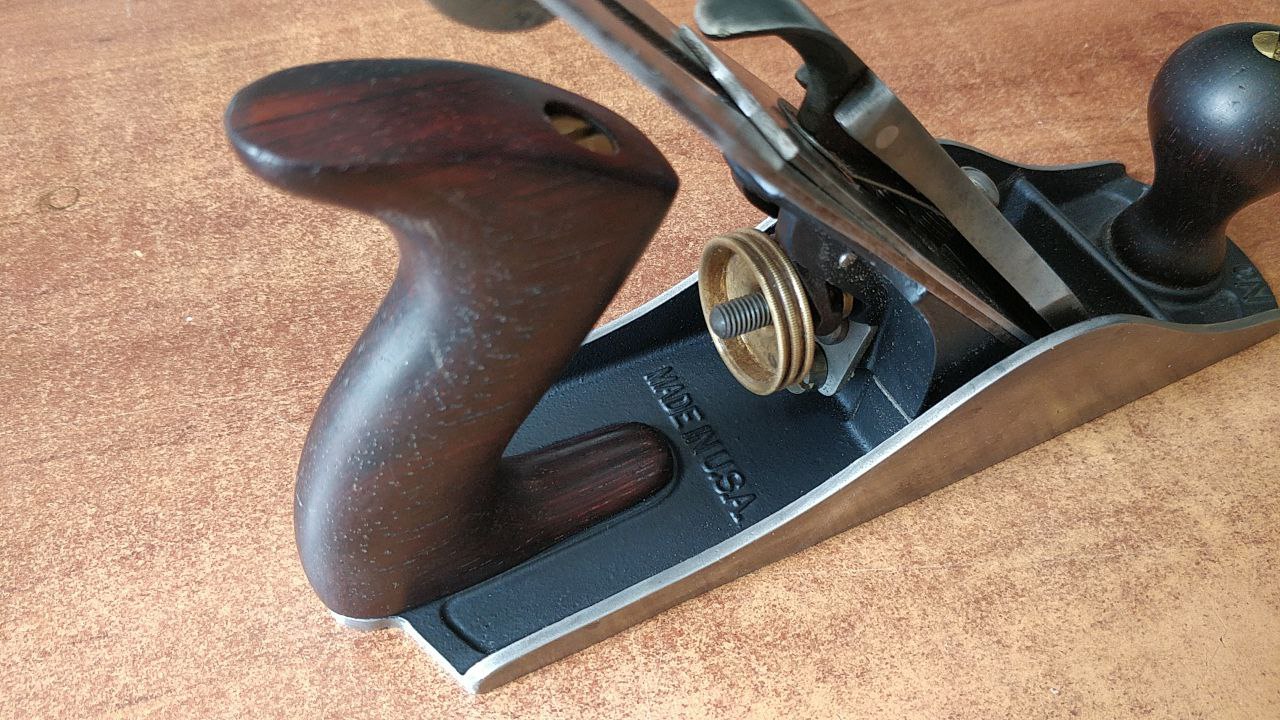
As for the cylindrical part, I packed it with some rubber. With that and the filler, the tote sits very firmly, and there is no need to overtighten the screw.
Stanley #5
The tote on the #5 was obviously bigger and was held in place with two screws. There was also a big hollow in the plane body right under the tote, and I used that hollow as a mortise to secure the tote in place.
I needed to make a matching tenon in the tote to mate with the hollow in the plane body. I started by making a shallow recess in the tote's bottom.

I then made a stub from a piece of maple that would fit the recess. Any reasonably hard wood would do, and that was what I had. I guess one could call it a floating tenon. I glued it in with 5-minute epoxy glue.

I then prepared the same two-component epoxy filler putty that worked so well on the #4, applied it around the maple stub, and pressed it into the greased plane body. It worked out just fine, it even filled the tiny letter "U" on the casting.

Once again, grease proved to be a lousy separator, as some of the putty made its way into the microscopic pores of the painted surface, discoloring it somewhat.
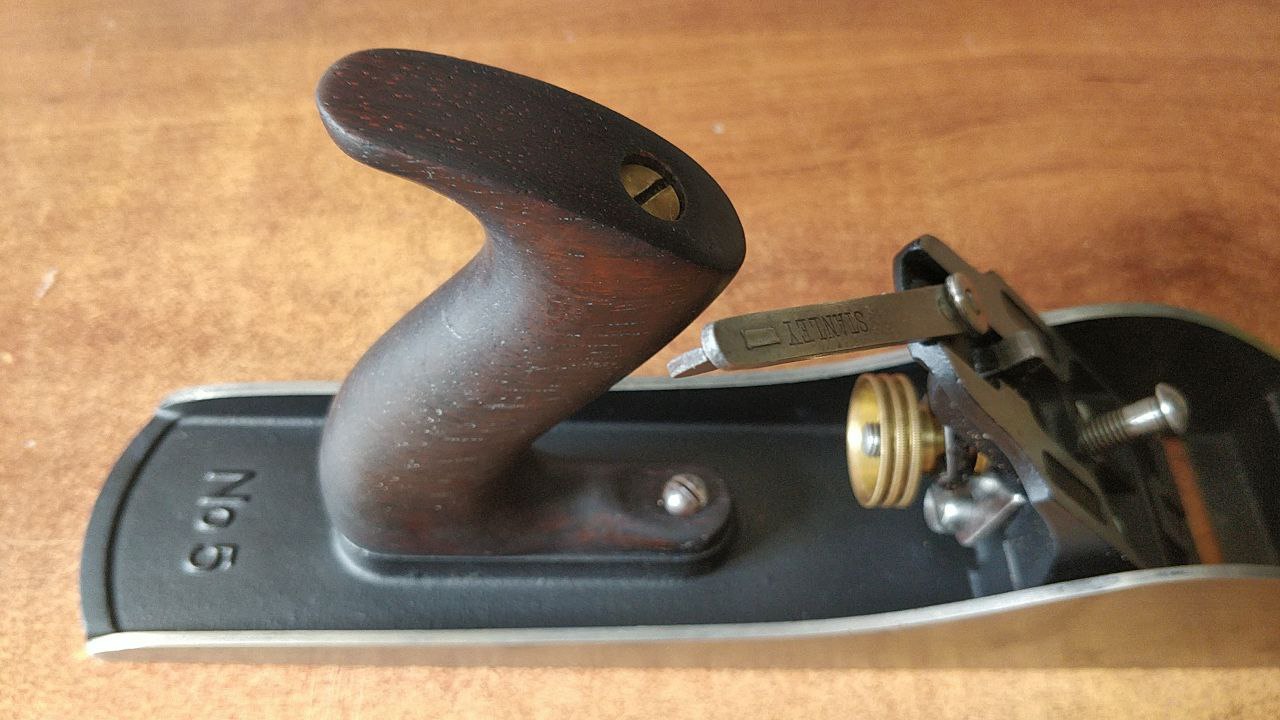
After the modification, it's the molded tenon that transfers the force from the tote to the body. The screws are just there to prevent it from coming loose.
Soviet fore plane
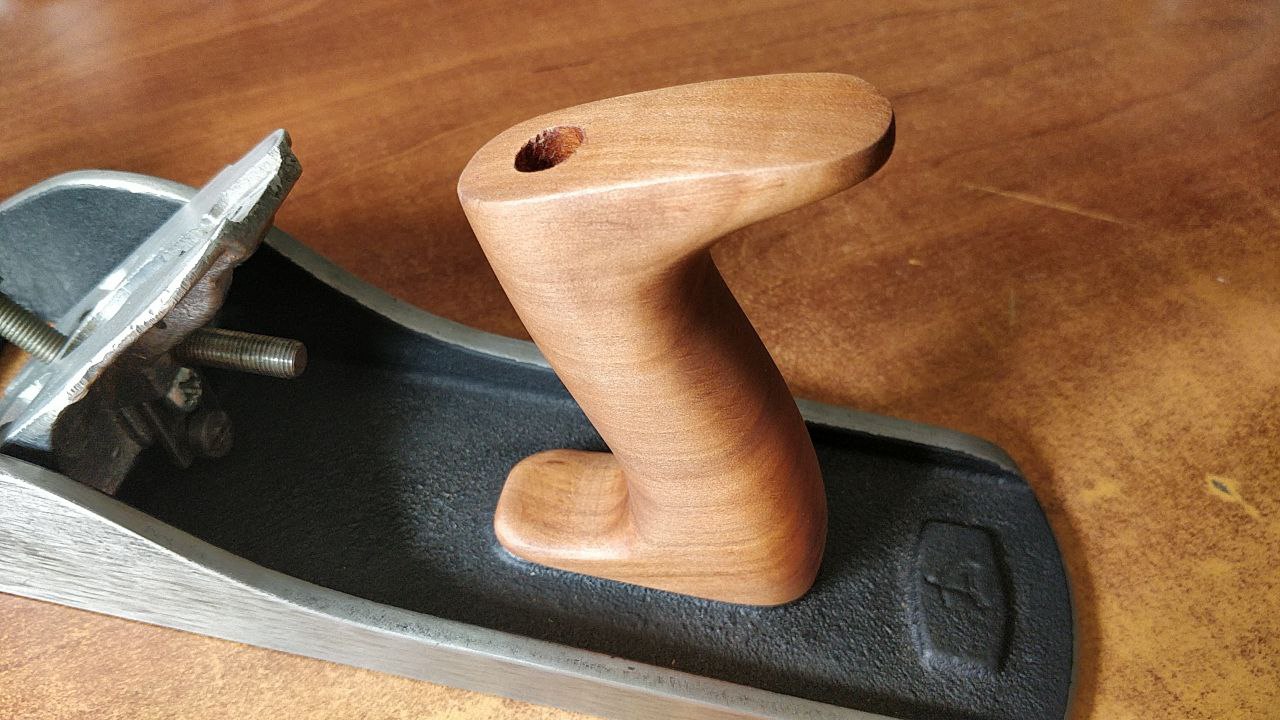
By the time I started the restoration of this bulky Soviet plane, the process had been pretty much established. I actually made the tote myself from apple wood. It was much more practical to make slightly enlarged cavities in the tote, and then fill them with putty, than to perfectly match the wooden tote to the oddly-shaped cast iron body.
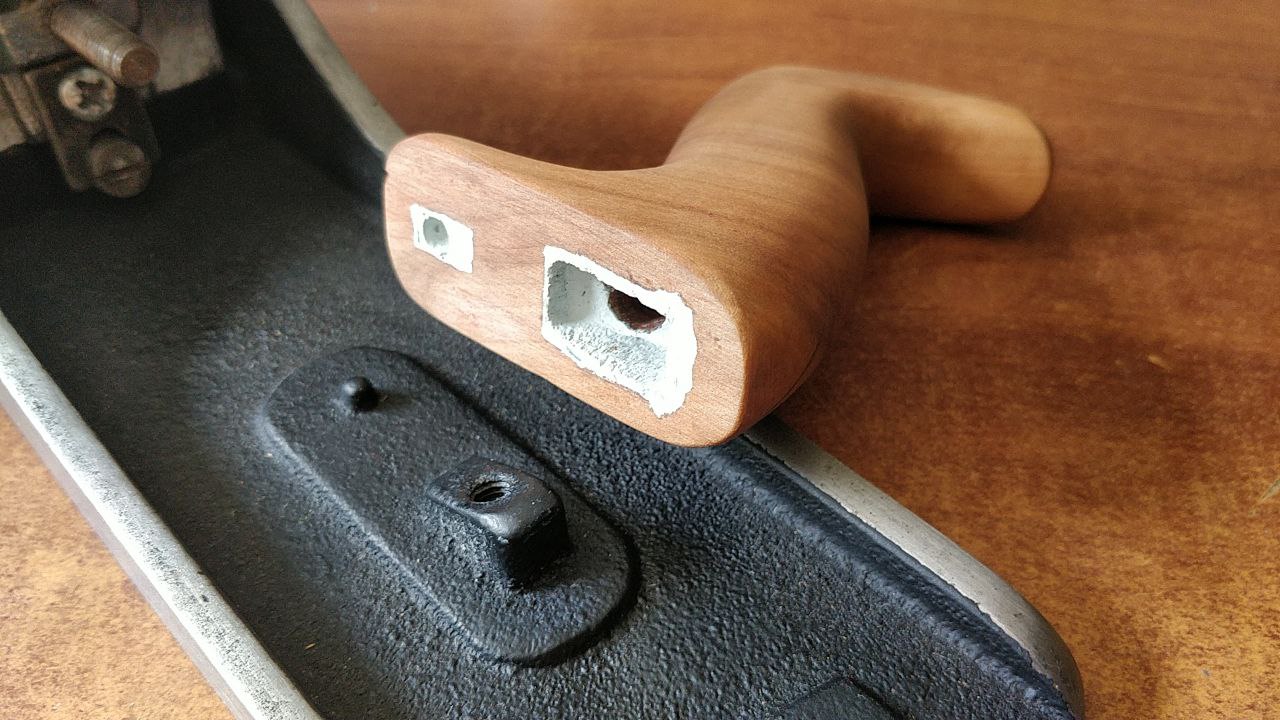
The tote fits well and is much more secure than the plastic original that came with the plane.
Conclusion
Old wooden body planes were often shop-built, and their parts were fitted together as a set. With the industrial revolution came changes.
It's not surprising that modern hand plane handles are now designed for a loose clearance fit because it allows for interchangeable parts with generous tolerance margins. If the handle is wobbly, you just crank down on the screws.
It makes perfect sense to sacrifice this interchangeability, as it vastly improves the plane's performance. In the unlikely event that the handle fails beyond reasonable repair, a replacement can be easily fabricated.