 DIY Blog
Stanley #151 Spokeshaves
02 Jul 2022I've fixed up these two spokeshaves a while ago. The flat-soled one came first, then after a while, I decided to get one with a curved sole. It was supposed to be a cookie-cutter restoration: sandblasting, painting, derusting, buffing or cold bluing, sharpening, assembly. But then I managed to add some excitement to the process by ham-fistedly breaking the blade.
Overview
Stanley used to make two notable spokeshave varieties, #51 and #151. They are identical, except #151 has adjustment screws, and #51 needs to be tapped with a hammer to adjust the blade. Both were available with flat and curved soles. Stanley #151 is still in production, but as usual, I bought vintage pieces in need of being restored.
Restoration
Sandblaster made quick work of old paint and rust.
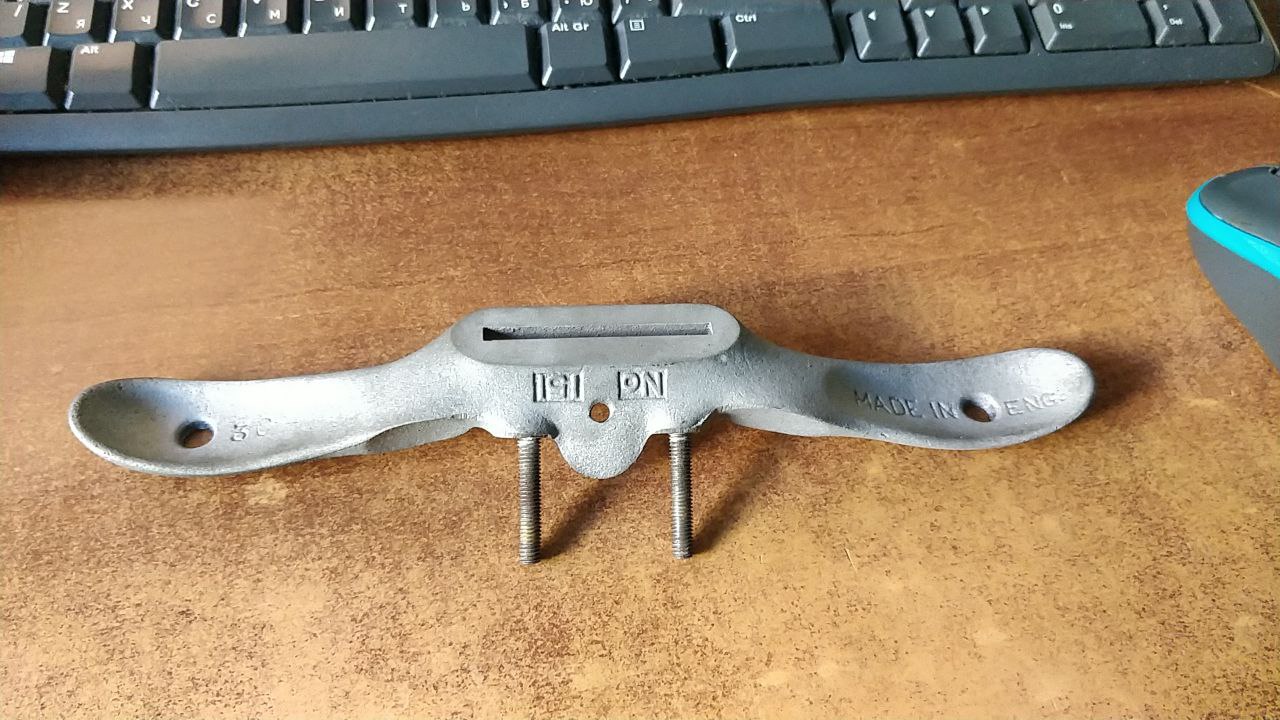
My finish of choice was the usual matte black.
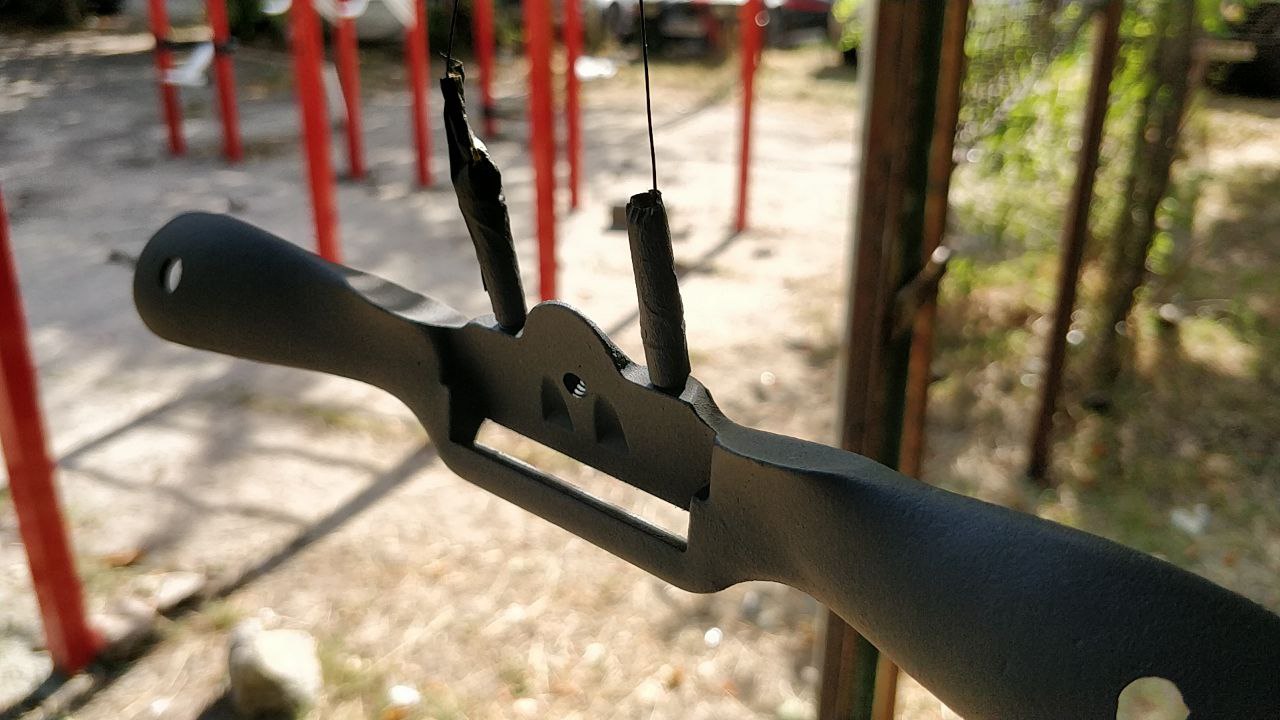
The metal nuts and screws got treated with some cold bluing solution made mostly from selenium dioxide. Same with the threaded rods attached to the cast iron body that I've masked during painting.

I've removed whatever rust was on the screw cap and buffed it up a bit.
The blade disaster
Here is the blade that came with the spokeshave, before I broke it.
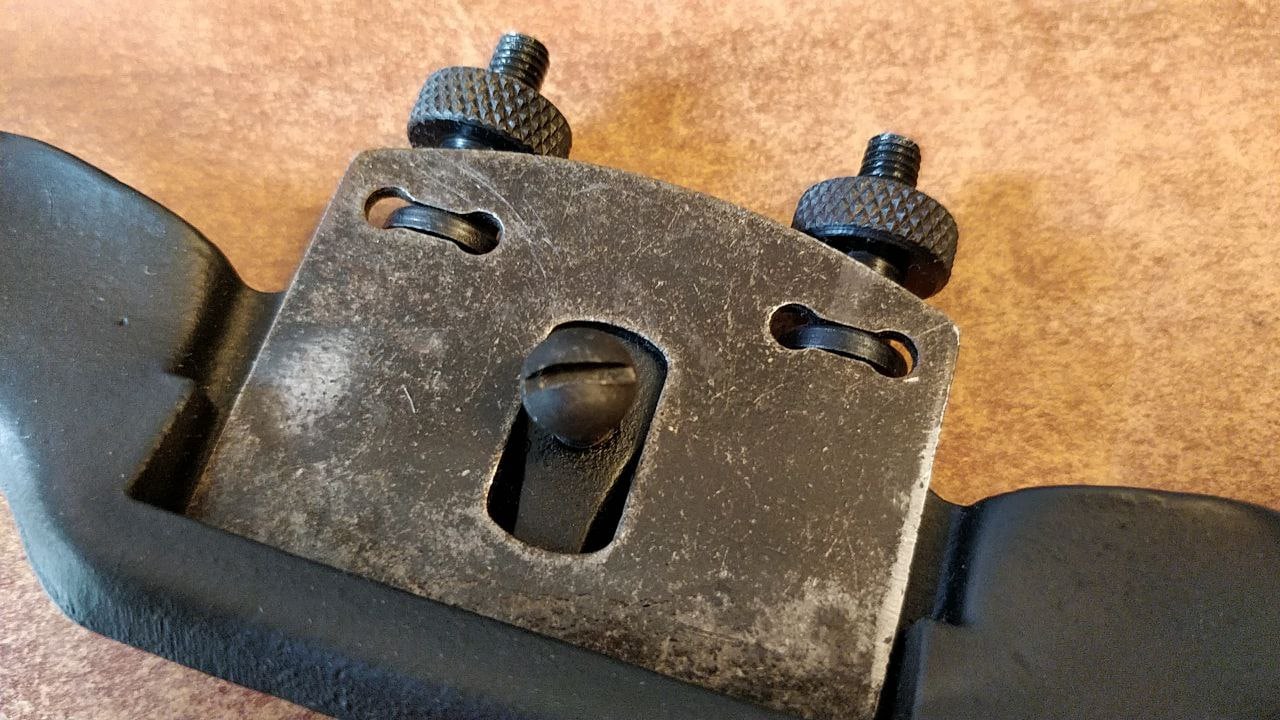
I usually sharpen my blades by flattening the back first. I tried that and quickly noticed how there was a high spot in the middle and low spots towards the edges. In other words, the blade was slightly curved.
That was when I had the genius idea to try and straighten the blade by squeezing it in my vice, using some makeshift fixture to apply pressure in the middle. Of course, the hardened blade snapped. The snapped blade was obviously beyond repair, so I needed a replacement.
Fortunately, I had materials: a fully and uniformly hardened industrial saw blade. Unfortunately, I had no means of annealing, and then hardening and tempering the blade, so I resorted to cutting and shaping the rock-hard metal using diamond and tungsten carbide tools.
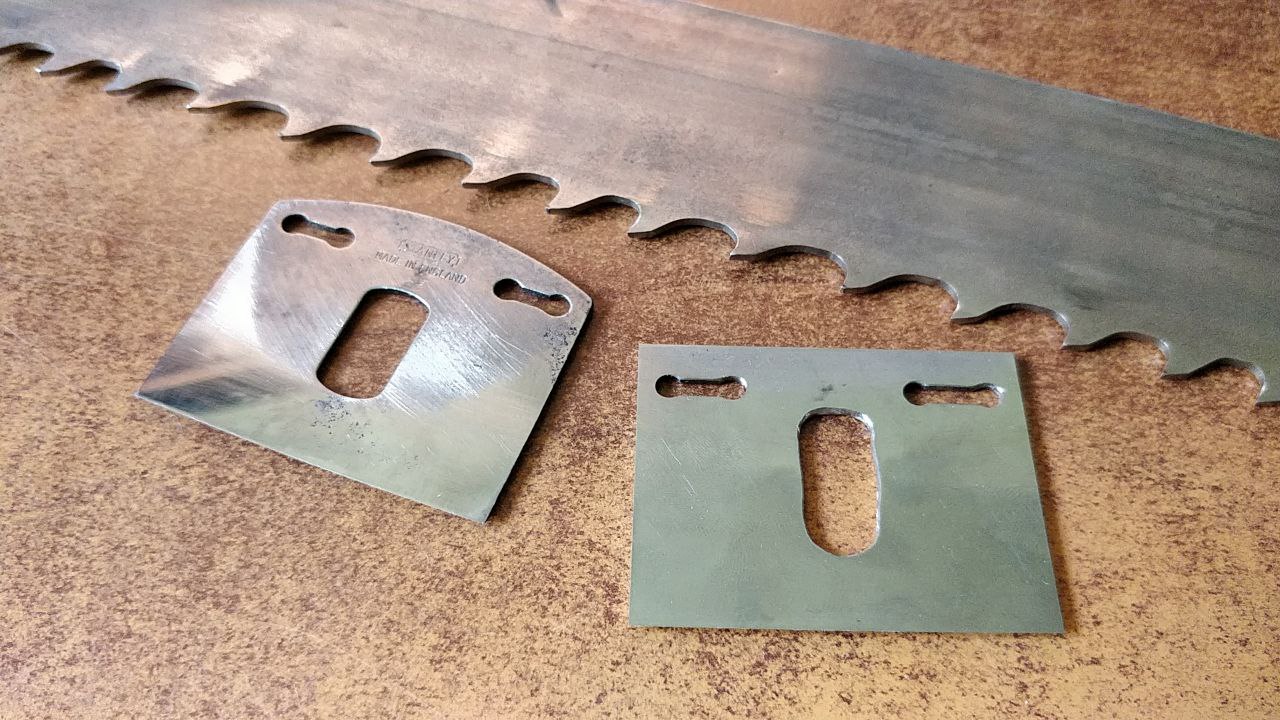
The picture shows the good blade from the other spokeshave (the curve-soled one I got later), the replacement blade I made, and the donor blade that I used.
I drilled a few holes with solid tungsten carbide bits (and of course broke one or two bits in the process). Then I joined the holes using diamond cutoff wheels on a Dremel. At last, I blunted the inside edges using diamond-coated needle files.
It was excruciating but well worth it. The new blade is very hard and retains the edge well. It may not be as pretty as the original, but it works at least as well, and maybe even better.
The result
Restoring the curve-soled spokeshave was easier because I knew exactly what to expect. The blade was straight enough.
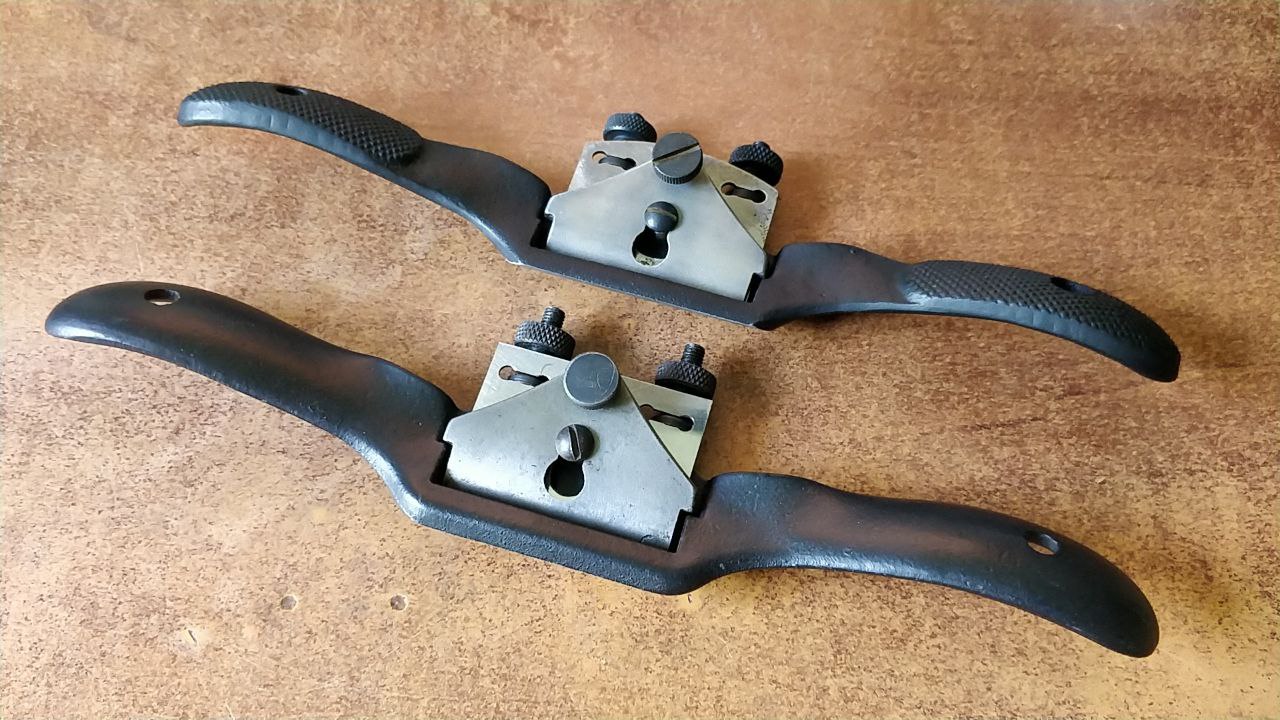
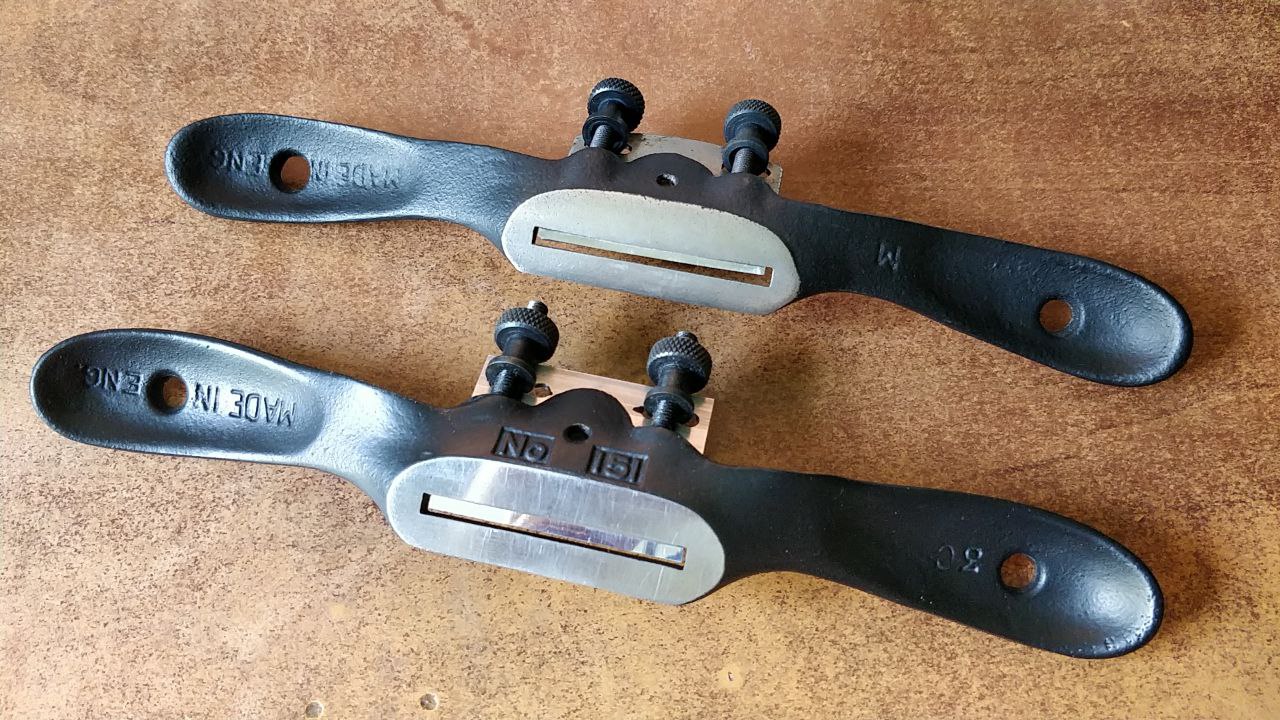
Both spokeshaves are marked as made in England, so I imagine they are the later models, especially the curved piece with the grooving pattern on its handles. If I were to guess, I'd say they were made in the 1980s. They are a useful addition to my toolbox, good for chamfering edges and working on curves and other complex shapes.