 DIY Blog
Stanley #191 Rabbet Plane
23 Jun 2022It all began as the quest for the scrub plane. Others had success converting a Stanley #78 into a scrub plane, so I felt this one could be converted just as well. Fortunately, the only change needed is to camber the blade. But the body and the cap need to be cleaned and restored regardless, and that's exactly what I'm going to do.
Overview
When I got it, the plane was quite rusty, and some screws were stuck. Easy enough to get it apart with some WD-40 and heat.
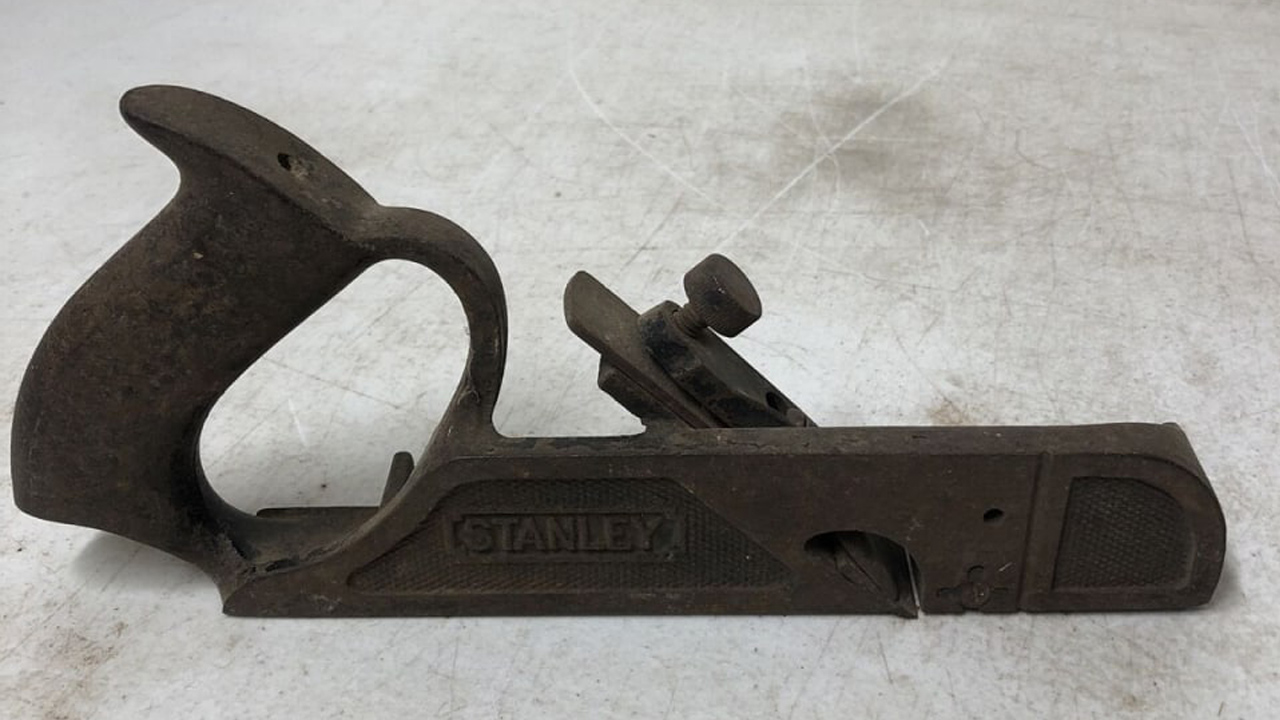
The design is very simple. With no depth adjustment, one would need to tap the blade to advance it. The plane has a spur that undercuts the fibers and allows to make rabbets across the grain. There should be a depth stop, but it's missing. Since I probably will not be making rabbets with this plane, the missing depth stop is not an issue, and besides, one can be easily fabricated from an angle iron offcut.
Apparently, Stanley made the last of these planes in 1962, so it must be quite old. Post-1910, certainly, judging from the screw and the patent date on the casting. It is slightly narrower than the #190, and slightly wider than the #192.
Plugging the hole
The handle of this plane is part of the casting. It is hollow inside and has a little hole on the top and a bigger hole on the bottom. For no reason other than aesthetics, I decided to fill the holes with some putty and sand everything down.

Painting
I masked the body where it was appropriate and proceeded to apply the primer, then some paint.
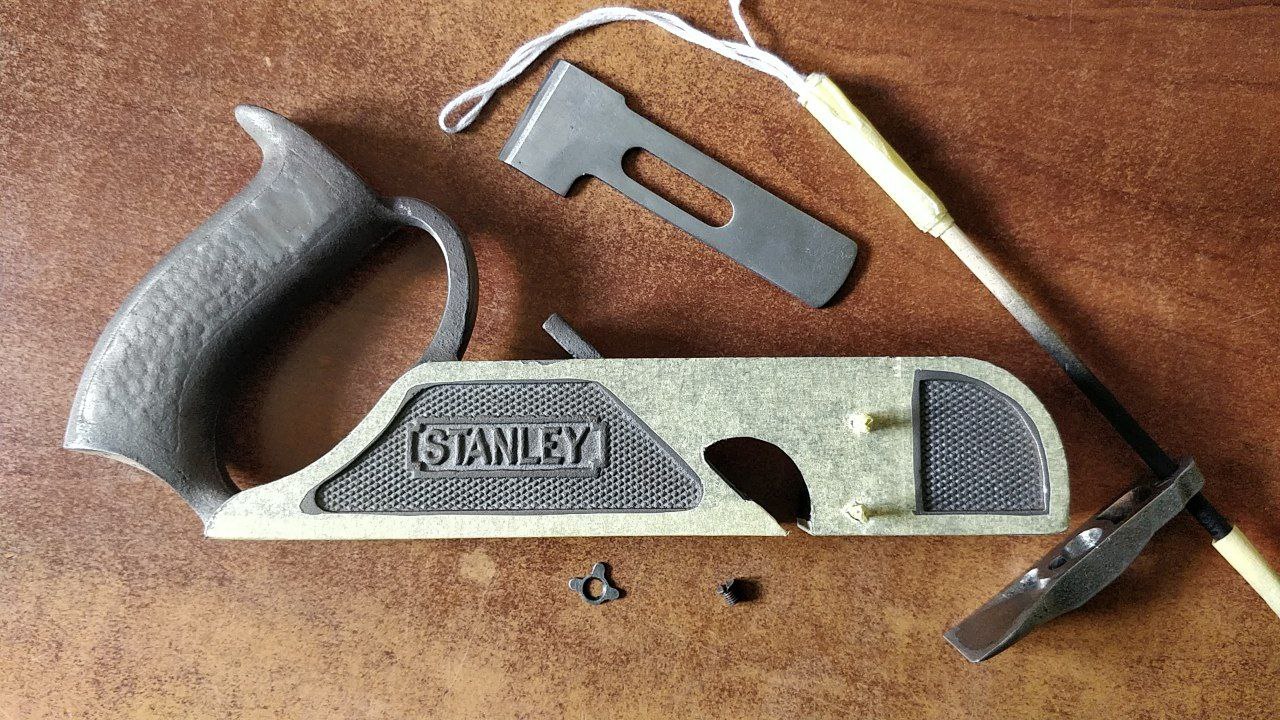
The sides and the sole need to be sanded to make them shiny and remove excess paint.
The blade
The original blade even has the Stanley Works ("sweetheart") logo. There's some life left in it.
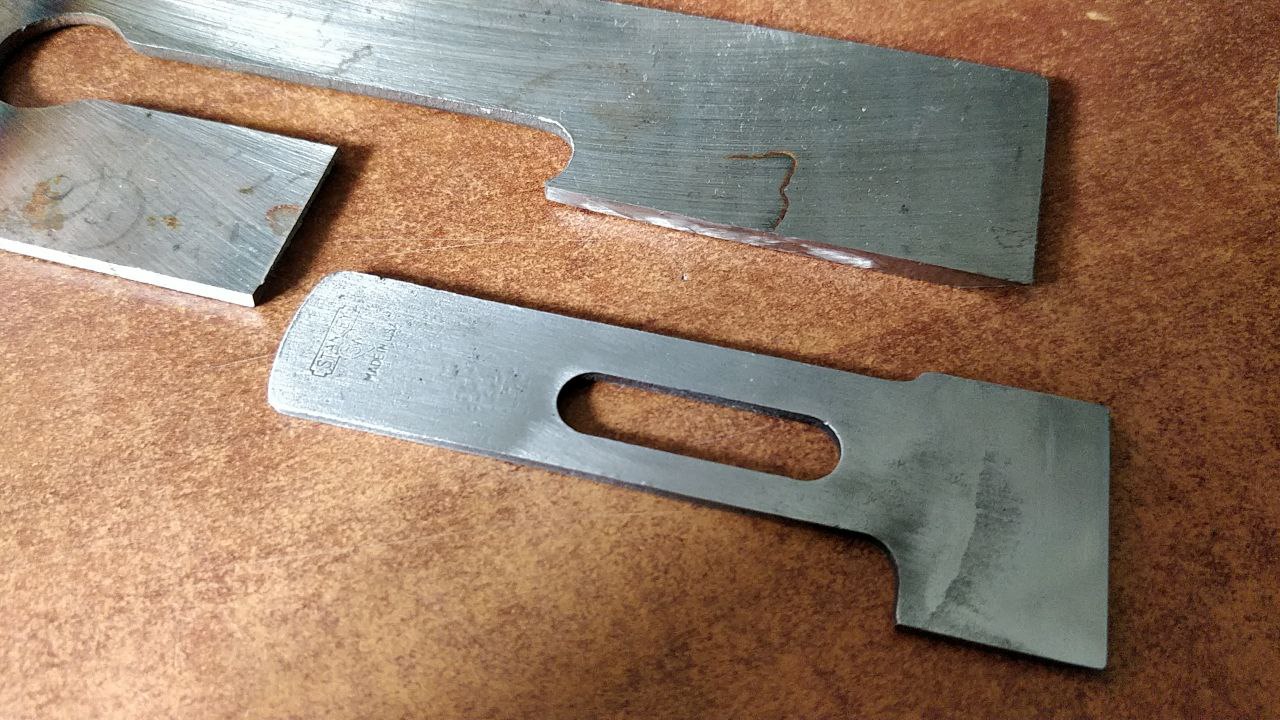
Still, I'm not going to camber the original blade, because I have the materials to fabricate a new blade. There's a chunk of a bigger plane iron and its shape is close to what I need. Also, the material is quite thick.
One complication is that the donor blade is fully hardened, and I am not equipped to anneal it and then harden and temper it. This means I'm stuck with using abrasives for material removal. Not the worst thing, but definitely a challenge, especially the slot in the middle. I'm not doing it now, though, this might become a future project.
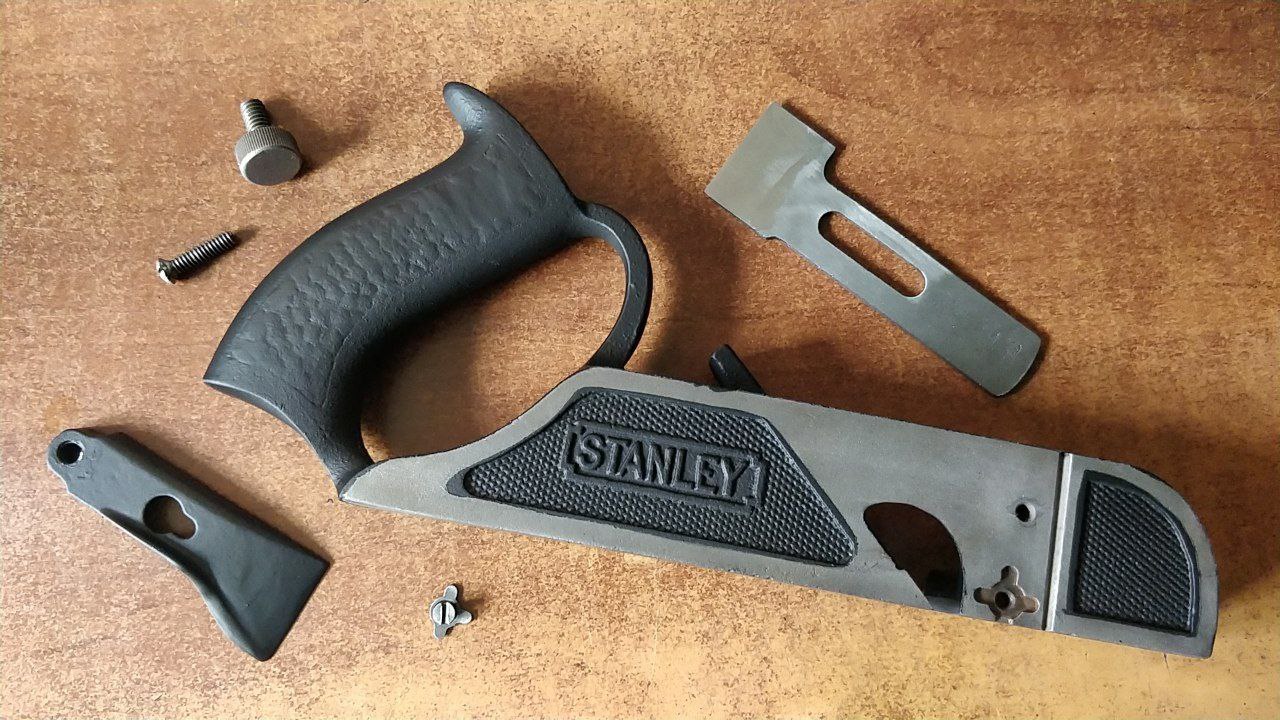
The result
Overall, I am happy with how this turned out.
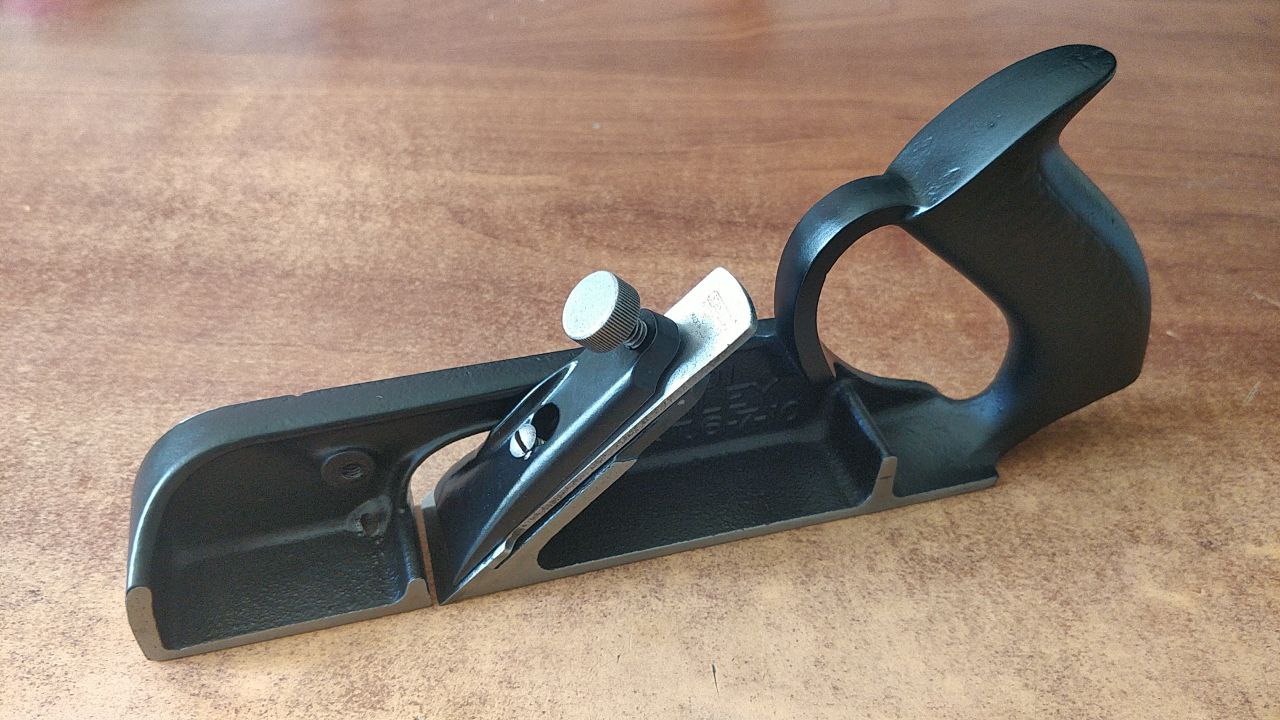
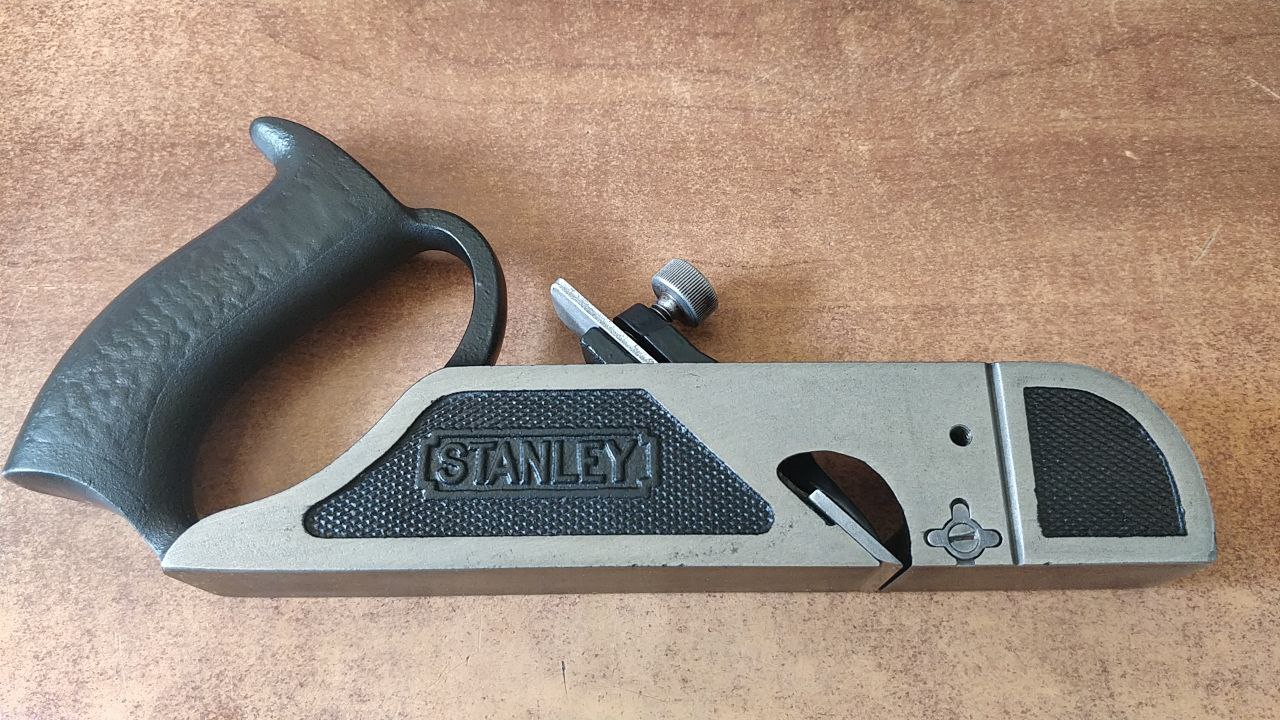
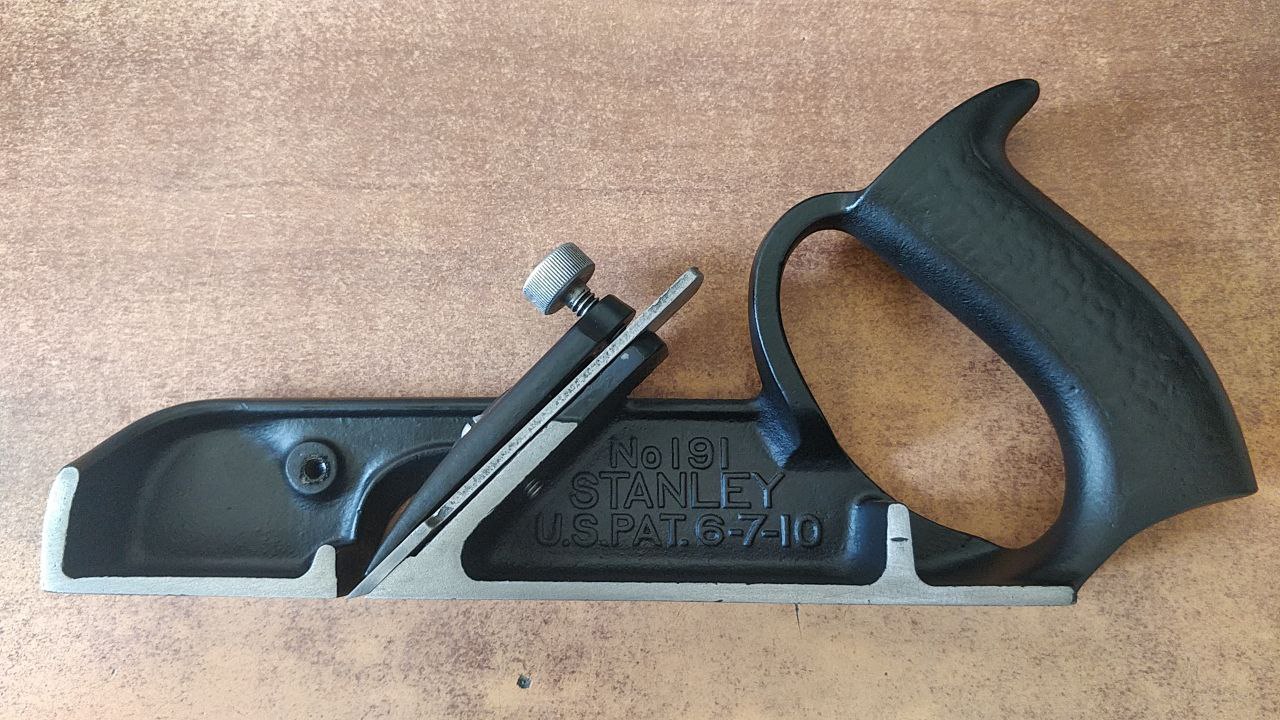
In the future I might make a few upgrades to the plane:
- If I decide to use it as a scrub plane, make the new cambered blade
- If it becomes my rabbeting plane, fabricate the depth stop (and find/make a matching screw for it)
- Sharpen the spur and replace the little screw that holds it (the screw is stripped, I don't want it to get stuck)
But for now, it goes on a shelf until the paint fully hardens.