 DIY Blog
Millers Falls 56B Low-Angle Block Plane
16 Jun 2022No hand plane hoard is complete without a low-angle block plane. I already have a traditional high-angle Stanley #220, but this Millers Falls with its adjustable mouth and bevel-up design was too beautiful to just let it go. It's a peculiar piece with some interesting modifications by the previous owner.
Parts View
The plane was in OK shape to begin with, but I still decided to give it a new paint job. I've derusted and buffed the rest of the hardware.
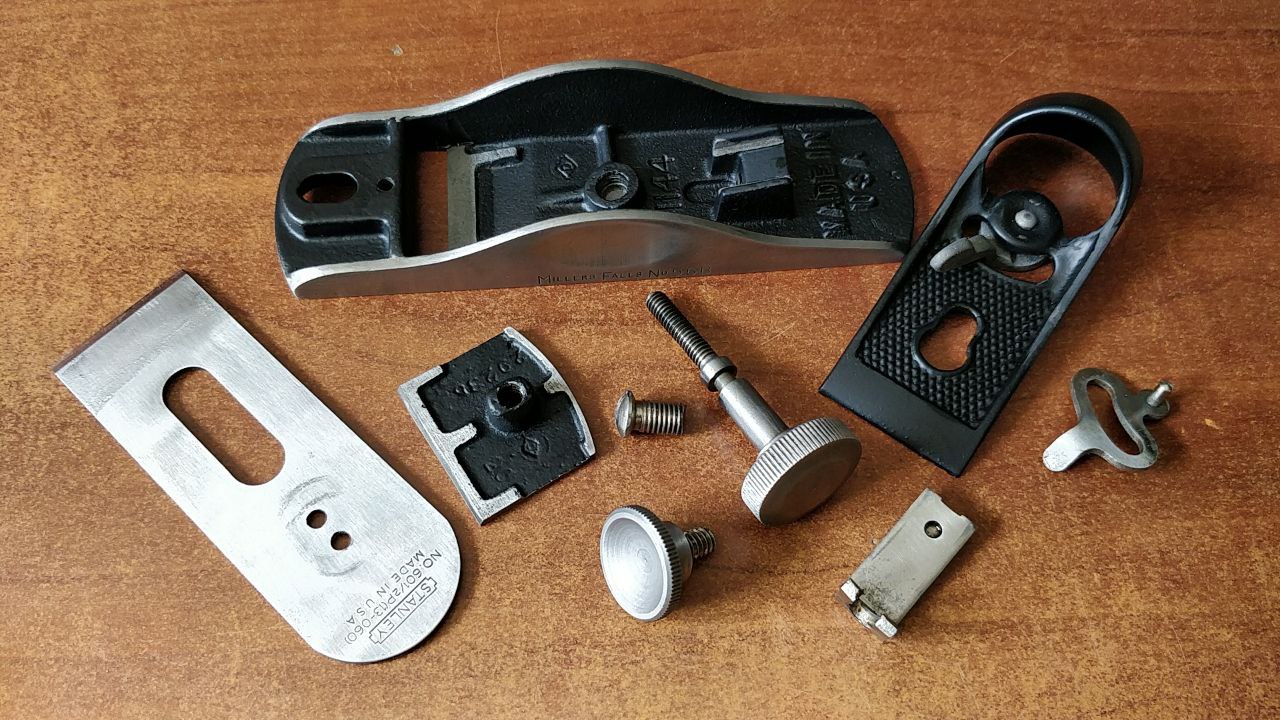
While I was cleaning up and sharpening the blade, it came to my attention that the blade was in fact not the original. Surprise!
Blade Depth Adjustment
Looks like the previous owner replaced the original blade with a Stanley.
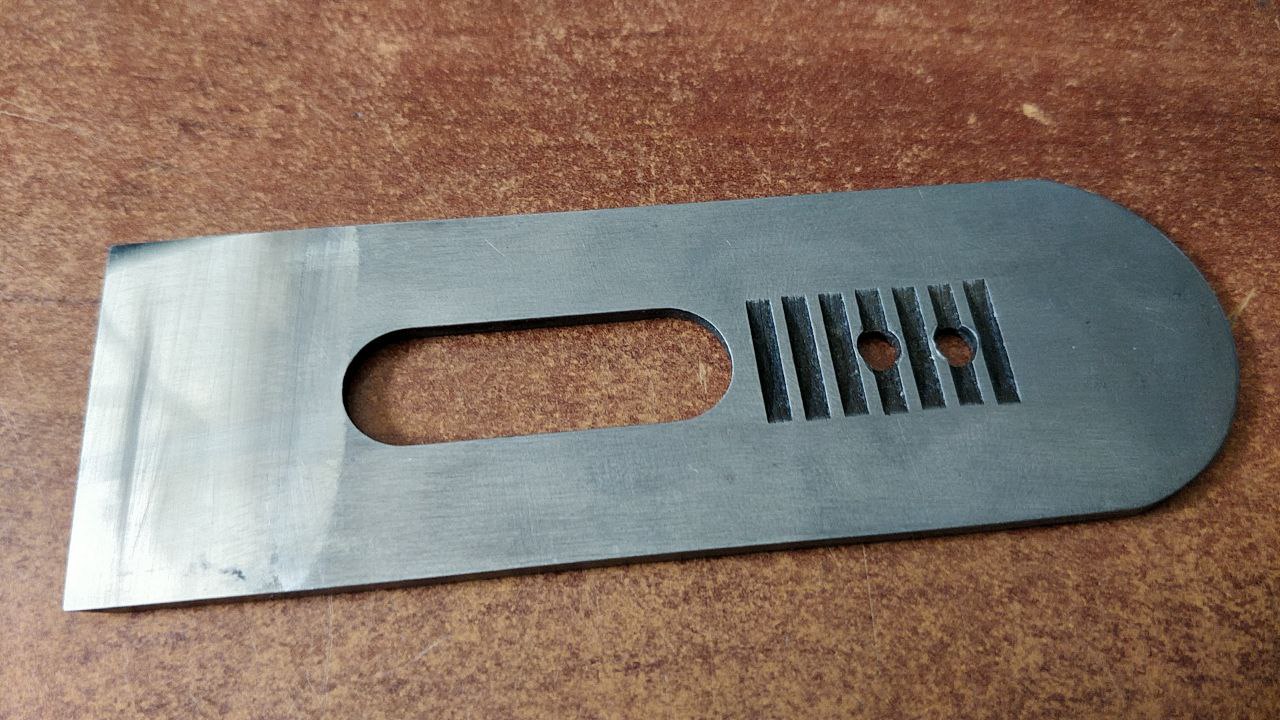
Unlike the Stanley, this depth adjustment mechanism is designed to latch to the blade with a tiny pin. The previous owner just drilled out two holes that mate with the mechanism. Unfortunately, the blade does not fit so well.
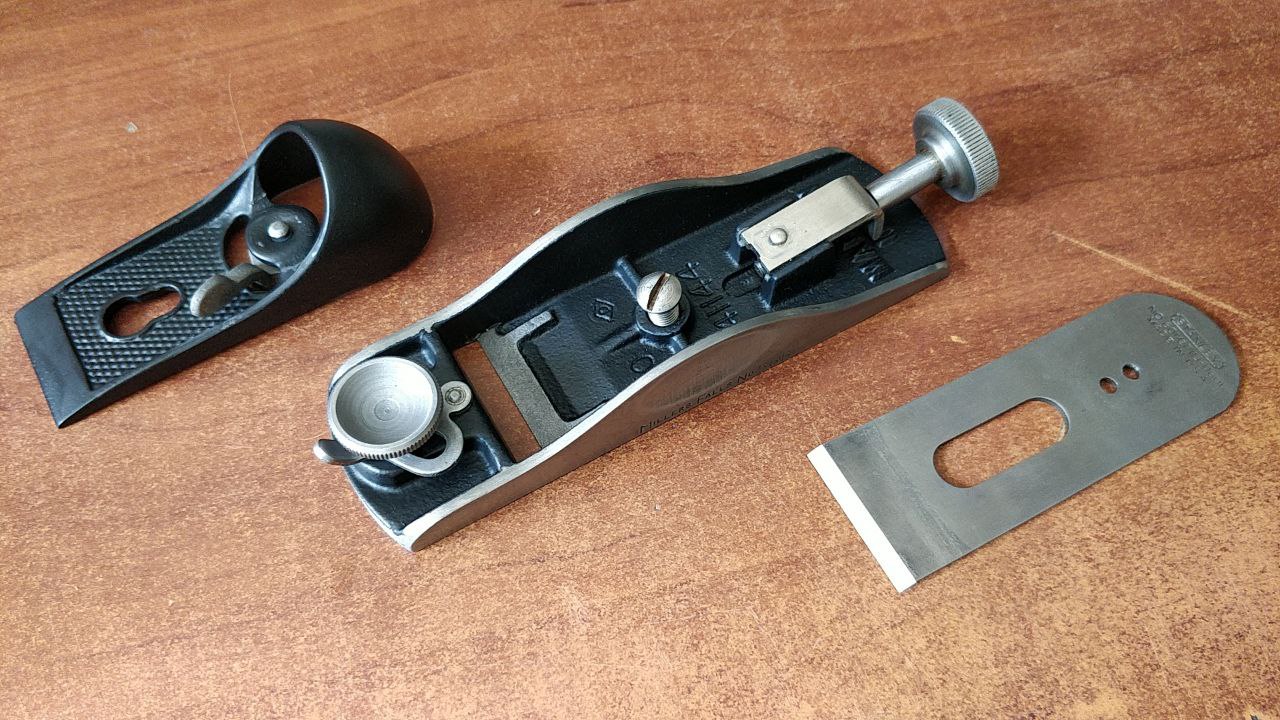
The blade rests on the little machined surface next to the mouth of the plane and the slider carriage that is actuated by the screw. These surfaces are more or less coplanar, however, the slider carriage sits roughly 2 mm below the blade. Of course, when the cap presses the blade down, it does end up in some stable position. However, the contact surface is much smaller than it could have been.
The plane works well enough, but I'm sure it can be made more rigid with a shim between the slider and the blade.
Eccentric Cap
The cap is the usual eccentric construction. One vexing aspect of it is the rivet that holds the lever. To paint it properly the cap needs to be fully disassembled, and for that, the rivet needs to be removed. Fortunately, I was able to file the rivet down until it I was able to push it out of the hole. After the paint job, putting the cap back together proved to be much harder than expected.

Once again I nicked the paint while unsuccessfully trying to peen the rivet for the first time. The second attempt was better, as I used one hammer as a makeshift anvil, and then peened the other end of the rivet with a different hammer.
I wonder if replacing the lever altogether is a good idea. Clearly, there are commercial planes produced with fine-pitched thumbscrews instead of the eccentric lever. However, this particular casting does not look particularly thick, and I would prefer to have at least five full threads to minimize the risk of stripping them out. So for now lever cap it is.
The Result
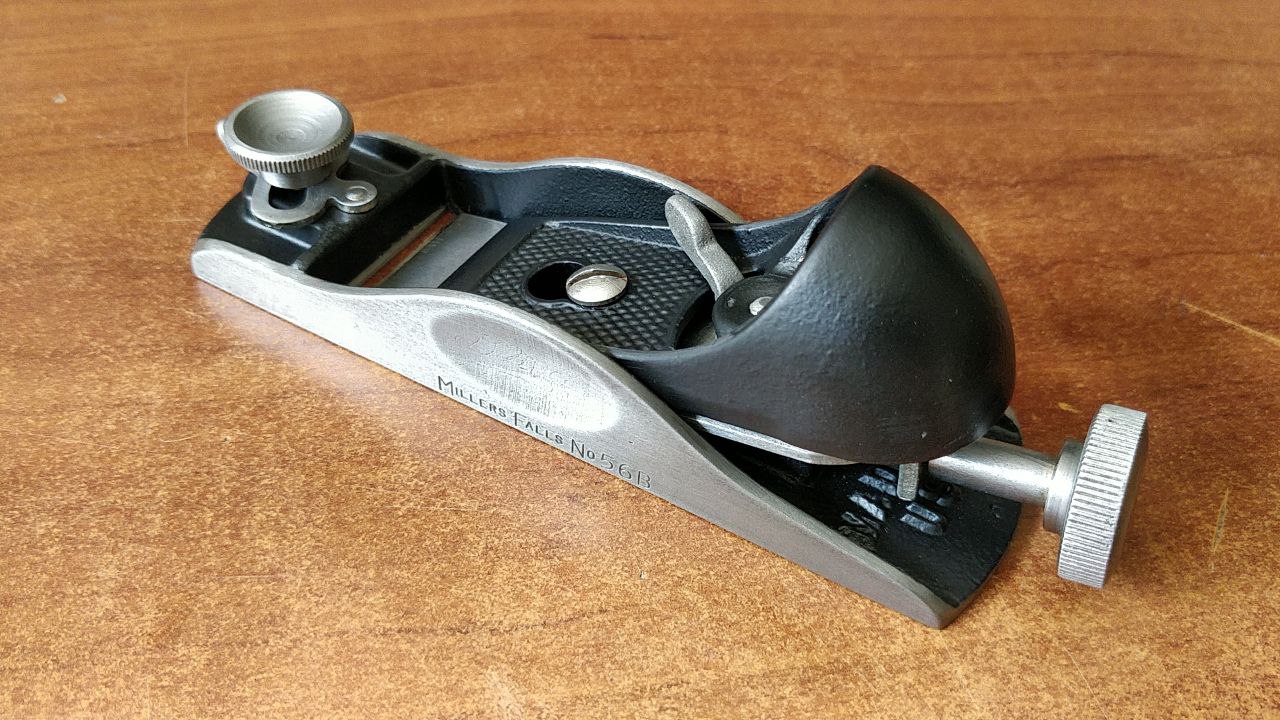
The previous owner scribbled what looks like their initials onto the side of the plane. I'll probably sand the writing off eventually. Maybe when I decide to shim the depth adjustment mechanism.
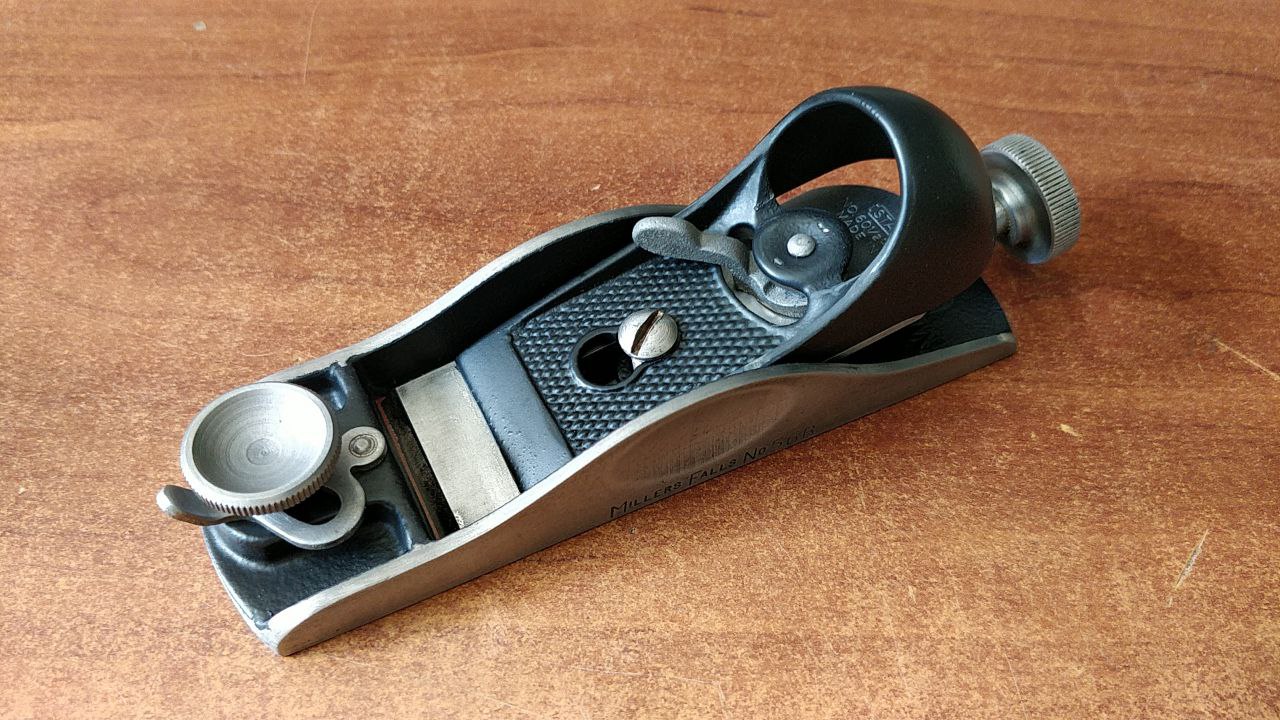
Despite its irregularities, the plane turned out quite well. There is potential for improvement, as the depth adjustment mechanism still needs some tuning. And the inscription and the non-standard blade give it character.