 DIY Blog
Scrub Plane Makeover (Planning)
08 Jun 2022I've always meant to get my hands on a good scrub plane. Sadly, Stanley #40 and the like have high collectible value, and therefore cost an arm and a leg on eBay. There's always the option of repurposing a Stanley #78 (and I might do that in the future), but for now, I've bought some rather cheap Soviet hardware that looks promising.
Choosing the Plane
I actually have two Soviet-made scrub planes, a fairly modern "new old stock" unit from the 90s and an older one from probably the 70s.

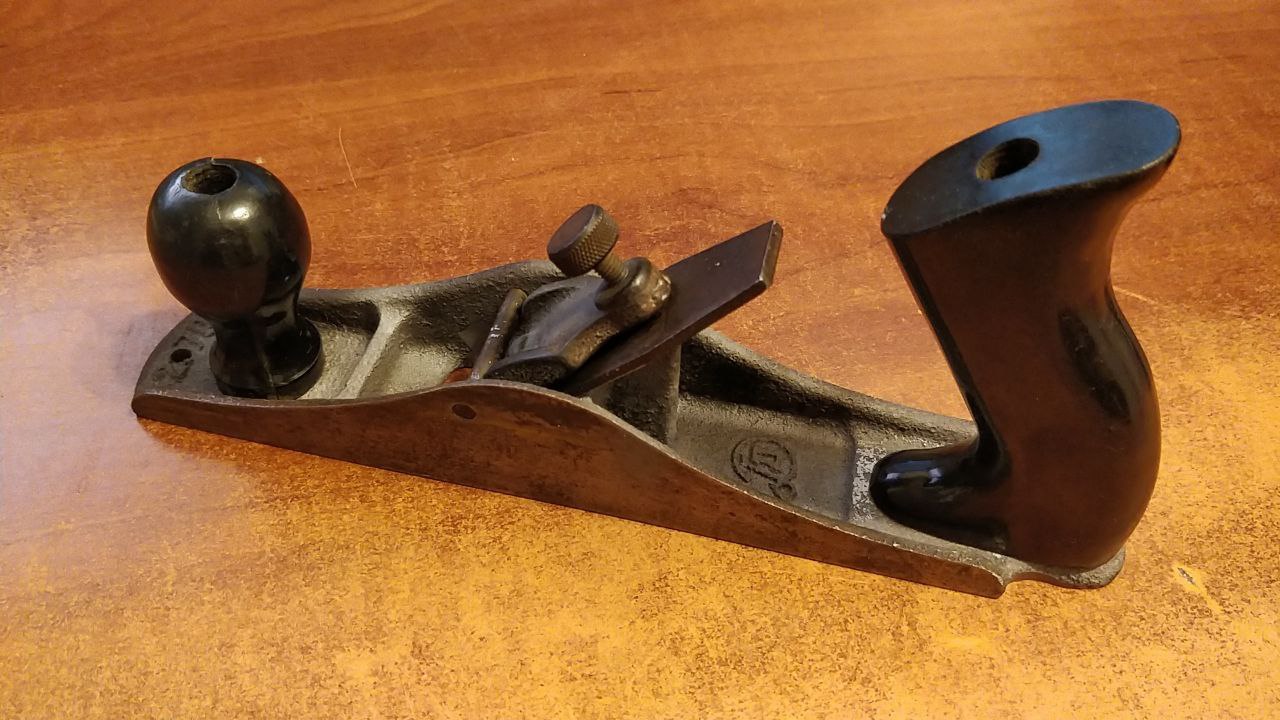
I've decided to refurbish the second, older plane. I like the heavier casting. Its iron is also significantly better.
Material for Handles
I have a nice applewood board that I bought specifically for making handles. The board is rather warped and has some cracks and imperfections, but then it is also quite thick and wide. I only need small blanks, so this is not a problem.
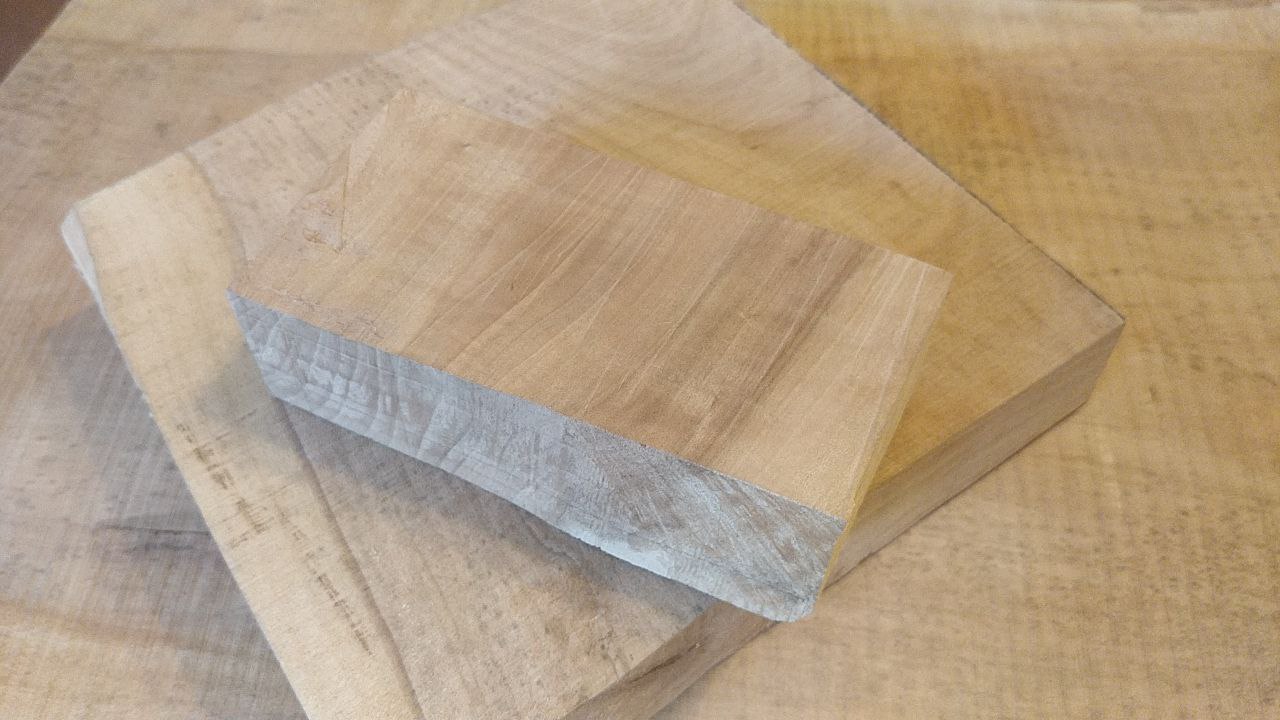
Apple is the traditional material for saw handles. I'm sure it will do well for hand plane handles as well. It certainly looks prettier than beechwood.
Handle replacement
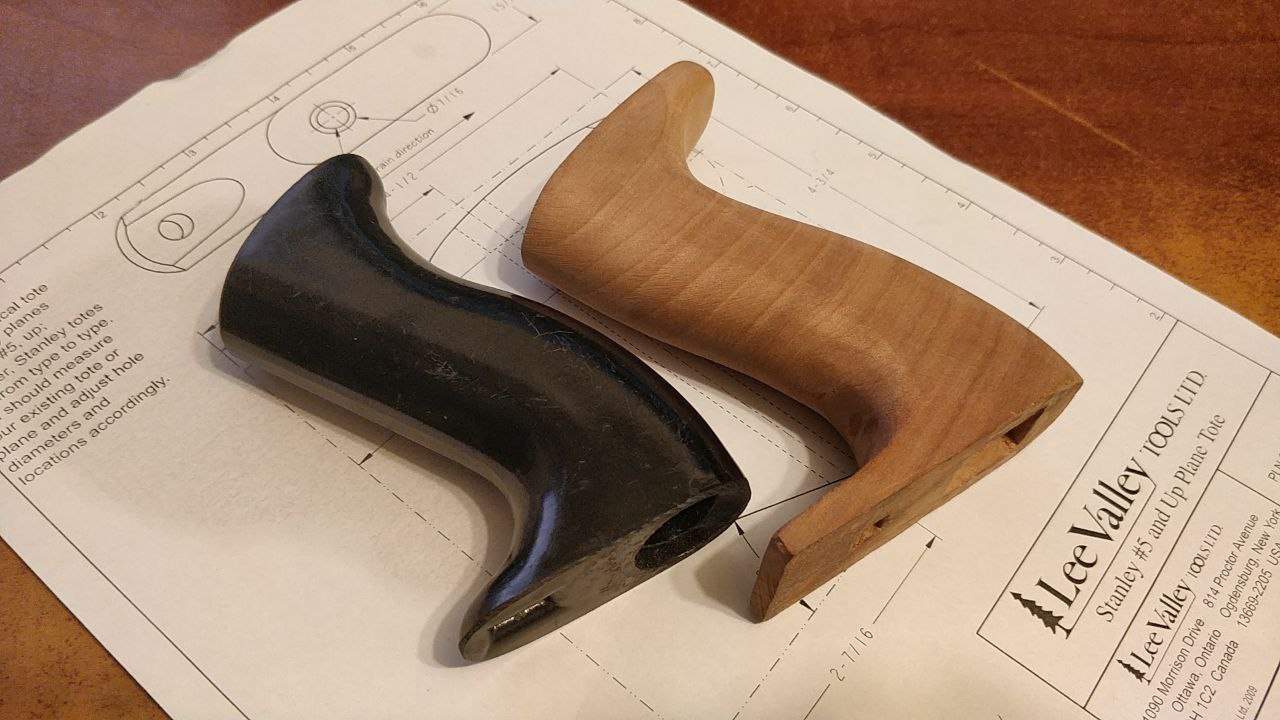
I'm going to replace both handles with something nicer. The bakelite knob is much too short and thin for my hands. Clearly, I need to make one that is bigger. I am using the knob from Stanley #40 as inspiration.
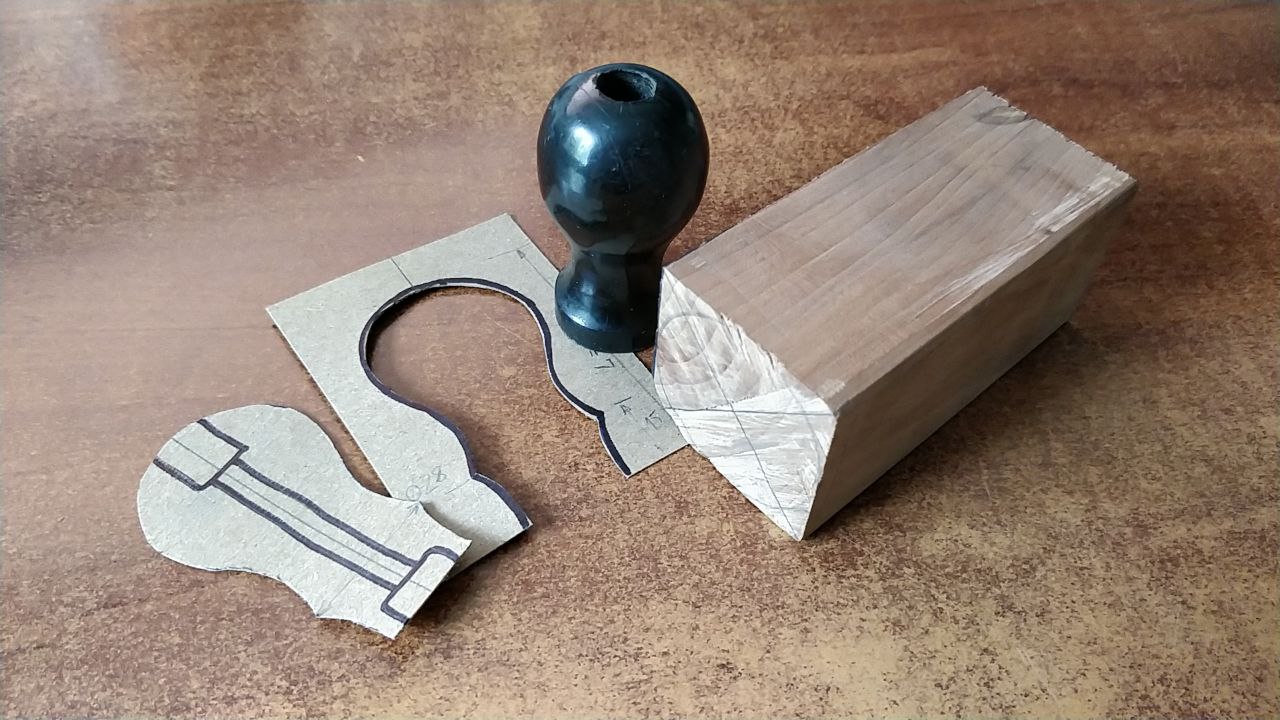
The tote is actually an attempt to salvage a failed project. As I was making a replacement tote for Stanley #6, I took off too much material at the bottom. Now I am adapting it to this plane instead. Fortunately, the tote needs to be shortened and the hole is located at 70° (unlike the 63° on a Stanley).
The Body
At least the manufacturer did not skimp on metal. The body is heavy and bulky and will withstand abuse. All threads are still good.
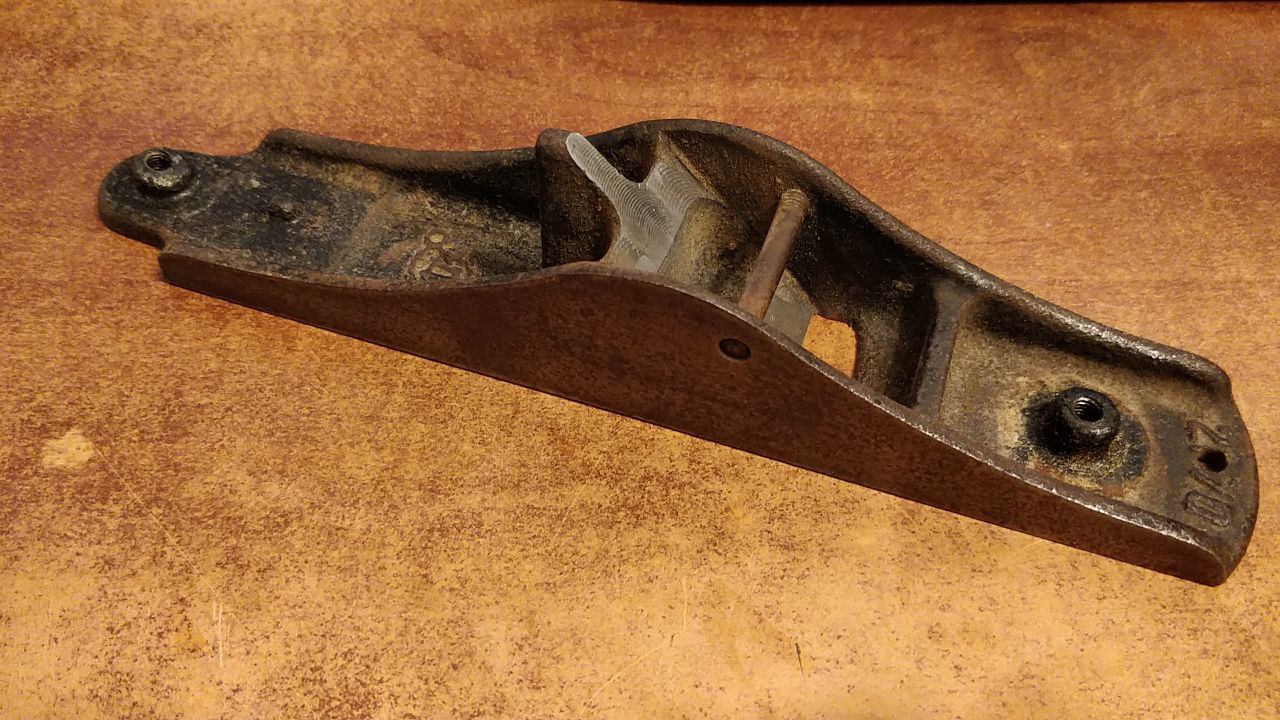
There are other issues with it, though. The casting is very rough, especially where the tote is. There are no well-defined rims on the cheeks of the plane. The previous owner has drilled a hole next to the knob. The area where the tote sits is not particularly flat. I'll need to address these one way or the other.
The casting imperfections can be easily removed with files. The hole is trickier. I could do nothing, or try to braze it with brass, or put an iron rod through it and peen it on both ends, or use some epoxy putty, perhaps with iron filings. All options seem equally unappealing.
I've sanded the bottom of the tote flat, but it does not sit flat on the casting, it rocks. I considered filing the casting flat, but this is tricky because of the two little prongs that come out of the casting. I'll probably use some filler or putty to level this surface. It does not need to be hard or wear-resistant, so another option is to add a compressible gasket to take out the unevenness of the underlying surface.
As with my other planes, I'll just spray paint the body with matte black paint.
Other Hardware
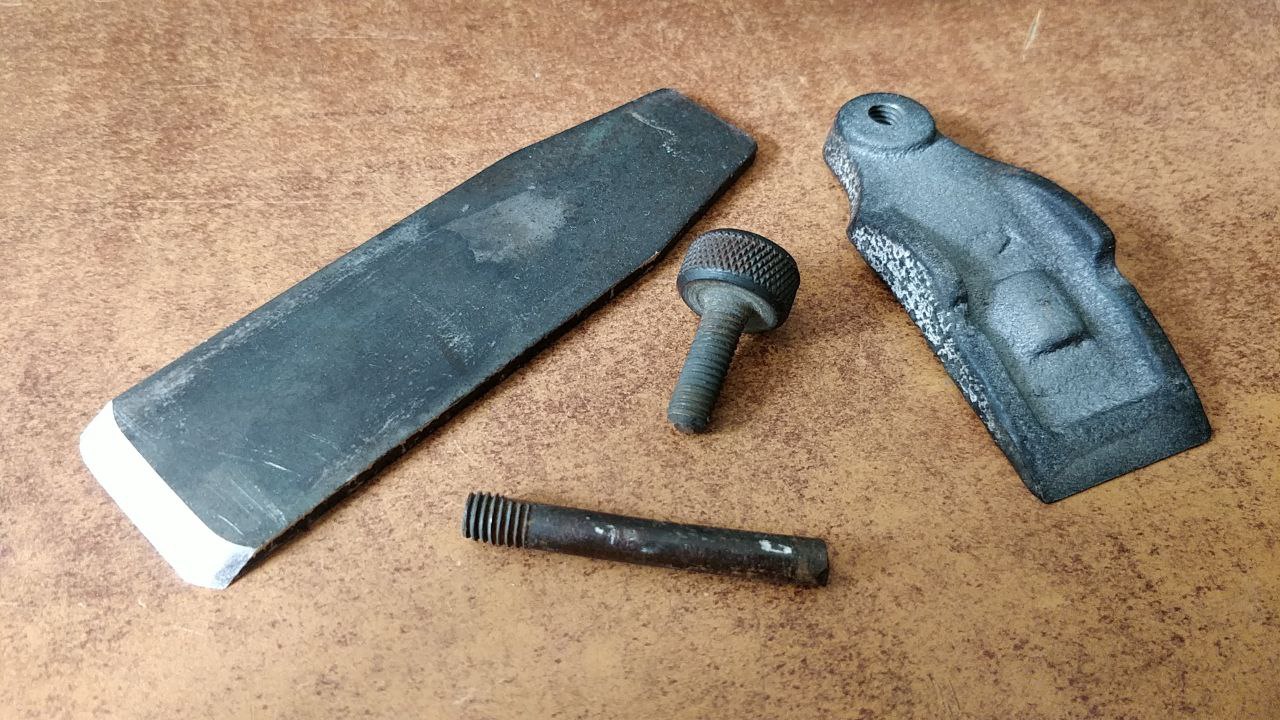
I have already sharpened the iron and it's much better than the iron that comes with the other plane. I will probably replace the little rod around which the screw cap pivots. The thread is the standard M6⨯1, so it should be an easy replacement. In fact, all other threads in this plane are identical. I'll probably clean the screw and apply cold bluing. As for the cap, I'll file it smooth, then spray paint it black to match the body.
I'll need to come up with a way to attach the handles to the body. For starters, I'll just use standard M6 socket head cap screws with some spring washers. If I get fancy, I might fabricate brass nuts similar to what Stanley planes use.
With the sharpened iron, the plane works even in this state. I used it to prepare the blanks, and the blanks turned out fine. It was not the most pleasant experience - the rough edges gave me blisters and the handles are extremely uncomfortable. But I'm sure with some work this plane will become a nice and useful tool.