 DIY Blog
Stanley #90 Bullnose Plane
14 May 2022I have to admit, I purchased this little plane not out of practical necessity, but simply for its looks. Besides, it comes highly recommended, and how could I resist when the price was that good?
These days I am no longer sure what brings me more joy - collecting tools, restoring them, or actually doing some work with them. I console myself with the understanding that at least I've put some effort into making these tools shine, and that sets me apart from the common hoarder.
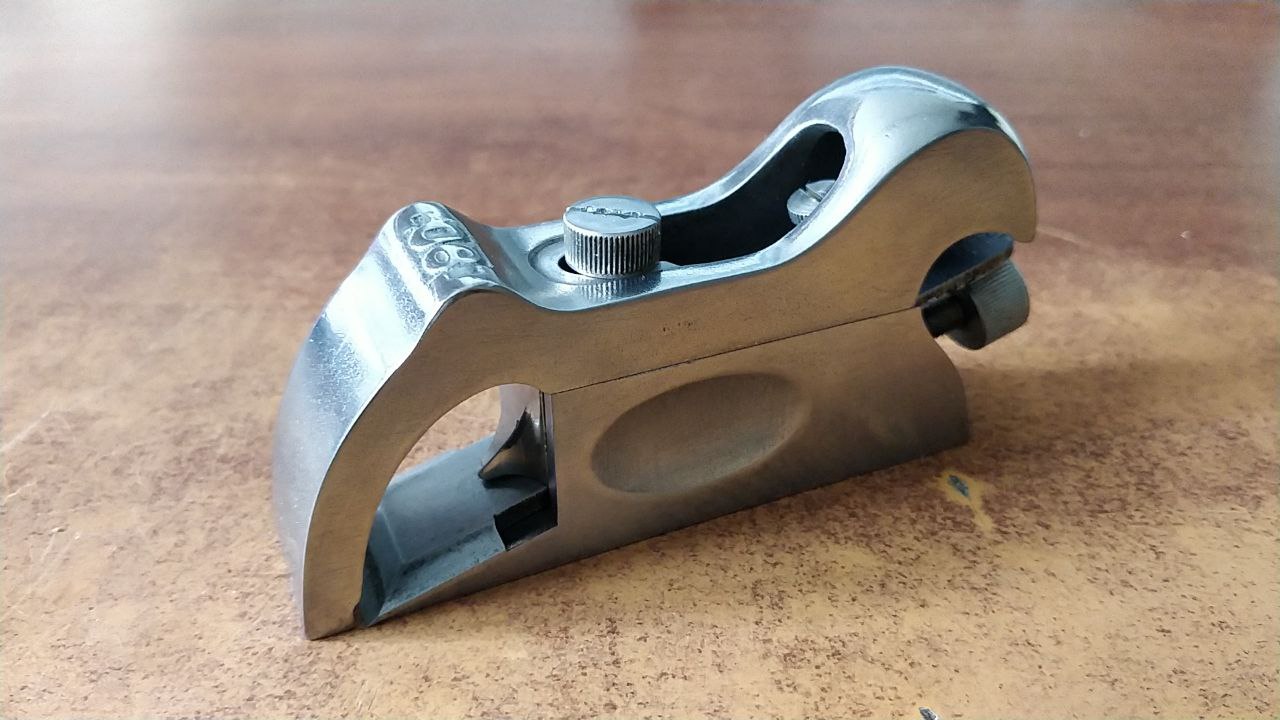
Some quick reading on the subject suggests that these planes had been manufactured from the last years of the 19th century all the way through the 1960s. Unlike the traditional cast iron planes that feature black japanning, this one comes nickel-plated. To my surprise, the nickel-plating tech had been quite mainstream at the time. For some reason, I thought electroplating was a mid-20th-century thing.
The body seems to be made of cast iron, then plated. The plating has significantly flaked over the years. There's some surface rust on the blade and screws, but that's expected. The blade is a bit dull, but not chipped, so resharpening it will be easy.
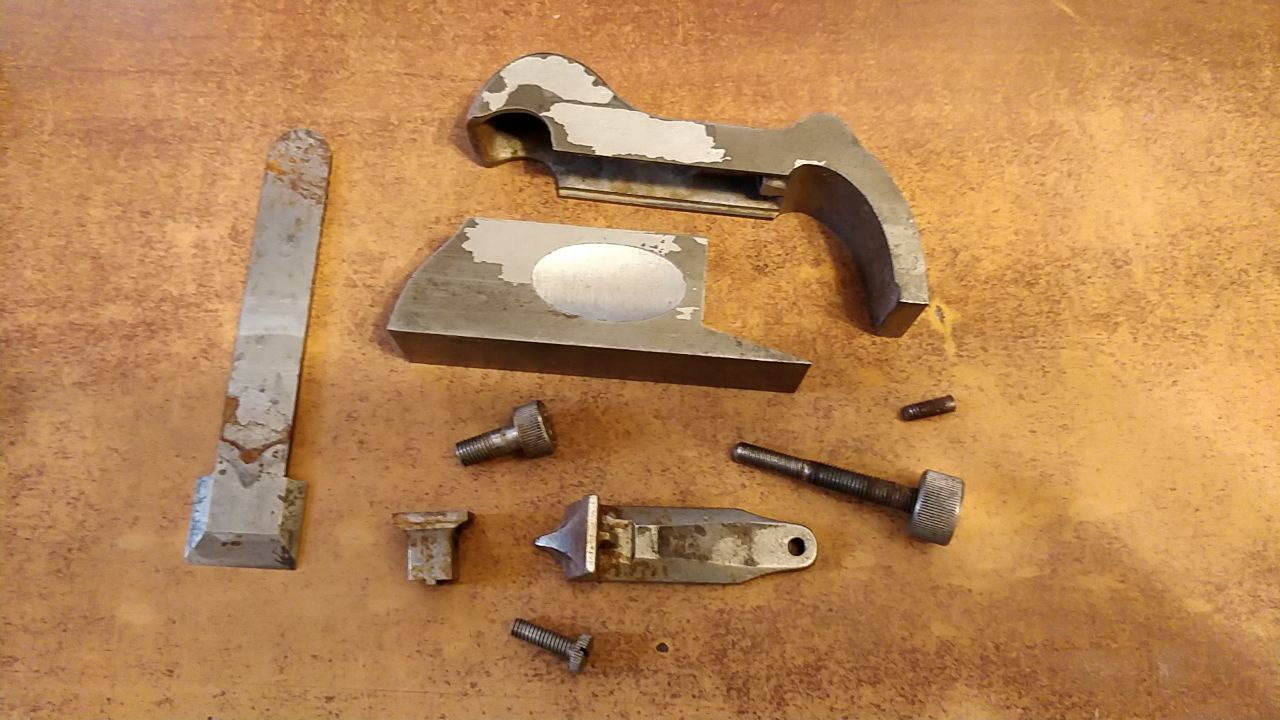
I guess the factory just made the casting, then had it machined, then had it polished on all the surfaces that were within reach, then plated it. The plane consists of three parts, the top and the bottom of the body, and the thing that would be the lever cap in a bench plane. It is interesting to see how the plating does not conceal imperfections but instead exaggerates them. The surface of the "lever cap" is quite rough, and so are the internal surfaces of the plane body. The dimples in the body have subtle machining marks that are just plated over.
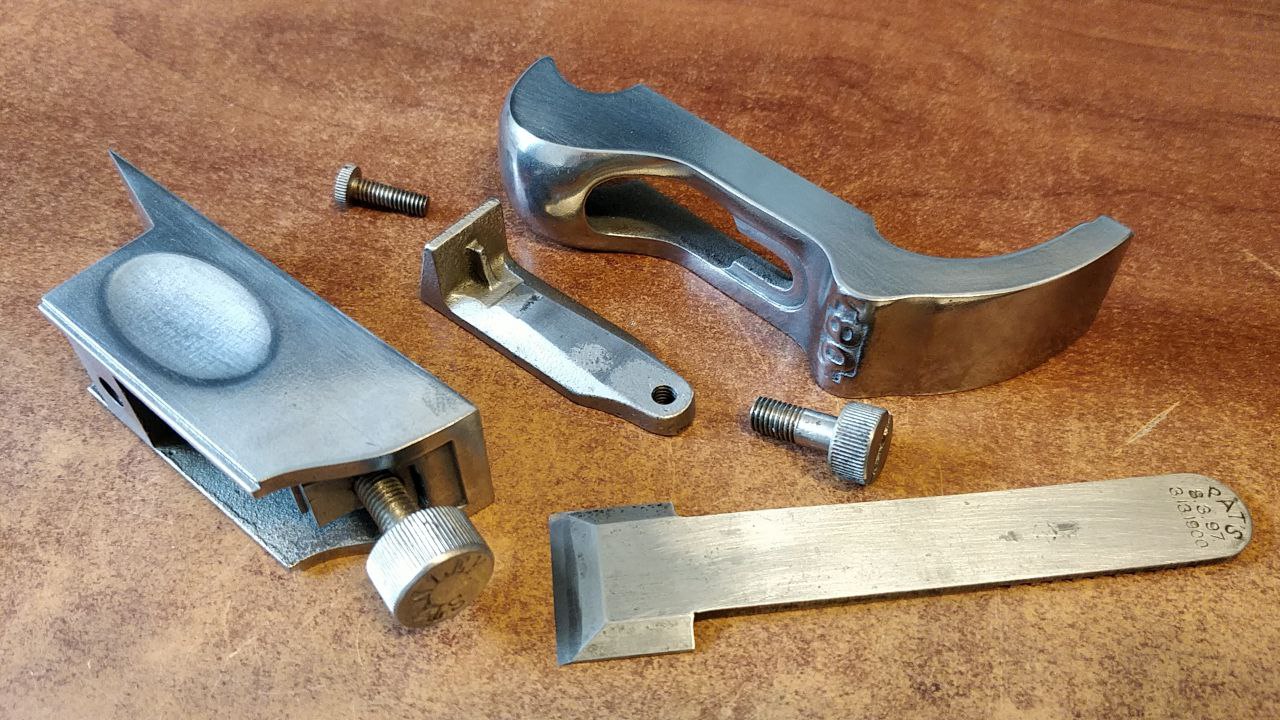
I decided to get rid of the plating altogether. I briefly considered chemical removal but opted for the sandblaster since I have access to one. The plating peeled off easily, and the already bare areas got a bit cleaner. Overall, the surface finish became consistently rough. The screws got their usual treatment of chemical rust removal, some cleaning with abrasive pads, then oil. I didn't blast the "lever cap", because flaking there was minimal, and it's not visible anyway. All's well as long as it does not rust.
At this time I had two options: to try and apply new plating or to keep things as they were. In the end, I decided not to plate. Since plating quality depends heavily on surface quality, I had to polish and buff the surfaces anyway. Besides, I know how well cast iron can be polished: I was able to get near mirror finish on my cast iron spokeshave sole. Not that I had to, but the sole was small, unlike the soles of my bench planes. I'm pretty sure that unless I leave this plane in a damp cellar for years, the mirror-polished cast iron surface will resist rust every bit as well as the nickel-plated.
One minor complication is, of course, the shape of the parts. There are surfaces that are extremely hard to reach. Even so, two hours with sandpaper, abrasive pads, and the buffing wheel were enough to make it nice and polished.
Restoration and collectible value
Experts say the plane loses half its collectible value if the plating (or, in the case of bench planes, japanning) is removed. I could not care less. I strip my planes to bare metal and refinish them. I never liked Stanley's original finish anyway, I very much prefer my black matte paint job. The rosewood is too precious to cover up with shellac, so my handles get several coats of very thin wiping varnish. And as for nickel plating, I'd rather remove it and buff up the cast iron than cling to the remaining original finish. It just looks better that way.